
Modernizing legacy architectural frameworks is often compared to performing an engine swap on a vehicle while it is cruising down the highway at seventy miles per hour without ever tapping the brakes. The inherent complexity of distributed systems, combined with the pressure to maintain constant availability, creates a scenario where even a minor miscalculation can result in cascading failures and significant revenue loss. Many organizations find themselves tethered to aging Java or Node.js services that, while functional, have become bottlenecks for feature velocity and scalability in the current technological landscape of 2026. The transition from these monolithic or poorly structured microservices to a modern, cloud-native stack requires more than just a simple rewrite of the source code. It demands a sophisticated, multi-phased approach that prioritizes system stability while systematically dismantling technical debt. Successfully navigating this process depends on a team’s ability to balance the introduction of new technologies with the rigorous maintenance of existing service-level agreements. By adopting a mindset of continuous improvement rather than a “big bang” overhaul, engineering departments can achieve a seamless migration that enhances performance, security, and developer productivity. This guide explores the strategic frameworks and technical patterns necessary to transform a legacy environment into a resilient, modern ecosystem without interrupting the user experience or risking the integrity of critical data assets.
1. Analyzing the Existing Environment: Establishing a Baseline
The initial phase of any modernization effort must focus on deep discovery to prevent the migration from becoming a reactive exercise in troubleshooting unforeseen dependencies. Mapping out the entire ecosystem is the first critical task, which involves identifying every library, external API call, and shared resource currently in play. For Java-based microservices, tools such as Maven or Gradle provide dependency tree visualizations that expose transitive dependencies and potential security vulnerabilities that may have accumulated over several years. In the context of Node.js environments, a comprehensive audit of the package manifest is necessary to identify end-of-life modules or unmaintained wrappers that could pose risks during the transition. This documentation process reveals hidden connections between services, such as shared database schemas or undocumented internal endpoints, which often represent the most significant hurdles to a clean migration. Understanding these relationships allows architects to plan the order of operations effectively, ensuring that foundational services are addressed before their dependents.
Parallel to dependency mapping, capturing high-fidelity performance metrics is essential for creating a baseline against which the new system will be measured. It is impossible to claim a migration is successful without quantitative proof that the modernized service performs at least as well as its predecessor. Engineers must collect data on response times across various percentiles, specifically focusing on P50, P95, and P99 metrics to understand the experience of both the average and the most delayed users. Additionally, monitoring current resource utilization, including CPU cycles and memory residency, provides the necessary context for right-sizing the future infrastructure. Database efficiency, measured through query execution plans and connection pool saturation, must also be recorded to identify existing bottlenecks that should not be carried over into the new architecture. This data serves as a contractual obligation for the migration team, providing a clear definition of success and preventing the common pitfall of shipping a “modern” system that is actually slower or less reliable than the legacy one it replaced.
2. Wrapping Services in Containers: Standardizing the Infrastructure
Once the environment is fully characterized, the next logical step is to abstract the services from their underlying hardware by wrapping them in containers. This process provides a consistent runtime environment that eliminates the “it works on my machine” syndrome and simplifies the deployment pipeline across different stages of development. Utilizing multi-stage Docker builds is a best practice here, as it allows for a clear separation between the heavy build environment and the lightweight production runtime. By copying only the necessary artifacts—such as a compiled JAR file for Java or a minified bundle for TypeScript—into the final image, teams can significantly reduce the attack surface and improve startup times. This standardization serves as the foundation for modern orchestration, enabling the legacy code to exist within the same operational framework as the newly developed services. It also forces the team to externalize configuration settings, such as environment variables and secret management, which is a key requirement for achieving a twelve-factor application architecture.
Properly configuring resource boundaries within a container orchestrator like Kubernetes is vital for maintaining the stability of the legacy services during this transition. For Java applications, it is particularly important to use JVM flags that make the runtime aware of container constraints, such as the use of container support and maximum RAM percentage settings. Without these configurations, the JVM might attempt to allocate memory based on the host’s total resources rather than the container’s limits, leading to frequent Out-Of-Memory kills and unpredictable restarts. Beyond memory management, implementing robust health checks, including readiness and liveness probes, ensures that the orchestrator can intelligently manage traffic. A readiness probe prevents the system from sending user requests to a service that is still initializing its database connections, while a liveness probe allows the cluster to automatically restart a frozen or deadlocked instance. These operational safeguards provide a layer of resilience that legacy virtual machine deployments often lack, significantly reducing the manual intervention required to keep the system online.
3. Executing the Strangler Fig Strategy: Incremental Migration
The most effective way to migrate functionality without downtime is through the implementation of the Strangler Fig pattern, which involves gradually wrapping the old system in new code until the legacy version can be safely decommissioned. At the heart of this strategy is a sophisticated routing gateway, such as NGINX or a specialized API gateway, positioned in front of all incoming traffic. Initially, this proxy simply passes all requests through to the legacy microservices, but as new versions are developed, specific routes are redirected to the modern stack. This allows for a granular transition where individual endpoints or specific business logic can be migrated and validated independently. For example, a team might choose to migrate the “user profile” service first while keeping the “payment processing” service on the legacy infrastructure until it has been thoroughly tested. This decoupled approach minimizes the blast radius of any potential issues, as the majority of the system remains untouched while the new components are stabilized in a production environment.
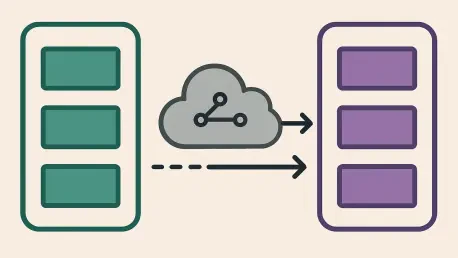
Shadow testing serves as a critical validation mechanism within the Strangler Fig framework, allowing engineers to verify the correctness of the new service using live production data without affecting the user. In this configuration, the routing gateway duplicates incoming requests and sends them to both the legacy and the modernized services simultaneously. However, only the response from the legacy system is returned to the client, while the response from the new service is logged and compared for accuracy. This “fire and forget” comparison reveals discrepancies in logic, data formatting, or performance that unit tests might have missed. By analyzing these differences over several days or weeks, the team can gain absolute confidence that the new service behaves identically to the old one under real-world load. Once the error rate in the shadow environment reaches zero and the performance meets the established benchmarks, the team can confidently flip the switch, making the new service the primary responder for that specific route.
4. Separating the Data Layer: Decoupling Shared Resources
One of the most complex challenges in microservice migration is the dismantling of shared database schemas, which often act as a hidden monolith that prevents independent scaling and deployment. To address this, the introduction of an Anti-Corruption Layer (ACL) or a repository pattern is necessary to decouple the application logic from the underlying storage structure. By forcing all data access through a standardized interface, the team creates a layer of abstraction that allows the backend schema to change without requiring a total rewrite of the business logic. This ACL acts as a translator, ensuring that the domain models in the modern service are not contaminated by the legacy naming conventions or structural idiosyncrasies of the old database. As the migration progresses, this isolation layer makes it much easier to eventually physically move the data to a dedicated service-specific database, which is the ultimate goal of a truly decoupled microservices architecture.
Managing these database transitions requires a disciplined approach to schema versioning, typically achieved through tools like Flyway or Liquibase. Every change to the database must be treated as code, versioned in a repository, and applied through an automated pipeline to ensure consistency across all environments. When splitting a shared table, it is often necessary to employ dual-write triggers or application-level synchronization to keep the old and new schemas in sync during the transition period. For instance, a trigger can be set up in the legacy database to automatically mirror any updates to a new table owned by the modernized service. This ensures that both systems have access to the most current data, allowing for a phased cutover where traffic can be shifted incrementally. Once the new service has fully taken over the responsibility for the data, the dual-write mechanism can be disabled and the legacy tables can be retired. This non-destructive approach provides a clear path for rollback if issues are discovered, as the original data remains intact and up-to-date throughout the process.
5. Transitioning to Asynchronous Communication: Enhancing Resilience
Moving away from synchronous HTTP-based communication between services is a transformative step that significantly increases the overall resilience of the system. In many legacy architectures, a single slow service can cause a ripple effect of delays, leading to a total system failure as threads are exhausted waiting for responses that may never come. By integrating an event broker like Kafka or RabbitMQ, teams can replace these brittle direct calls with an event-driven model where services communicate by publishing and subscribing to message streams. When a user initiates an action, the receiving service simply acknowledges the request and publishes an event, allowing other services to process the necessary downstream tasks independently. This decoupling not only improves the perceived performance for the end-user, who no longer has to wait for the entire chain to complete, but also allows the system to handle spikes in traffic more gracefully by buffering messages during peak periods.
Building a resilient system also requires a sophisticated strategy for handling the inevitable failures that occur in distributed environments. Implementing a Dead Letter Queue (DLQ) ensures that messages which cannot be processed after a series of automated retries are not simply lost or allowed to block the entire pipeline. Instead, these problematic messages are moved to a separate queue where they can be inspected, corrected, and re-driven by engineers at a later time. This approach prevents a single malformed request from causing a “poison pill” effect that crashes consumers across the cluster. Furthermore, incorporating exponential backoff and jitter into retry mechanisms prevents a recovering service from being overwhelmed by a sudden flood of retried requests. By treating communication as an asynchronous, potentially unreliable process, the modernized architecture becomes inherently more robust, capable of maintaining high availability even when individual components or third-party dependencies experience intermittent issues or latency spikes.
6. Final Considerations: Actionable Steps for Success
The journey toward a modernized microservice architecture is a continuous process that yields benefits far beyond simple performance improvements. As the migration work concluded, the primary focus shifted toward maintaining the high standards of operational excellence established during the transition. The successful implementation of the Strangler Fig pattern allowed the engineering organization to retire significant portions of the legacy codebase without a single minute of unplanned downtime. By prioritizing the containerization phase, the team achieved a standardized deployment model that reduced the time from code commit to production from hours to minutes. Furthermore, the transition to an event-driven model proved to be a decisive factor in stabilizing the platform, as it effectively isolated services from one another and eliminated the cascading failures that had previously plagued the legacy environment. The lessons learned during this period highlight the importance of thorough initial analysis and the use of shadow testing to mitigate the inherent risks of architectural changes.
Looking ahead, the foundation built through this incremental migration provides the agility needed to adopt emerging technologies as they mature. The shift toward a decoupled data layer and asynchronous communication has prepared the organization for future scaling challenges and the potential integration of specialized AI-driven services. Organizations should now focus on refining their observability stacks to gain deeper insights into the event streams and containerized workloads that now form the core of their operations. Automated regression testing and continuous security scanning should be integrated deeper into the CI/CD pipeline to ensure that new features do not reintroduce the technical debt that was so painstakingly removed. By treating the architecture as a living entity that requires constant pruning and care, teams can ensure that their systems remain modern, efficient, and capable of supporting business growth for years to come. The transition successfully turned a rigid, aging infrastructure into a flexible and resilient ecosystem that stands ready for the demands of the modern digital landscape.