
Enterprise teams often realize too late that applying agentic architectures to linear business processes introduces unnecessary latency and points of failure into otherwise stable systems. The evolution of the Microsoft AI ecosystem has reached a definitive turning point with the release of its unified Agent Framework, a development that addresses years of architectural fragmentation. For a significant period, developers and system architects were caught in a persistent cycle of indecision, debating the relative merits of Semantic Kernel versus AutoGen or attempting to bridge the gaps within Azure AI Foundry. This period, characterized by “Framework Wars,” frequently distracted engineering teams from the primary objective of building production-ready applications. By consolidating these disparate tools into a single, stable version for both .NET and Python, the technical landscape has shifted from a debate over competing software development kits to a focused examination of fundamental system integrity and long-term reliability.
The Strategic Shift: From Experimental Frameworks to Unified Infrastructure
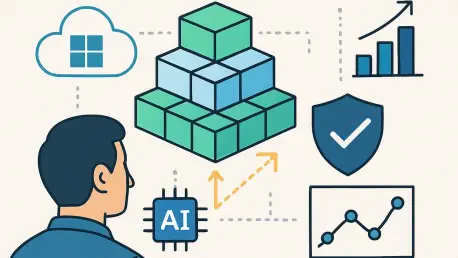
The standardization of the Microsoft toolset does not automatically guarantee a reliable system; rather, it removes the technical distractions that previously allowed teams to ignore difficult engineering challenges. While the menu of available tools has been simplified, the substance of a production-grade AI application remains extraordinarily complex to execute properly. Architects are now forced to confront the non-negotiable elements of AI systems, such as recovery logic, granular security identity, and state management, without the excuse of platform instability or breaking changes in underlying libraries. This transition marks the end of experimental AI development and the beginning of a more disciplined era of enterprise software engineering where the focus is on the robustness of the solution rather than the novelty of the stack. Engineering leaders are now recognizing that a unified framework provides the scaffolding, but the reliability of the finished structure depends entirely on the rigor of the implementation and the adherence to traditional software quality standards.
The stabilization of these frameworks has also shifted the conversation toward the total cost of ownership and the sustainability of AI-driven features. In the past, the lack of a unified approach meant that maintaining an agentic system required specialized knowledge of multiple, often conflicting, libraries that were updated at different cadences. With the current unified architecture, organizations can standardize their testing protocols and deployment pipelines, leading to a more predictable lifecycle for AI components. This shift enables a more holistic view of system health, where the focus moves beyond whether an agent can answer a query to whether the entire agentic ecosystem can scale across an enterprise without incurring prohibitive maintenance costs. Reliability is no longer viewed as a lucky byproduct of a specific model’s performance but as a deliberate outcome of a standardized development process that prioritizes consistency over experimental flexibility.
The Dichotomy of Process: Deterministic Workflows Versus True Agents
A major hurdle in achieving operational reliability is the common tendency to over-engineer simple processes by inappropriately labeling them as agentic. Many business tasks are inherently linear and predictable, following a set sequence of validation, API calls, and notifications that do not require the overhead of a reasoning engine. In these scenarios, using a Large Language Model to decide the next step introduces unnecessary latency and creates multiple points of failure in what should be a straightforward execution path. True reliability begins with a strategy of minimalism, ensuring that expensive and unpredictable agentic architectures are reserved exclusively for high-uncertainty environments where autonomous tool selection is actually required for the task. By distinguishing between a rigid workflow and a flexible agent, developers can avoid the pitfalls of non-deterministic behavior in processes that demand absolute precision and predictable outcomes.
Reliability is frequently compromised when the “Workflow Fallacy” takes hold, leading teams to replace stable, deterministic code with flexible but inherently erratic AI decision-making layers. Engineering rigor dictates that if a process can be handled by traditional functions or state machines, it should be, as these are significantly easier to test, monitor, and maintain over time. By limiting an agent’s autonomy to only the specific parts of a workflow that require genuine reasoning or natural language synthesis, architects can create systems that are both powerful and predictable. This targeted application of agentic power ensures that the AI adds tangible value rather than introducing systemic instability. The goal is to build a hybrid environment where the “brain” of the agent is only engaged when the “muscles” of deterministic code reach a scenario that lacks a predefined script, thereby maintaining high performance and reliability.
Technical Foundations: Precision and Failure Management in AI Systems
To ensure an agent survives the demands of a real-world environment, architects must prioritize contextual precision over the sheer scale of the underlying model. Providing an agent with an excessive amount of internal documentation through broad Retrieval-Augmented Generation often leads to hallucinations or skipped logic as the model struggles to parse relevant details from the noise. Successful systems in the current landscape rely on “contextual pruning,” a deliberate process of filtering and ranking information to ensure that only the most relevant data reaches the model’s limited attention span. Maintaining a high-quality context window is far more critical for reliability than simply expanding its size, as it reduces the cognitive load on the agent and minimizes the chances of logic errors. Precision in data delivery directly translates to precision in execution, making the data engineering component of the agentic architecture just as vital as the model itself.
Resilience in the current Microsoft architecture is defined primarily by how a system manages failure rather than how it performs during a perfect, nominal run. Real-world agents frequently encounter API timeouts, inconsistent data formats from legacy systems, and logic loops where a model repeatedly attempts a failing task without intervention. Consequently, the majority of development time must be spent on sophisticated recovery logic, determining when the system should retry a task, when it should roll back a distributed transaction, and exactly when a human must intervene to resolve an ambiguity. These are traditional software engineering problems that no framework can solve automatically, requiring specific business logic to ensure continuous operation. A reliable agent is one that knows its limits and possesses a structured way to fail gracefully, ensuring that a single error in a sub-process does not cascade into a total system collapse.
Security and Governance: The Infrastructure of Agentic Identity
As AI agents transition from simple chatbots to active participants in complex business systems, they require a robust identity framework to remain secure and reliable over the long term. Utilizing tools like the Model Context Protocol allows agents to connect directly to sensitive business data, but this connectivity necessitates clear boundaries regarding authorization and autonomy. Operating an agent under a generic service account or a developer’s personal credentials creates significant audit risks and security vulnerabilities that can compromise the integrity of the entire organizational data structure. Establishing a clear “persona” with specific, limited authorization scopes is a high-stakes decision that determines whether an agent is a valuable asset or a significant liability. Security must be baked into the architecture at the identity level, ensuring that every action taken by an agent is traceable, authorized, and confined within its intended operational domain.
Future-proofing a complex AI system requires a strategy of loose coupling, where the core business logic and orchestration remain independent of any specific underlying software development kit. The history of platform evolution suggests that the current unified state of Microsoft’s frameworks may not be the final destination, and teams that build too closely around specific abstractions risk rapid obsolescence during the next inevitable platform shift. By treating the framework as a replaceable dependency rather than the foundation of the logic, architects can ensure their systems outlast the specific tools used to build them. This approach involves creating clear interfaces between the agentic logic and the infrastructure, allowing for easier migrations and upgrades as newer models or more efficient orchestration techniques emerge. Maintaining this architectural distance is essential for building systems that remain reliable across multiple generations of technological advancement.
Architectural Discipline: Ensuring Performance Beyond the Initial Deployment
The ultimate measure of a successful agent architecture was found in its performance on a “Normal Tuesday”—the ability to handle inevitable downstream failures and data inconsistencies without crashing the entire business process. Success in the current era of enterprise AI was determined to be twenty percent about AI orchestration and eighty percent about traditional engineering discipline. While the unified framework provided a more stable starting point, the real work of building reliable, secure, and resilient systems remained a challenge of human architectural design rather than a feature of the software itself. Organizations that excelled were those that treated agents not as magical entities, but as sophisticated software components requiring the same rigorous testing and monitoring as any other mission-critical system. This disciplined approach ensured that AI deployments moved beyond the pilot phase and into the core of the business infrastructure.
To maintain this trajectory of reliability, engineering leaders prioritized the implementation of comprehensive observability pipelines that monitored agentic decision-making in real-time. This allowed teams to identify and correct “drift” in agent behavior before it impacted the end-user experience or the accuracy of business data. Furthermore, the adoption of standardized governance models ensured that every agentic deployment adhered to strict safety and compliance protocols, regardless of the department or use case. By focusing on the structural integrity of the entire ecosystem rather than the performance of a single model, these organizations created a foundation for sustainable AI innovation. The shift toward a unified architecture was merely the beginning; the true achievement was the integration of these tools into a mature engineering culture that valued stability, security, and long-term viability above all else.