
The hollow, rhythmic pulsing of a loading circle has become the digital equivalent of a “closed” sign, signaling a frustrating disconnect between a user’s immediate intent and a company’s backend capability. In an age where digital patience is no longer measured in seconds but in fleeting milliseconds, the traditional journey of data traveling to a distant data center and back is more than a technical bottleneck—it is a significant business liability. As the world moves beyond the era of static applications, a new architectural alliance is fundamentally reshaping the landscape of interaction. By migrating the cognitive power of Generative AI out of centralized cloud hubs and onto the Edge, organizations are finally closing the gap between human thought and machine action, turning what used to be a clunky conversation with a remote server into an instantaneous, local intuition.
The End of the Digital Waiting Room
The spinning icon is increasingly viewed as a relic of an inefficient past, a ghost of an architecture that was never designed for the sheer volume of real-time data produced today. Modern consumers do not just want answers; they want them before they have fully finished asking the question. This shift in expectation is forcing a radical rethink of how data moves across networks. When a user interacts with a brand through a mobile device or a smart terminal, they expect the interface to react with the same fluidity as a face-to-face conversation. If the system has to pause to consult a server three states away, the magic of the digital experience evaporates, often taking the customer’s interest with it.
The transition toward Edge-based intelligence represents the final frontier in eliminating latency. By placing the “brain” of the operation at the point of contact, companies are effectively removing the physical distance that has historically hindered performance. This is not merely about making apps run faster; it is about creating a sense of “presence.” When a system responds instantly, it feels like a partner rather than a tool. This evolution marks the end of the digital waiting room, replacing the anxiety of the “please wait” screen with a seamless, continuous flow of value that mirrors the speed of human thought.
Why the Cloud-First Model Is Hitting a Latency Wall
For the last decade, the cloud has reigned as the undisputed headquarters of enterprise intelligence, yet the traditional “hub-and-spoke” model is finally reaching its physical limits. This structural lag creates a brittle foundation for mission-critical applications, particularly in high-stakes environments where every microsecond counts. In a moving autonomous vehicle, a remote hospital wing, or a high-velocity retail floor, a split-second delay in data processing is not just an inconvenience; it can be a failure of the entire service. These environments prove that consistent, high-speed connectivity is a luxury that cannot always be guaranteed, making total cloud dependence a strategic risk.
Furthermore, the recurring toll of data transit is becoming a financial and operational burden that many industries can no longer justify. Moving massive amounts of raw data back and forth across the globe consumes immense bandwidth and introduces countless points of failure. Organizations are beginning to realize that to deliver truly resilient services, they must solve the problem of the “long haul” by moving decision-making power to the point of origin. This shift ensures that even if the wider network stutters, the local intelligence remains functional, providing a layer of operational continuity that centralized systems simply cannot match.
Breaking the Bottleneck: The Architectural Fusion of Edge and GenAI
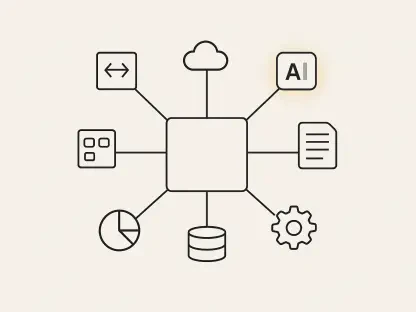
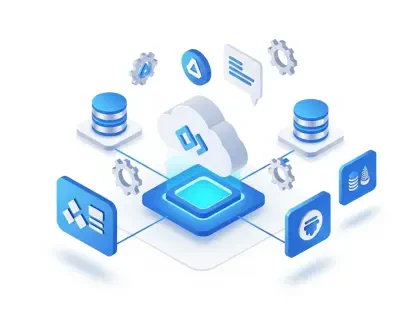
Historically, the Edge was treated as a digital front porch—a simple place to gather data before shipping it elsewhere for analysis. With the integration of Generative AI, however, the Edge has transformed into an active execution surface. This change allows systems to move from after-the-fact reporting to shaping experiences as they unfold in real time. Instead of just recording what happened, these smart nodes can now interpret context and make complex adjustments on the fly, ensuring that the digital interaction evolves alongside the user’s needs.
While traditional machine learning at the Edge could flag errors or score simple data points, GenAI adds a qualitative layer of synthesis. It can compose local troubleshooting explanations for a field technician or generate real-time summaries of complex sensor data, providing nuanced context that a generic cloud model would lack. This capability turns raw data into human-understandable insights instantly. Consequently, architects are now treating signal-to-response speed as the most critical element of the user experience, designing systems where local inference is a non-negotiable requirement rather than a secondary feature.
Insights from the Field: Expert Perspectives on Intelligent Decentralization
The transition toward decentralized machine learning has become an irreversible standard for modern infrastructure, driven by a global economy that operates in milliseconds. Industry observers note that the primary hurdle to success is rarely the AI model itself; rather, it is the “scaffolding”—the event ingestion and synchronization protocols—that determines whether a system thrives or fails. Companies that have successfully reduced journey fractures through Edge intelligence report a direct correlation with increased conversion rates and significantly lowered cloud compute costs. The consensus is clear: the Edge is no longer an experimental add-on but the primary layer for digital execution.
Experts also emphasize that this shift is redefining how we think about data privacy and security. Edge GenAI thrives on immediate environmental data, such as specific device status or local session behavior, which is often highly sensitive. By processing this information locally, companies can provide hyper-personalized outputs while simultaneously reducing the security risks associated with transmitting raw data to the cloud. This “privacy by design” approach satisfies both the technical requirement for speed and the ethical requirement for data protection, creating a more robust and trustworthy digital ecosystem.
Strategies for Deploying an Edge-First GenAI Framework
To capitalize on this shift, organizations must transition from rigid, scripted workflows to adaptive journeys capable of making micro-adjustments. If a user shows signs of frustration or a machine indicates physical fatigue, the Edge GenAI should reshape the process on the fly before a failure occurs. This requires a departure from the “collect everything” mentality, which often leads to high costs and digital noise. Instead, systems should be designed to process data at the source, sending only high-value signals upstream to refine global models or meet compliance needs, ensuring a more disciplined and cost-effective data movement strategy.
Successful deployment also hinges on implementing a model of managed autonomy. This involves establishing central governance and guardrails at the enterprise level while empowering local hardware to execute within those boundaries. To industrialize this framework, companies must move beyond pilot phases and create consistent packaging for their AI models that can survive the messy reality of intermittent connectivity. A robust framework maintains enterprise-wide observability even when individual nodes are operating independently, ensuring that the system remains cohesive regardless of the physical location of the hardware.
In the past, the challenge of digital experience was defined by the limitations of the network and the distance to the server. Organizations focused on optimizing the “middle mile” of data travel, hoping that faster cables would solve the problem of latency. However, as the demand for instant, context-aware interactions grew, the focus shifted toward the Edge as the only viable solution. This move effectively decentralized the core of digital intelligence, allowing for a more resilient and responsive infrastructure. Ultimately, the successful integration of local AI capabilities allowed businesses to transform passive data collection into active, real-time participation in the user journey. Companies that adopted these distributed frameworks found themselves better equipped to handle the complexities of a hyper-connected world, while those stuck in centralized models struggled to keep pace with the increasing speed of modern commerce. Moving forward, the priority will likely center on refining the synchronization between these autonomous nodes and the central cloud to ensure that local intelligence continues to evolve based on global insights.