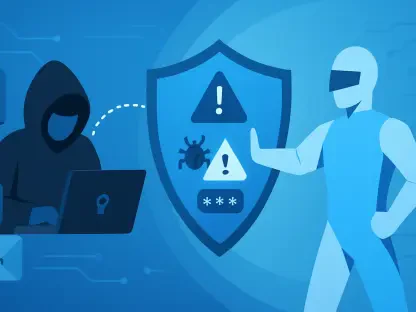

The modern software development lifecycle relies heavily on automated pipelines that bridge the gap between community contributions and production-ready code, yet this very openness often creates a dangerous backdoor for sophisticated cyberattacks. One of the most persistent threats in this ecosystem is the pwn request, a specialized exploit where a malicious actor submits a pull request from a fork to trigger a workflow that inadvertently grants access to internal secrets. For years, developers have struggled to balance the need for automated testing of external code with the necessity of keeping administrative credentials and API tokens out of reach of unauthorized users. GitHub has now stepped in to provide a definitive solution by overhauling the standard checkout utility used by millions of repositories worldwide. This update represents a fundamental change in how the platform perceives trust, ensuring that the burden of security no longer rests solely on the individual maintainer’s ability to write perfect yaml configurations.
Strengthening the Core Defense of Repository Workflows
The architecture of contemporary CI/CD systems often utilizes the pull_request_target event to facilitate tasks like automated labeling, commenting, or running integration tests that require access to the base repository’s environment variables. While this event is essential for maintaining large-scale open-source projects, it creates a significant security gap if the workflow checks out code from a contributor’s fork and executes it with high-level permissions. In such scenarios, an attacker can modify the code in their fork to exfiltrate secrets or even gain administrative access to the repository’s runners. This vulnerability has led to numerous incidents where sensitive data was compromised because a single workflow was configured to trust incoming code too implicitly. By recognizing that any code originating from outside the immediate organization is inherently untrusted, GitHub is moving toward a zero-trust model for pipeline execution that prioritizes the integrity of the host environment over the convenience of integration.
The primary technical mitigation introduced in the latest iteration of the checkout tool involves a mechanism that detects the context of the execution environment relative to the source of the code. Version 7 of the utility is now engineered to identify when a pull request originates from a fork while running in a privileged setting, such as when secrets are available to the runner. If these specific conditions are met, the tool automatically halts the checkout process to prevent untrusted scripts from gaining a foothold in the secure environment. This proactive measure ensures that even if a maintainer forgets to manually sanitize a workflow, the underlying infrastructure provides a safety net that blocks the most common paths for exploitation. This shift from a passive tool to an active security gatekeeper reflects a broader trend in the tech industry where platforms are taking more responsibility for the security outcomes of their users by implementing robust, automated safeguards that are difficult to bypass.
Navigating the Balance Between Safety and Accessibility
Recognizing that some development teams have legitimate reasons for checking out code from forks within privileged workflows, the platform has introduced a specific configuration option to allow this behavior. The new setting, explicitly labeled as allow-unsafe-pr-checkout, requires developers to make a conscious decision to bypass the default security protections. By using the word “unsafe” in the parameter name, the developers are provided with a clear and persistent reminder of the risks associated with this configuration choice. This psychological nudge is intended to discourage the use of the bypass unless it is absolutely necessary for the project’s specific requirements. This approach forces engineering teams to justify their security exceptions and encourages them to explore safer alternatives, such as using separate, low-privilege workflows for initial testing before merging code into a more sensitive environment. It effectively transforms a technical setting into a governance tool.
To ensure that the global developer community remains protected, these security enhancements were not limited only to the newest release but were also strategically backported to older versions of the utility. This decision acknowledges the reality that many organizations are slow to adopt new major versions of their tooling due to concerns about compatibility or the overhead of updating multiple repositories simultaneously. By integrating these protections into previous versions, the platform effectively extends its shield to legacy pipelines that might otherwise remain vulnerable for years. This broad implementation strategy demonstrates a commitment to collective security that transcends simple product updates, aiming instead to raise the baseline level of protection for the entire ecosystem. It ensures that teams operating on older infrastructure are not left behind as the threat landscape continues to evolve, providing a consistent security posture regardless of the specific version of the checkout tool being utilized by a given project.
Addressing the Residual Risks of Custom Environments
Despite the substantial improvements offered by this update, it is critical to understand that these protections are not a universal cure for all pipeline vulnerabilities. The automated safeguards are specifically tied to the official checkout tool, meaning that any workflow utilizing custom shell scripts or raw Git commands to fetch code remains entirely exposed to pwn request attacks. Many advanced users prefer custom implementations to gain finer control over their build environments, but this flexibility often comes at the cost of losing the built-in security logic provided by standard platform utilities. Without the specialized detection mechanisms built into the official action, these custom scripts lack the ability to distinguish between safe internal code and potentially malicious external forks. Consequently, organizations must conduct a thorough audit of their entire CI/CD landscape to identify and replace these bespoke implementations with official tools whenever possible to maintain a secure and reliable development environment.
Another significant hurdle in achieving widespread protection is the common practice of pinning actions to specific commit hashes to ensure build reproducibility and prevent supply chain tampering. While pinning is a recommended security best practice, it ironically creates a situation where important security patches are not automatically applied to the affected workflows. In large-scale enterprise environments where hundreds or even thousands of repositories may be using pinned versions of the checkout utility, the process of manually updating each one can be an incredibly slow and labor-intensive task. This latency between the release of a patch and its actual implementation creates a window of opportunity for attackers to target organizations that have not yet updated their configurations. This highlights the ongoing tension between stability and security in modern software development, suggesting that maintainers must develop more agile processes for rolling out critical updates to their infrastructure without compromising the predictability of their systems.
Establishing New Norms for Supply Chain Integrity
The implementation of these restrictive defaults marks a significant turning point in the industry’s approach to open-source collaboration and supply chain security. Historically, developer tools have favored ease of use and immediate functionality, often leaving it to the user to discover and enable security features. By flipping this dynamic and making the secure option the standard, the platform is actively shaping a more resilient future where security is an integral part of the development process rather than an afterthought. This strategy not only protects individual repositories but also helps to stabilize the broader open-source ecosystem by making it harder for malicious actors to exploit the trust that forms the foundation of community contributions. As other platforms observe the success of this transition, it is likely that we will see a widespread shift toward “secure by default” configurations across the entire technological stack, ultimately reducing the overall success rate of common attack vectors.
As these strategies became the new baseline, organizations observed a dramatic decrease in unauthorized lateral movement within their build environments. They moved toward a model where every external contribution was treated with a high degree of skepticism until verified by automated security gates. This transition required teams to update their internal documentation and retrain developers on the importance of maintaining strict boundary controls between untrusted code and sensitive assets. By successfully implementing these changes, the community effectively closed a long-standing loophole that had previously compromised some of the world’s most critical software projects. This shift solidified the concept of the secure supply chain as a standard practice rather than an optional configuration. Ultimately, the adoption of these rigorous standards ensured that the collaborative nature of open-source development could continue to flourish without being undermined by the persistent threat of credential theft.