
The shift from large language models as simple chat interfaces to autonomous AI agents represents the most significant transformation in enterprise software since the transition to microservices. For years, the industry struggled with the “stochastic parrot” problem, where models could talk about a problem but lacked the structural grounding to solve it. Gemini 3 changes this dynamic by offering a foundational model engineered specifically for long-context reasoning and low-latency decision-making. This technology marks a departure from passive assistance toward active, goal-oriented participation in complex business workflows within the Google Cloud and Vertex AI ecosystem.
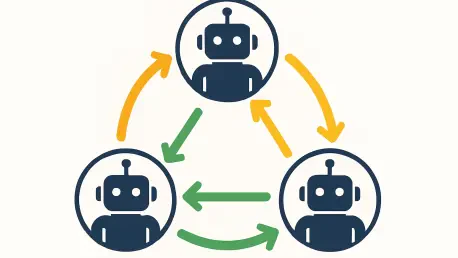
By moving beyond monolithic architectures, this iteration introduces a modular framework where tasks are no longer handled by a single, overwhelmed prompt. Instead, the system thrives on a collaborative multi-agent architecture (MAS) that mirrors human organizational structures. This review analyzes how this shift impacts technical performance, why it outperforms previous iterations like Gemini 1.5, and what challenges remain for developers seeking to deploy truly autonomous agents.
Introduction to Gemini 3 and Agentic Architecture
At the heart of Gemini 3 lies a fundamental transition from a predictive text engine to a reasoning-heavy agentic architecture. Unlike traditional models that follow a linear path from input to output, Gemini 3 operates within a continuous loop of perception, reasoning, action, and observation. This iterative process allows the system to receive a high-level goal, break it down into executable sub-tasks, and adjust its strategy based on the results of those actions. This is not merely an improvement in speed; it is a change in the cognitive logic of the system.
The emergence of this technology signals the end of the “monolithic model” era. In the past, developers attempted to cram every instruction into a single, massive prompt, often resulting in “token bloat” and degraded performance. Gemini 3 thrives in a modular environment where an orchestrator agent delegates specific duties to specialized worker agents. This separation of concerns ensures that each component remains focused on its domain, whether that involves legal document review or real-time market data analysis, thereby increasing the overall reliability of the system.
Core Features and Technical Capabilities
High-Precision Tool Use and Native Function Calling
Precision in tool calling is the primary differentiator between a toy and an enterprise-grade agent. Gemini 3 has refined its ability to generate structured JSON, pushing tool call accuracy beyond the 98% threshold. This is a vital improvement because even a minor syntax error in an API call can break an entire automated sequence. By minimizing these hallucinations, the model ensures that when it attempts to query a database or execute a financial transaction, the interaction is seamless and syntactically perfect.
Moreover, this native function calling capability allows the model to “understand” the external environment better. Instead of just guessing what a tool might do, Gemini 3 uses the descriptions provided in the Python SDK to map user intent directly to technical functions. This reduces the need for complex middleware and allows the agent to act as a direct bridge between natural language instructions and legacy software systems.
Long-Context Reasoning and Native Session State
Managing state has historically been the Achilles’ heel of AI agents, as long-running conversations often lead to “context drift” where the model forgets the original objective. Gemini 3 addresses this with an expanded context window and integrated session state management. Rather than passing the entire history back and forth with every turn—a process that is both slow and expensive—the system can “freeze” the initial context. This native memory management allows agents to retain complex multi-turn histories without the latency typical of external vector database retrievals.
This architectural shift enables a more sophisticated form of reasoning. Because the model can hold more information in its “active memory,” it can synthesize data from disparate sources across an entire session. This is particularly useful in research-heavy tasks where an agent must compare multiple documents, remember a specific constraint mentioned ten minutes ago, and apply it to a final summary without losing the thread of the logic.
Multimodal Processing and Low-Latency Performance
The ability to “see” and “hear” is no longer a peripheral feature; it is central to how Gemini 3 agents interact with the world. Through high-speed stream processing, agents can now analyze UI screenshots or audio logs in real time. This multimodal reasoning allows an agent to troubleshoot a software bug by literally looking at the error message on a user’s screen or to provide support by listening to the tone of a customer’s voice.
Speed is the final piece of the puzzle. Previous iterations often felt sluggish when tasked with complex reasoning, making them unsuitable for live applications. Gemini 3 is optimized for low-latency throughput, ensuring that the time taken for a single reasoning loop is fast enough to support fluid, real-time interactions. This combination of sensory input and processing speed makes the technology viable for autonomous operations that require immediate feedback.
Emerging Trends in Agentic Orchestration
The industry is currently pivoting toward a “Manager-Worker” architectural pattern, moving away from manually prompted task decomposition. In this setup, the “Manager” agent acts as the central brain, utilizing Gemini 3’s high-reasoning threshold to determine which specialized worker is best suited for a specific task. This prevents the worker agents from being overwhelmed with irrelevant context, as they only receive the information necessary to complete their specific portion of the project.
Furthermore, innovations like context caching and information bottleneck strategies are redefining cost management. By identifying and passing only high-signal data between agents, developers can significantly reduce token consumption. This trend toward efficiency is essential for scaling multi-agent systems from small pilot programs to enterprise-wide deployments where the cost of inference must be carefully balanced against the value of the output.
Real-World Applications and Sector Deployment
In the financial sector, Gemini 3 MAS is already transforming how data is processed. These agents can autonomously fetch live stock data, analyze market sentiment from news feeds, and generate comprehensive automated reports in minutes. This is not just a faster version of a human analyst; it is a system capable of monitoring thousands of data points simultaneously without the fatigue or oversight errors common in manual processes.
Customer support and technical documentation retrieval have also seen a massive shift. Agents can now collaborate to solve multi-step problems, such as a “Support Agent” identifying a user’s problem and a “Technical Agent” searching the internal documentation to find a specific code fix. This collaborative approach ensures that the user receives an accurate, verified solution rather than a generic response, fundamentally raising the bar for automated service.
Technical Hurdles and Mitigation Strategies
Despite its advancements, the technology faces the “Infinite Loop” problem, where agents can get stuck repeatedly calling the same tool without making progress. To mitigate this, developers are implementing observer patterns—using a secondary model to monitor the primary agent’s logic for redundancy. This “watcher” can intervene if it detects that the agent is spinning its wheels, ensuring that the system remains efficient and productive.
Another challenge is tool output ambiguity, where unexpected data from an API can cause an agent to hallucinate. The current best practice involves using strict Pydantic model validation to ensure that all tool outputs meet specific criteria before they are fed back into the model’s context. By providing the agent with clear validation errors, it can learn to self-correct its mistakes, turning potential failures into opportunities for iterative improvement.
Future Outlook and Technological Trajectory
The trajectory of Gemini 3 points toward a deeper integration with edge computing and fully autonomous enterprise workflows. We are likely to see agents that do not just suggest actions but execute them across decentralized networks, reducing the reliance on centralized servers. This move toward the edge will further decrease latency and allow for more private, localized AI operations in sensitive industries like healthcare or national security.
As self-correction mechanisms improve, the very nature of software development will change. We are moving toward a world where the traditional microservices model is replaced by agentic software—systems that can rewrite their own logic and optimize their own tools. This evolution will require a new kind of oversight focused on designing agent ecosystems rather than writing static code, shifting the developer’s role from a builder to an architect of intelligence.
Final Assessment and Summary
The evaluation of Gemini 3 Multi-Agent Systems revealed a paradigm shift that moved beyond the limitations of chat-based AI. It successfully bridged the gap between theoretical reasoning and practical execution by prioritizing tool call accuracy and long-context retention. By allowing multiple specialized agents to work in concert, the system demonstrated a level of reliability that was previously unattainable in monolithic models. This modularity not only improved performance but also provided a clearer path for developers to debug and optimize complex workflows.
The transition toward agentic orchestration changed the fundamental approach to problem-solving in the digital space. Instead of relying on rigid, pre-programmed logic, organizations began to favor dynamic ecosystems capable of adapting to real-world variables. While technical hurdles like context overflow and reasoning loops remained, the introduction of native state management and observer patterns offered viable solutions. Ultimately, the maturity of Gemini 3 established a new baseline for enterprise AI, where the value was found in the agent’s ability to act autonomously, accurately, and at scale.