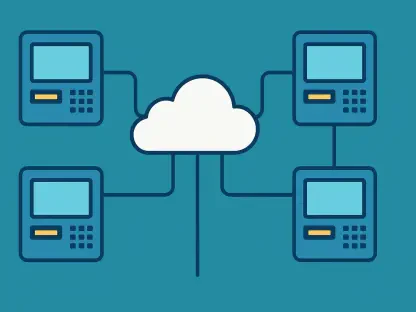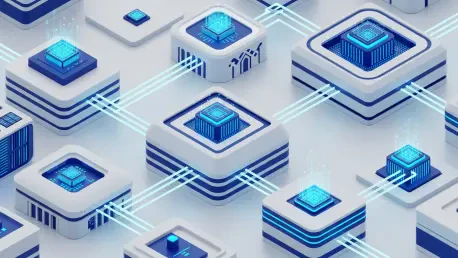

The current landscape of autonomous artificial intelligence resembles a fragmented archipelago where brilliant individual agents remain stranded on isolated islands of proprietary code and incompatible communication standards. Building a complex AI system often feels like assembling a high-performance engine where every part is manufactured to a different measurement standard. An agent built in AutoGen speaks a different language than a LangGraph subgraph, while a CrewAI team remains fundamentally isolated from an OpenAI SDK orchestrator. This lack of a common tongue creates the inter-agent protocol problem, a bottleneck where the only way to make disparate agents collaborate is through brittle, manual glue code. The industry has mastered the art of building individual agent frameworks, yet the search for the universal handshake that allows them to delegate tasks and share context seamlessly continues to define the current era of development.
This technological friction is not merely an academic concern; it is a structural barrier to the next phase of the AI economy. As organizations attempt to scale agentic workflows between 2026 and 2028, the ability for a specialized research agent from one vendor to trigger a specialized financial agent from another becomes a prerequisite for operational efficiency. Without a standardized way to pass messages, track state, and manage errors across boundaries, the dream of a fluid, interconnected agent ecosystem remains out of reach. The following analysis explores why this problem persists and examines the four emerging philosophies that aim to unite these fractured digital workforces.
The Invisible Walls Dividing Today’s AI Frameworks
The modularity that developers expect from traditional software remains elusive in the realm of artificial intelligence agents. In a typical modern enterprise, a single project might utilize three or four different libraries to handle specific niches of autonomy. However, an orchestrator designed within the OpenAI ecosystem cannot natively understand the internal logic of a LangChain-based worker. This isolation forces engineers to spend a disproportionate amount of time writing custom API wrappers and translation layers. Instead of focusing on the core logic of the task at hand, teams are bogged down by the architectural overhead of making two distinct frameworks acknowledge each other’s existence.
These invisible walls are reinforced by the differing philosophies behind framework design. Some frameworks prioritize an event-driven model where agents react to messages on a bus, while others rely on a strictly hierarchical structure where a parent agent controls every action of its children. When these two worlds collide, the data structures used to represent a task or a completion often clash. For instance, a dictionary-based state in one system may not be compatible with the Pydantic models used in another. This lack of interoperability does not just slow down development; it creates a fragile infrastructure where a minor update in one framework can break the entire multi-agent pipeline.
Furthermore, the absence of a shared protocol prevents the emergence of a true marketplace for specialized agents. If a company develops a world-class legal reasoning agent, that agent should ideally be accessible to any orchestrator regardless of the underlying library. Currently, the “vendor lock-in” of a single ecosystem remains the safest path for stability, even if it means sacrificing the best-in-class tools available elsewhere. This fragmentation forces a compromise between using the most effective individual agents and maintaining a cohesive, manageable codebase.
Why Multi-Agent Systems Struggle: The Need for a Shared Language
In a single-agent setup, communication is a straightforward exchange of prompts and responses, but multi-agent systems require a much more sophisticated dialogue to be effective. Agents must handle complex operations like state propagation, where the history of a conversation is passed accurately from one participant to the next. Without a shared language, context is often lost in translation, leading to “hallucinations” or repetitive queries that waste expensive tokens. A worker agent needs to know not just what the current task is, but also what has been attempted previously and what constraints are in place.
Managing long-running tasks adds another layer of difficulty to the communication problem. When an agent is performing a deep research task that takes several minutes, the orchestrator needs real-time updates through streaming partial results. Standard HTTP requests often fail to capture this nuance, leading to a “black box” effect where the parent agent has no visibility into the sub-agent’s progress until the very end. If a protocol does not support asynchronous streaming or heartbeat signals, the system becomes prone to timeouts and cascading failures that are difficult to debug in a production environment.
Moreover, error handling and task cancellation are notoriously difficult to standardize across frameworks. If a sub-agent encounters a rate limit or a logic error, it must communicate the specific nature of that failure back to the orchestrator in a way that allows for an intelligent retry or an alternative path. In the current fragmented landscape, a failure in a sub-agent often results in a generic error message that provides no actionable data for the parent. A robust protocol must go beyond simple message passing to include a comprehensive schema for handling the myriad ways an autonomous system can go off the rails.
Decoding the Four Leading Models: Bridging the Communication Gap
Four distinct philosophies have emerged to bridge the gap between autonomous agents, each offering a different balance of flexibility and ease of use. The Agent Communication Protocol, or ACP, champions an open JSON schema as the foundation for interoperability. By defining a set of standardized endpoints and message formats, ACP allows agents to communicate over HTTP regardless of their underlying code. This approach treats agents as independent microservices, where a deep research agent can be queried by any orchestrator that implements the ACP client. It is a framework-agnostic solution that prioritizes the long-term health of the ecosystem over short-term ease of implementation.
In contrast, the “Handoffs” model popularized by the OpenAI Agents SDK prioritizes ergonomic simplicity within a single, high-performance environment. This philosophy treats delegation as a native state transfer where an agent explicitly passes control to another specialist. While this method is incredibly efficient and easy to program, it remains largely framework-internal. It excels at managing complex dialogues within a controlled ecosystem but does not inherently solve the problem of talking to agents outside of that specific SDK. It represents a “walled garden” approach that offers a refined experience at the cost of broader reach.
Pydantic AI approaches the problem through the lens of type safety and tool-calling patterns. In this model, agent delegation is treated as a function call where a specialist agent is nested inside a tool. This ensures that every exchange of information is validated against a strict schema, reducing the likelihood of data corruption. However, like the handoff model, it is primarily optimized for internal use within its own library. Finally, the Agno project attempts to build a “backbone” adapter that unifies various frameworks under a single orchestration layer. By acting as a multi-framework bridge, Agno seeks to allow agents from LangGraph or DSPy to work together in a unified team, though this ambitious vision is still maturing in terms of full feature parity across all supported libraries.
The High Price: Measuring the Fragmentation Tax
The cost of framework fragmentation is most clearly seen in the “glue code” tax that developers pay when trying to integrate specialized tools from different sources. For instance, a research pipeline using a LangGraph orchestrator and a CrewAI worker currently loses critical features like real-time streaming and structured error handling unless every interaction is manually re-engineered. Developers are often forced to choose between writing hundreds of lines of boilerplate code or accepting a degraded version of the sub-agent’s capabilities. This tax manifests as increased development time, higher maintenance costs, and a significant decrease in system reliability.
A side-by-side comparison of current methods reveals that while native handoffs are mature for internal use, they lack the cross-framework reach of an open schema like ACP. When an organization tries to scale a multi-agent system, the inability to pass context or propagate token usage across different platforms becomes a significant barrier. In a production environment, knowing exactly how many tokens a sub-agent consumed is vital for cost management and billing. Without a protocol that standardizes usage reporting, companies are left guessing about the actual cost of their AI operations, leading to budgeting surprises and inefficient resource allocation.
Furthermore, the lack of a standard protocol makes it nearly impossible to implement universal security and governance policies. If every agent uses a different communication format, an enterprise cannot easily intercept and audit messages to ensure compliance with safety guidelines. A unified protocol would allow for “middleware” that sits between agents, checking for data leaks or biased outputs regardless of which framework generated the message. The fragmentation tax, therefore, is not just a burden on developers but a risk factor for the entire organization as it moves toward more autonomous operations.
Choosing the Right Path: Strategic Decisions for Agentic Architecture
Deciding on a communication strategy depended on whether the priority was immediate stability or long-term flexibility. Decision makers looked toward the specific needs of their architecture to determine if a specialized or a general solution served them better. If a project remained rooted firmly in one ecosystem, such as OpenAI or Pydantic AI, leveraging their native delegation patterns offered the lowest friction and most refined developer experience. These internal protocols provided a level of polish that open standards struggled to match in their early stages, making them the preferred choice for rapid prototyping and narrow deployments.
However, for those building infrastructure intended to survive the inevitable churn of framework popularity, investing in ACP-compatible interfaces provided a future-proof foundation. By implementing standardized servers and clients, engineers ensured that their agents could collaborate with any external tool or framework that emerged later. This forward-looking approach accepted a higher initial complexity in exchange for the ability to swap out components as better models and libraries became available. This strategy proved essential for organizations that viewed their agentic capabilities as a core, long-term asset rather than a temporary experiment.
Ultimately, the industry moved toward a hybrid reality where internal efficiency coexisted with external standards. The most successful teams built their agents with a modular mindset, using native handoffs for tightly coupled internal logic while exposing ACP or Agno-compatible endpoints for cross-team collaboration. This balanced approach mitigated the fragmentation tax while maintaining the high performance of specialized SDKs. As the technology matured through the late 2020s, the focus shifted from merely making agents talk to each other to ensuring that those conversations were secure, cost-effective, and transparent across the entire enterprise stack. Decision makers who prioritized interoperability early on found themselves better positioned to integrate the next generation of autonomous breakthroughs without rebuilding their entire infrastructure from the ground up.