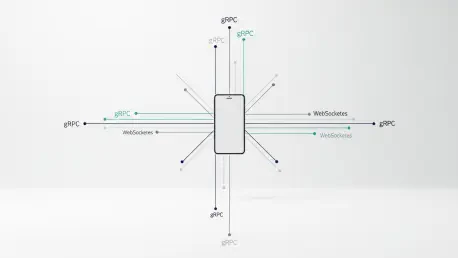

The current landscape of mobile development demands instantaneous data synchronization and robust communication protocols that can withstand the architectural complexities of modern distributed systems. As developers increasingly rely on real-time interactions for everything from financial trading platforms to collaborative workspace tools, the underlying framework must provide first-class support for low-latency networking. Codename One has addressed this necessity by integrating WebSockets, gRPC, and GraphQL directly into its core engine, streamlining the way Java and Kotlin developers build cross-platform applications. This major update eliminates the traditional friction associated with third-party library dependencies and mismatched protocol implementations across different operating systems. By centralizing these technologies, the framework offers a cohesive environment where developers can leverage the efficiency of binary protocols and the flexibility of typed queries without sacrificing the write once, run anywhere philosophy. This strategic move ensures that mobile apps remain performant as backend infrastructures shift toward microservices.
1. Establishing Persistent Links with Integrated WebSockets
The native inclusion of the com.codename1.io.WebSocket class represents a fundamental shift in how developers manage bidirectional communication within the ecosystem. Previously, achieving reliable WebSocket connections across iOS, Android, and JavaScript targets often required a patchwork of external libraries that could lead to versioning conflicts or platform-specific bugs. Now, the framework provides a unified, fluent API designed to handle the entire lifecycle of a connection with minimal boilerplate code. Developers can utilize lambda expressions to define specific behaviors for events such as establishing a link, receiving incoming text or binary data, and handling connection closures or errors. This standardized approach ensures that the networking logic remains consistent regardless of the underlying hardware or operating system. By abstracting the complexities of the handshake process and socket management, the framework allows engineers to focus on the application logic rather than the nuances of network transport layers.
Building a real-time chat interface or a live data dashboard becomes significantly more straightforward with these integrated tools. When a message arrives via the onTextMessage handler, it often triggers a need to update the user interface, which must be handled carefully to avoid thread-related crashes or UI freezes. The framework mandates the use of callSerially to ensure that data updates are safely dispatched to the main UI thread, maintaining a smooth user experience even during high-frequency data bursts. Furthermore, the implementation supports advanced configuration options such as the definition of specific subprotocols. If a backend server requires a handshake specialized for graphql-transport-ws or other custom protocols, developers can specify these parameters during the initial connection phase. Once the link is active, the system allows for verification of the selected subprotocol, providing a layer of validation that is essential for complex enterprise environments where multiple messaging standards might coexist.
2. Streamlining Data Fetching with a Typed GraphQL Client
The introduction of a typed GraphQL client marks a significant advancement in data management by transforming schema definitions into high-level programming interfaces. Through the use of the @GraphQLClient annotation, developers can define their API requirements in a clear, declarative manner that the build-time processor then uses to generate necessary implementation code. This methodology effectively removes the need for manual HTTP plumbing, as the generated client handles the construction of requests and the parsing of responses automatically. By mapping GraphQL operations, including queries and mutations, directly to Java or Kotlin methods, the framework provides compile-time safety that prevents many common runtime errors associated with dynamic data structures. This integration ensures that the client-side representation of the data remains in perfect sync with the server-side schema, facilitating a more predictable development cycle and reducing the time spent debugging data format mismatches or missing fields in large JSON payloads.
Beyond standard data fetching, the framework extends its GraphQL capabilities to support real-time updates through the @Subscription annotation. This feature leverages the core WebSocket implementation to maintain a persistent connection that listens for live events triggered by the server. When a subscription is active, the client receives pushed data automatically, allowing for the dynamic population of UI components such as lists, charts, or notification badges without requiring manual polling. The response objects provided by the generated client are designed to handle both the requested data and any potential errors or partial results, giving developers granular control over how information is presented to the user. This approach not only optimizes battery life and network usage by avoiding unnecessary requests but also provides a more responsive feel to the application. The seamless transition between standard queries and live subscriptions within the same typed interface simplifies the overall architecture of data-intensive mobile applications.
3. High-Performance Communication via Typed gRPC Clients
For applications requiring extreme efficiency and low latency, the framework now provides robust support for proto3 through the cn1:generate-grpc tool. This utility allows developers to take standard .proto files and automatically generate binary protobuf codecs along with the necessary call sites directly within their mobile projects. By utilizing binary serialization instead of text-based formats like JSON, gRPC significantly reduces the payload size and the CPU overhead required for encoding and decoding data. This is particularly beneficial for mobile devices where bandwidth might be limited and processing power must be conserved to extend battery longevity. The system is specifically engineered to use the gRPC-Web binary protocol, which ensures compatibility with modern gRPC servers and popular proxies like Envoy. This compatibility allows developers to integrate mobile clients into existing microservices architectures that rely on gRPC for internal service communication, extending those performance benefits to the end user.
Interacting with the generated gRPC client is designed to be intuitive, enabling developers to perform unary RPC calls as if they were local method calls. The generated classes encapsulate the complexity of the protobuf format, providing a clean API that manages request and response types defined in the original service specification. This tight integration means that changes to the backend service can be quickly propagated to the mobile client by simply updating the .proto file and regenerating the code, ensuring that the contract between the frontend and backend remains strictly enforced. Moreover, the use of gRPC-Web bridges the gap between traditional web-based constraints and the high-performance requirements of modern mobile apps. By leveraging this protocol, Codename One ensures that developers can build highly scalable systems that handle thousands of concurrent connections with minimal latency. The ability to use the same code-generation patterns for both gRPC and GraphQL creates a unified experience for developers.
4. Strengthening Security and Data Mapping Reliability
Reliability and security are paramount in modern mobile development, and the latest framework updates include several key improvements to address these concerns. The built-in JSON and XML mappers have been upgraded to handle enumerations automatically, which significantly reduces the manual work involved in data serialization. Enums are now serialized by their defined names and deserialized using the valueOf method, providing a consistent way to handle both internal logic and external data exchange. This improvement ensures that data integrity is maintained across different platforms and prevents errors that often occur when mapping string constants to internal logic. Furthermore, the framework encourages a proactive approach to troubleshooting by directing developers to report any issues with schema or proto file generation on official channels. This feedback loop is essential for refining the code-generation tools as new specifications and edge cases emerge in the evolving landscape of web services and API design.
In terms of security, the framework emphasizes the critical importance of protecting authentication credentials and sensitive data. Developers are strongly advised to never hard-code authentication tokens or API keys within the source code or resource files, as these can be easily exposed if the application binary is unpacked or reverse-engineered. Instead, the recommended best practice is to fetch tokens at runtime through secure authentication flows and store them using the SecureStorage API. This specialized storage mechanism provides an encrypted layer that is difficult for unauthorized users or malicious software to access, even on compromised devices. By integrating these security considerations into the core workflow, the framework helps developers build applications that not only perform well but also adhere to industry-standard security protocols. Protecting user data through robust encryption and careful credential management remains a cornerstone of the development philosophy, ensuring that the new connectivity features do not introduce vulnerabilities.
5. Future Considerations and Strategic Implementation
The transition toward a core that natively supported WebSockets, GraphQL, and gRPC represented a significant milestone in simplifying the development of data-driven applications. By adopting these standards, the framework enabled a more streamlined workflow where developers spent less time on infrastructure and more on refining the user experience. Moving forward, the focus shifted toward optimizing these connections for emerging network technologies like satellite-linked internet and advanced 5G implementations. Engineers who embraced these typed clients and persistent connections found themselves better equipped to handle the demands of real-time collaboration and high-frequency data streams. The integration of automated enum mapping and secure storage established a foundation for more resilient and secure mobile software. As the industry continued to evolve, the decision to centralize these critical networking components proved to be a vital step in maintaining the agility and performance of cross-platform applications across the globe.
Looking toward future considerations, organizations prioritized the implementation of these protocols to stay competitive in an increasingly connected world. The shift from monolithic backends to distributed services required tools that could handle asynchronous data flows with ease. By leveraging the built-in gRPC and GraphQL capabilities, developers ensured their applications were ready for the next wave of cloud-native enhancements. Continuous monitoring of network performance and the adoption of automated testing for generated clients became essential practices for maintaining high availability. Furthermore, the ability to rapidly adapt to schema changes without extensive manual refactoring provided a significant advantage in agile development environments. As these technologies became standard across all tiers of the stack, the mobile client evolved from a simple data viewer into a powerful, real-time node in a larger digital ecosystem. This progression underscored the importance of frameworks that grew alongside the latest technological advancements.