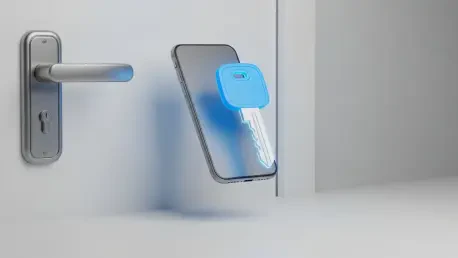

The modern smart home landscape has undergone a radical transformation as manufacturers move away from isolated ecosystems toward a unified framework that prioritizes user convenience and cross-brand compatibility. For years, the lack of a common language between digital locks and mobile devices created a fragmented experience that forced consumers to choose hardware based on their smartphone brand rather than the quality of the security device itself. The arrival of Aliro, a communication standard developed by the Connectivity Standards Alliance, addresses this friction by establishing a universal protocol for digital keys. By drawing on the collective expertise of technology leaders like Apple, Google, Samsung, and Amazon, this standard ensures that digital credentials function seamlessly across different hardware platforms. This move mirrors the earlier success of the Matter protocol but focuses specifically on the high-security requirements of residential and commercial entry systems. The goal is to create a world where a digital key is as reliable and predictable as a physical one, regardless of the software running on the user’s primary mobile device.
Technical Foundations: The Mechanics of Secure Access
The engineering core of the Aliro standard relies heavily on Near Field Communication technology, which provides a high-speed and short-range connection between a lock and a mobile credential. This is the same underlying infrastructure used for contactless payments, ensuring that the interaction is both familiar to users and incredibly fast, usually occurring in a fraction of a second. By utilizing the secure element within modern smartphones, Aliro creates a hardened environment for storing digital keys, making them virtually impossible for unauthorized parties to clone or intercept during a transaction. This level of hardware-level encryption moves the security burden away from the manufacturer’s cloud servers and places it directly into the palm of the user’s hand. Because the communication happens locally between the device and the lock, the system is inherently more resilient against remote hacking attempts, providing a level of privacy and data integrity that was previously difficult to achieve in a diverse marketplace.
Building upon this secure hardware foundation, the standard introduces a critical feature known as power reserve mode, which ensures that digital keys remain functional even when a smartphone battery is depleted. This capability addresses a primary concern for many homeowners who have been hesitant to fully commit to keyless entry due to the fear of being locked out by a dead device. Furthermore, the standard simplifies the complex process of guest management by allowing homeowners to share digital keys directly through native communication apps like text or email without requiring the recipient to download a third-party application. These guest credentials live inside the native digital wallet of the recipient’s phone, where the owner can set specific time windows and expiration dates with granular precision. This approach significantly reduces the administrative overhead associated with managing household services, such as dog walkers or maintenance crews, while maintaining a clear audit trail of who accessed the property and when the entry event occurred.
Hardware Reality: Navigating the Implementation Phase
While the software specifications for Aliro are now finalized, the transition for the average consumer involves a significant physical hurdle related to hardware requirements. Major industry players such as Ultraloq, Schlage, and Aqara have begun rolling out certified devices, but these new features cannot be added to older smart locks through a simple firmware or software update. The Aliro protocol requires specific internal security chips and NFC antennas that were not present in previous generations of smart home hardware. As a result, homeowners who wish to take advantage of this unified ecosystem must be prepared for a total hardware replacement. This physical requirement ensures that every certified device meets the strict security and performance benchmarks set by the Connectivity Standards Alliance, but it also means that the adoption of Aliro will be a gradual process as users replace their aging locks over the next several years. The market is currently seeing the first wave of these devices, signaling the start of a multi-year shift in home security standards.
The current transition phase is best described as a marathon rather than a sprint, as manufacturers work to integrate the new standard into their entire product catalogs. For the industry, the long-term objective is for Aliro to become the baseline expectation for every digital lock found on a retail shelf, effectively removing the technical guesswork for shoppers. When a consumer walks into a store, they should eventually be able to purchase any certified lock with the confidence that it will work perfectly with their current phone and any future device they might buy. This standardization also benefits the manufacturers by allowing them to focus their engineering resources on physical durability and aesthetic design rather than maintaining dozens of different software integrations. This streamlined development cycle should lead to more competitive pricing and higher quality hardware as the industry settles into a more stable and predictable technical environment. The shift towards a common standard represents a maturation of the smart home sector, where utility and reliability take precedence over brand exclusivity.
Strategic Considerations: Evaluating the Upgrade Necessity
Despite the clear technical advantages of the new standard, many security experts suggest that a “wait and see” approach may be the most logical path for those who currently own high-end smart locks. Many existing premium devices already offer a high level of convenience through alternative entry methods like biometric fingerprint scanners or advanced geofencing. For a user who is accustomed to their door unlocking automatically as they walk up the driveway, the manual process of tapping a phone against a lock might actually feel like a step backward in terms of daily convenience. If the current hardware is functioning reliably and the family is already comfortable with the existing entry methods, the immediate benefits of the new standard may not justify the expense of a full replacement. The value of the standard is most evident in its administrative simplicity, particularly for those who frequently manage multiple guests, but for a standard family unit, these benefits might not be felt on a day-to-day basis during normal operation.
The decision to upgrade should also take into account the specific needs of the household and the existing digital ecosystem. If a home is currently split between different mobile operating systems, the cross-platform nature of Aliro becomes a much more compelling reason to make the switch. However, for a household that is deeply committed to a single ecosystem that already supports a proprietary key system, the functional gap between the current setup and a new one is relatively narrow. The consensus among professionals is that the primary value of the new standard lies in its ability to future-proof a home rather than solving an immediate crisis in security or functionality. Therefore, the most practical recommendation for most homeowners is to continue using their current systems until they reach the end of their natural lifespan. When the time eventually comes to replace a failing or outdated lock, the presence of the Aliro certification should be a mandatory requirement for any new purchase to ensure the longest possible period of relevance and utility.
Long-Term Benefits: The Path to Future Proofing
The most significant long-term benefit of adopting a standardized protocol is the total elimination of platform lock-in, which has historically trapped users within a specific brand’s ecosystem. By choosing Aliro-certified hardware, consumers regain the freedom to switch between different mobile platforms or smartwatch brands without losing access to their primary residence. This independence is a major shift for the smart home industry, as it places the control back into the hands of the consumer rather than the software provider. Furthermore, because the standard is maintained by an independent third-party alliance, the core functionality of the lock is not entirely dependent on the survival or update schedule of a single company’s proprietary app. This creates a much more stable environment for home security, as the basic unlock functions are managed through a universal protocol that is designed to last for a decade or more. This stability is crucial for a product category like door locks, where users expect a much longer lifespan than they do for a smartphone or a laptop.
As the industry continues to evolve, the move toward universal utility signals the end of the era where smart home gadgets lived in isolated silos. By treating a digital key with the same universal utility as a traditional physical key, the industry has finally provided a foundational layer of compatibility that was missing for many years. This standardization effort also encourages innovation in other areas, as developers can now build new services on top of a reliable and predictable access control framework. For example, delivery services or short-term rental platforms could eventually use this standard to manage access across thousands of different properties with a single, secure integration. The presence of a universal language for digital keys simplifies the entire landscape for both consumers and service providers, creating a more efficient and secure infrastructure for modern living. While it may take time for the hardware to become ubiquitous, the groundwork has been laid for a future where access is seamless, secure, and entirely independent of the brand on a device.
Moving Forward: Actionable Steps for Implementation
The arrival of a unified digital key standard provided a clear roadmap for the future of home security, yet the decision to transition required a careful evaluation of current household needs and hardware health. For those who were already satisfied with their existing biometric or geofencing systems, the immediate functional gains were often viewed as secondary to the stability of their current setups. However, for users entering the market for the first time or those looking to resolve compatibility issues between different smartphone brands, the new standard became a non-negotiable requirement. The industry successfully demonstrated that by prioritizing interoperability, it was possible to create a more resilient and user-friendly ecosystem that benefited everyone involved. Homeowners were encouraged to check for the official certification mark on any new security hardware to ensure that their investment would remain relevant as mobile technology continued to advance. This move ultimately reduced the complexity of managing a smart home, allowing users to focus on security rather than software compatibility.
The transition toward a universal entry standard proved to be a pivotal moment in the professionalization of the smart home industry, as it set a new benchmark for how digital credentials should be managed. By removing the barriers between competing platforms, the technology allowed for a more flexible approach to home access that could adapt to the changing needs of a modern family. Those who adopted the technology early found that the streamlined guest access and power reserve features provided a significant safety net in their daily lives. In contrast, those who waited for a natural replacement cycle benefited from the maturation of the hardware and the wider availability of certified products at various price points. This development showed that the most effective technological advancements are those that disappear into the background, providing a reliable service without requiring constant attention or specialized apps. The smart home became more accessible to everyone, as the complexity of the underlying systems was replaced by a simple, universal tap that worked every single time.