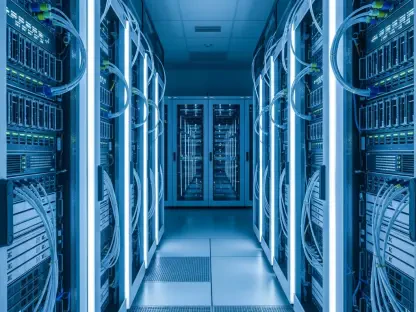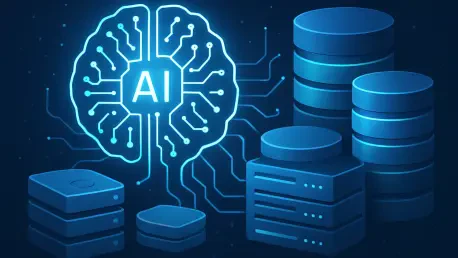

The exponential growth of artificial intelligence and high-performance computing has created an insatiable demand for storage solutions that can keep pace with massive data ingestion requirements. As hyperscale data centers grapple with the physical limitations of their current facilities, the introduction of the Mozaic 4+ platform marks a significant shift toward higher areal density. This technology leverages Heat-Assisted Magnetic Recording to bypass the density ceilings that previously hampered conventional hard drive designs. By integrating advanced nanophotonic lasers and specialized media, Seagate managed to increase the amount of information stored on a single platter, allowing organizations to maximize their existing rack space. This transition is not merely a technical upgrade but a strategic necessity for managing the petabytes of data generated by modern large language models. The platform underwent rigorous qualification with leading cloud service providers to ensure it met the reliability standards required for 24/7 mission-critical operations.
Scaling Capacity: The Impact of Advanced Recording Techniques
Achieving these density breakthroughs required a fundamental redesign of the recording process, shifting from traditional perpendicular recording to a system that utilizes heat to stabilize data bits. The Mozaic 4+ architecture employs a plasmonic transducer that momentarily heats a tiny spot on the disk, making it easier to flip the magnetic orientation of high-coercivity media. This approach allowed engineers to pack bits much tighter than ever before without risking the thermal instability that typically occurs at such microscopic scales. For cloud architects, this meant a substantial reduction in total cost of ownership, as fewer drives were needed to reach the same total capacity thresholds. Beyond raw storage volume, the platform also addressed the critical issue of power consumption per terabyte, which became a top priority for facilities facing strict energy regulations. This mechanical evolution provided a scalable path for infrastructure providers to support the next wave of generative AI applications and complex data analytics.
Financial Dynamics: Navigating the Market and Adoption Cycles
Market observers noticed that while the underlying technology showed immense promise, the financial trajectory for Seagate remained a complex puzzle for many institutional investors. Recent fluctuations in share price suggested a cautious stance from the broader market, yet deep-dive valuation models indicated that the company traded well below its estimated fair value. The capital-intensive nature of transitioning to high-volume manufacturing for HAMR-based products created initial pressure on profit margins, which was a common trend during the rollout of revolutionary hardware cycles. However, the long-term potential of the Mozaic 4+ platform rested on its ability to capture the massive refresh cycles currently underway in global data centers. These facilities prioritized high-capacity drives to handle the training and inference workloads that defined the modern digital economy. Analysts closely monitored the company’s debt levels and production yields to determine if the technical success of the platform could translate into sustainable dividends.
Strategic Implementation: Future-Proofing Modern Infrastructure
Enterprise leaders recognized that the arrival of the Mozaic 4+ platform served as a catalyst for rethinking long-term infrastructure roadmaps. Organizations that successfully integrated these high-density drives gained a competitive edge by reducing their physical data center footprint while simultaneously increasing their computational throughput. To capitalize on these advancements, IT departments evaluated their procurement strategies to prioritize drives that balanced high capacity with energy efficiency. Management teams also prioritized the modernization of legacy storage arrays to mitigate the risks associated with aging hardware that could not support AI-driven data demands. These strategic decisions ensured that businesses remained agile enough to pivot as new data-intensive technologies emerged in the market. The industry moved toward a model where hardware efficiency became just as important as software optimization. By focusing on total lifecycle management and sustainable scaling, decision-makers ensured their storage architectures remained robust.