
In the rapidly evolving landscape of cloud infrastructure, the traditional wall between engineering performance and financial accountability is finally beginning to crumble. Vijay Raina, a seasoned specialist in enterprise SaaS technology and software architecture, has spent years navigating the intersection of system reliability and fiscal efficiency. As organizations scale, they often find that technical success—shipping features fast and maintaining low latency—can lead to a “learned helplessness” when the monthly cloud bill arrives with unexpected, astronomical spikes. Raina advocates for a paradigm shift called Runtime FinOps, which treats cloud spend not as a static line item for accountants, but as a live system metric that belongs in the hands of the developers writing the code.
This discussion explores the mechanical and cultural maneuvers required to collapse the multi-week feedback loop between a deployment and its cost impact. We delve into the technicalities of real-time cost observability, the inherent friction of tagging governance, and the evolution of CI/CD pipelines to include predictive cost modeling. Raina also provides a blueprint for an SRE-inflected cost culture, where spend anomalies are treated with the same urgency as service outages, and blameless postmortems help teams internalize the financial weight of their architectural decisions.
Engineering teams often see a multi-week lag between a code deployment and its impact on the cloud bill. How can organizations bridge this gap by integrating dollars-per-minute metrics into real-time Grafana dashboards, and what specific technical hurdles arise when mapping these costs alongside traditional latency charts?
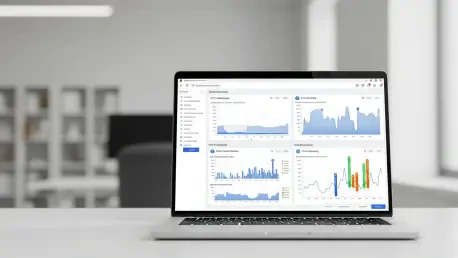
The most painful part of modern cloud management is that “screenshot of a jagged red arrow” sent from finance three weeks after a developer has already moved on to their next three features. To bridge this gap, we have to treat cost like any other telemetry signal—scraping data points with the same frequency we use for CPU or memory utilization. By emitting cost-per-request or dollars-per-minute metrics directly into a time-series store like Prometheus, we can visualize spend on a Grafana panel right next to our p99 latency and throughput charts. The real technical hurdle is that billing data from providers like AWS typically has a 24-to-48-hour lag, which is far too slow for an operational response. We solve this by using tools like Kubecost or CloudZero to provide “directionally accurate” real-time approximations based on resource consumption. While these models might struggle with precisely decomposing shared infrastructure or node-level overhead, having a live graph with vertical lines marking every Git SHA deployment allows an engineer to see the immediate correlation between a code change and a flex in the cost curve.
Tagging compliance often plateaus at low percentages because of manual errors and untaggable resources like data transfer or RDS overhead. How do you design a governance strategy that moves beyond human memory, and how should teams effectively categorize and manage the inevitable “unattributed” bucket of spend?
Relying on an engineer’s memory to apply tags during a late-night console session is a recipe for a 40% compliance rate and a fractured budget. A robust strategy shifts the responsibility from the human to the pipeline by enforcing tagging at the workload level via CI/CD gates and Open Policy Agent (OPA) policies for Terraform. If a resource isn’t tagged with a service ID, team owner, and environment, the deployment simply fails before it ever touches production. However, we have to be honest about the fact that things like data transfer costs and RDS instance overhead don’t always decompose cleanly to a specific microservice. Instead of chasing a 100% attribution unicorn, I advise teams to accept a residual “unattributed” bucket and treat it as a technical debt metric to be managed down over time. You use the 70% of data you can see to drive high-impact decisions, while performing less glamorous, manual audits on the legacy tail to ensure that the “unknown” spend doesn’t mask a massive architectural leak.
Static analysis tools can estimate infrastructure changes, but they often miss operational costs like storage I/O and egress that scale with traffic. What is the step-by-step process for building a predictive cost model that combines deployment annotations with historical traffic patterns to forecast actual production spend?
Static analysis tools like Infracost are a fantastic first step because they teach engineers the “sticker price” of an RDS instance or a NAT gateway directly within their pull request comments. But the real danger lies in the operational costs—the egress fees and API calls—that only manifest once real users hit the service. To build a truly predictive model, you first need to correlate your historical deployment annotations with the subsequent shifts in traffic-driven spend from your billing data. By pulling the last 30 days of traffic patterns and running them through the AWS Cost Explorer Forecast API, you can project how a new resource configuration will behave under your current load. The goal is to move from a static estimate to a dynamic projection: “Given our current 50,000 requests per second, this change to the DynamoDB schema will likely increase our monthly spend by $1,200 due to increased read units.” This requires building custom plumbing that sits between your CI/CD metrics and your cloud provider’s billing API, but it’s the only way to avoid the “cost-neutral” PR that actually doubles your CloudFront egress.
Routing cost anomalies to finance departments instead of engineering rotations often results in ignored alerts. If a service team treats a cost budget like an SRE error budget, how should they structure their on-call escalation and what specific metrics should trigger a high-severity response?
The reason most cost alerts are ignored is that they land in the inbox of a VP of Finance who doesn’t have the permissions or the technical context to fix a runaway Lambda function. We need to route these notifications into the same PagerDuty or Slack rotations that handle operational incidents, because a cost spike is a system anomaly, period. A team should establish a monthly cost envelope and track their “burn rate” just as they track an error budget; if the trajectory shows the budget will be exhausted in 15 days instead of 30, that triggers a warning. A high-severity, page-the-on-call response should be reserved for “dollar-rate” anomalies—for instance, if the spend-per-minute doubles within a ten-minute window without a corresponding spike in legitimate traffic. By using AWS Cost Anomaly Detection and routing it to the specific service owner identified in the resource tags, you ensure the person who can actually roll back the deployment is the one getting the alert.
Most autoscaling policies rely on CPU or queue depth but ignore “dollar-rate” signals, allowing expensive but low-volume requests to go unchecked. How can developers implement cost-based circuit breaking or rate limiting, and what are the architectural trade-offs of using spend as a primary flow control signal?
Traditional autoscalers are blind to the “expensive request” problem, where a pathological client triggers a chain of ML inference or heavy S3 reads that melt the budget while barely moving the needle on CPU utilization. To counter this, developers can implement cost-based circuit breaking by monitoring the “dollars-per-minute” signal in Prometheus and triggering a graceful degradation if the rate crosses a safety threshold. This might mean temporarily serving a cached response or rate-limiting a specific API key that is causing a disproportionate spend spike. The primary architectural trade-off is that using cost as a flow control signal introduces a dependency on your cost-tracking infrastructure, which might not be as resilient as your core data path. You also risk a “false positive” shutdown where a legitimate, high-value surge in business activity is misinterpreted as a cost leak, so these limits must be carefully calibrated and easily overridable by a human operator.
Accountability for cloud spend is frequently fractured between finance, platform, and engineering teams. What does a blameless postmortem for a cost incident look like in practice, and how can leadership effectively shift the ownership of cost service-level objectives (SLOs) down to the individual microservice level?
A blameless postmortem for a cost incident should feel identical to one for a site outage, focusing on the timeline of events and the systemic contributing factors rather than finding a “guilty” engineer to reprimand. You start by identifying exactly which code or configuration change correlated with the spike, asking whether it was an emergent behavior of the system under load or a simple logic error like an O(n²) database query. Leadership facilitates this by moving away from centralized “cloud police” and instead embedding cost SLOs directly into the service catalog, where each team reviews their spend metrics during weekly ops meetings. When a team owns their budget and understands that burning it early means they may have to defer new infrastructure for the rest of the month, they naturally start writing more cost-efficient code. It’s about changing the default from “it’s just money, someone else handles it” to “this is a system constraint I need to optimize for,” turning fiscal responsibility into a point of engineering pride.
What is your forecast for Runtime FinOps?
I believe we are entering an era where cloud cost will become as “shift-left” as security and testing, moving from a monthly accounting exercise to a core component of the developer’s inner loop. Within the next few years, we will see IDE plugins that highlight expensive code blocks in real-time and automated canary deployments that auto-rollback not just for high error rates, but for exceeding a defined cost-per-transaction threshold. The “learned helplessness” of the billing cycle will disappear as the boundary between the cloud provider’s ledger and the SRE’s dashboard vanishes entirely. Ultimately, the companies that thrive will be those that treat every dollar spent on a cloud resource as a unit of system performance, making cost efficiency an inseparable part of high-quality software architecture.