
Relying on a one-machine-per-tester model causes significant delays in the deployment of critical biometric authentication and cash-recycling capabilities. In the current landscape of 2026, the automated teller machine has defied early predictions of its demise, evolving instead into a sophisticated multi-functional hub that bridges the gap between physical currency and digital finance. Modern terminals are no longer simple cash dispensers; they are intricate computing environments that require constant updates to defend against cyber threats and provide seamless user experiences. However, the legacy approach to quality assurance, which necessitates a physical presence and manual interaction for every software tweak, has become an unsustainable bottleneck for financial institutions. As banks strive to keep pace with the agility of fintech startups, the traditional lab-based testing model is proving to be a costly relic. This tension between hardware dependency and the need for rapid software deployment has pushed virtualization to the forefront of the industry’s digital transformation strategy.
Maximizing Efficiency Through Automation
Streamlining Routine Testing: Resource Allocation
A significant finding in contemporary ATM fleet management is the observation of the “20/80” rule, where approximately twenty percent of standard transaction types—such as basic withdrawals and balance inquiries—account for eighty percent of the overall testing workload. In a purely manual testing environment, quality assurance teams are forced to spend the vast majority of their valuable time repeating these mundane steps, which leaves little room for exploring edge cases or vetting complex new features. By shifting toward virtualization, financial organizations can implement automated regression testing that allows these routine procedures to run independently of human supervision. This transition is not merely about speed; it is about ensuring that the foundational elements of the banking experience remain stable while the system evolves. By utilizing data-driven scripting, banks can ensure that every standard path is verified with mathematical precision before a single human tester ever touches the code.
The redistribution of human capital is perhaps the most profound effect of this automated shift within the banking sector. When the heavy lifting of repetitive validation is offloaded to a virtualized engine, high-value engineers and developers are finally freed from the exhausting drudgery of manual button-pressing and card-swiping. This allows internal teams to pivot their focus toward high-level innovation, such as integrating advanced contactless protocols or refining the logic of cash-recycling modules that reduce operational costs for the bank. By compressing development timelines from several weeks to just a few hours, virtualization enables a state of continuous delivery that was previously unthinkable in the hardware-centric world of ATM operations. The resulting boost in productivity ensures that institutions can respond to market shifts or security vulnerabilities in real-time, maintaining a competitive edge that is essential in the fast-moving financial sector of 2026.
Continuous Integration: Achieving Faster Delivery
Modern software development relies heavily on continuous integration and continuous delivery (CI/CD) pipelines, a concept that was historically difficult to apply to physical hardware like ATMs. Virtualization bridges this gap by allowing software builds to be automatically deployed and tested in a simulated environment the moment a developer commits new code. These “overnight” testing cycles mean that by the time the staff returns to the office the following morning, a full suite of regression tests has already been completed, with detailed logs highlighting any regressions or bugs. This level of responsiveness ensures that defects are identified and remediated at the earliest possible stage of the lifecycle, where they are significantly cheaper and easier to fix. Instead of waiting for a scheduled lab window, teams can now validate their work in a perpetual loop, ensuring that the software remains in a deployable state at all times, regardless of the complexity of the update.
The acceleration provided by these virtualized pipelines directly translates into a faster time-to-market for consumer-facing features. In a landscape where customer loyalty is often tied to the convenience of banking services, the ability to roll out a new biometric login or a localized language pack ahead of competitors is a major strategic advantage. By removing the physical machine as a gatekeeper, banks are able to run hundreds of tests in parallel across diverse hardware profiles and software versions simultaneously. This massive scaling capability allows for a comprehensive validation of the entire fleet’s configuration, ensuring that a patch meant for a high-end terminal in a city center will also function perfectly on an older model in a remote rural location. The result is a unified, high-quality user experience across all touchpoints, achieved without the massive overhead and logistical complexity traditionally associated with large-scale retail banking hardware deployments.
Breaking Physical and Geographical Barriers
Decentralized Testing: Global Access
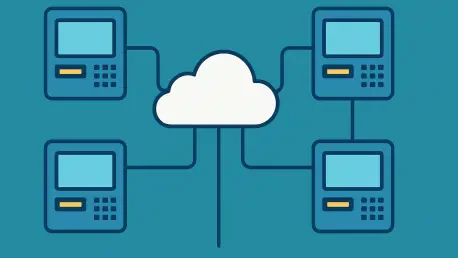
Historically, the process of ATM testing was a “one machine, one tester” endeavor that forced developers to be physically present in a specialized laboratory to interact with the hardware. This centralized model created significant logistical friction, as testers had to wait for their allotted time on a specific machine, and any hardware failure could bring an entire project to a grinding halt. Virtualization effectively dismantles these physical constraints by creating digital copies of the entire ATM software stack, often referred to as a VirtualATM. These digital environments can be hosted on centralized local servers or within the cloud, providing a distributed workforce with twenty-four-seven access from any location on the globe. This shift not only eliminates the need for expensive lab space and the associated utilities but also removes the geographical barriers that once limited the recruitment of talent, allowing banks to tap into a global pool of specialized engineering expertise.
The decentralization of the testing environment also leads to a more resilient and flexible operational framework. When testing is no longer tied to a physical location, the risks associated with local infrastructure failures or site access restrictions are significantly mitigated. Furthermore, the ability to access a VirtualATM from a standard workstation means that support and development teams can collaborate more effectively across different time zones. A bug discovered by a tester in Europe can be replicated and fixed by a developer in North America within minutes, using the exact same virtual environment. This level of interconnectivity fosters a more cohesive and agile development culture, where information and solutions flow freely without the delays of shipping hardware or scheduling on-site visits. By modernizing the infrastructure of the testing process, financial institutions are essentially future-proofing their operations against the unpredictability of the physical world.
Virtual Sandboxes: Individual Developer Empowerment
A cornerstone of the virtualized approach is the ability to provide every developer and quality assurance professional with their own private virtual “sandbox.” In traditional settings, sharing a physical ATM meant that one person’s configuration changes could inadvertently disrupt the work of others, leading to frustration and lost productivity. With virtualization, a fresh, clean instance of the ATM environment can be cloned or reset in a matter of seconds, allowing individuals to experiment and test without fear of impacting the broader team. This level of isolation is critical for deep-dive debugging, where a developer may need to restart the system dozens of times or manipulate specific memory states to find the root cause of a persistent issue. The sandbox environment ensures that every test begins from a known, stable baseline, which drastically increases the reliability of the results and reduces the likelihood of “false positives” that can occur in cluttered physical labs.
Beyond the technical advantages, the provision of modern virtualized tools is a powerful factor in attracting and retaining top-tier engineering talent. Modern developers, particularly those accustomed to cloud-native workflows, are often reluctant to work in environments that rely on antiquated, hardware-bound processes. By offering a streamlined, digital-first testing experience, banks demonstrate a commitment to technological excellence and professional efficiency. This transition helps to bridge the cultural gap between traditional banking and the tech-forward mindset of today’s leading software engineers. When developers are empowered with the tools to work autonomously and see the immediate impact of their code through a virtual interface, their job satisfaction and output both improve. This investment in the developer experience ultimately pays dividends in the form of higher-quality software and a more motivated workforce capable of steering the bank through the complexities of 2026.
Improving Accuracy and Reducing Risk
Protocol Simulation: Technical Validation
Manual testing is inherently susceptible to human error, particularly during long shifts where the repetitive nature of the work leads to cognitive fatigue. A tester might miss a slight flicker on a screen or a minor delay in a receipt printer’s response, allowing a subtle but critical defect to migrate into the production environment. Virtualization mitigates these risks by simulating ATM behavior at the message and protocol level, utilizing sophisticated tools like Optical Character Recognition (OCR) and pixel-by-pixel screen comparisons. These systems do not get tired; they compare the actual output against an expected “gold standard” with absolute consistency. By verifying that every element of the user interface—from the font size of the balance display to the positioning of the “cancel” button—meets specific requirements, virtualization ensures a level of visual and functional accuracy that far exceeds the capabilities of even the most diligent manual testing professional.
Furthermore, virtualized environments allow for deep-dive technical validation that goes far beneath the surface of the user interface. This includes the rigorous checking of EMV chip processing, card data encryption, and XFS message tracing between the application and the simulated peripheral devices. Because the testing occurs at the protocol level, engineers can verify that the data being sent to the banking host is formatted exactly as required, ensuring seamless interoperability with backend systems. This precise simulation of the entire communication chain allows banks to catch logic errors or security vulnerabilities that might only manifest under specific transaction conditions. By ensuring that what is tested in the virtual environment is a perfect mirror of what will happen in the field, financial institutions can deploy updates with a much higher degree of confidence, knowing that the risk of failed customer transactions or high-profile system outages has been minimized.
Negative Testing: Risk Mitigation
One of the most valuable aspects of a virtualized testing suite is the ability to conduct “negative testing” without any risk to physical assets. In a real-world setting, intentionally triggering hardware faults—such as simulating a jammed card reader, a faulty cash dispenser, or a network timeout mid-transaction—can lead to expensive mechanical damage or require a service technician to manually reset the machine. In a virtual environment, these faults can be injected through software scripts to see exactly how the application handles the error. This allows developers to ensure that the system fails gracefully, providing clear instructions to the customer and properly logging the incident for the bank’s maintenance teams. Being able to test these “disaster” scenarios repeatedly and safely ensures that the ATM remains resilient in the face of hardware wear and tear, providing a more reliable service for the end-user regardless of the physical condition of the unit.
This rigorous approach to fault injection and error handling has led to a documented fifty percent reduction in the rate of defects that escape into the live production environment. By simulating the myriad of things that can go wrong in a public-facing self-service terminal, banks can harden their software against both accidental malfunctions and intentional tampering. Virtualization also allows for the testing of “corner cases”—rare combinations of events that might only occur once in every million transactions—which are nearly impossible to replicate manually on physical hardware. The ability to simulate these high-stress conditions ensures that the ATM remains a stable and trustworthy touchpoint for the customer, even when the underlying hardware or network is under duress. Ultimately, the transition to virtualization creates a safer environment for innovation, where new features can be pushed to their limits before they are ever introduced to the public.
Sustaining Growth and Economic Viability
Long-Term ROI: Script Reusability
While the transition to a virtualized ATM testing platform necessitates an initial investment in software and training, the long-term economic benefits are substantial and tend to compound as the system matures. The primary driver of this return on investment is the inherent reusability of automated testing scripts. Unlike manual testing, where the cost remains constant for every repetition, a virtualized test script can be executed thousands of times at virtually no additional cost. Every time a new security patch is released or a minor configuration change is made, the entire library of existing tests can be run to ensure no new bugs have been introduced. This creates a powerful “force multiplier” effect, where the value of the initial development work increases with every subsequent software release. Over time, the cost per test transaction drops precipitously, allowing the bank to maintain a much higher frequency of updates without a corresponding increase in the quality assurance budget.
Beyond the direct savings in labor, virtualization removes the significant “capital drain” associated with maintaining a massive fleet of physical test machines. The expenses related to purchasing hardware, paying for high-security lab space, and covering the electricity and cooling costs for dozens of idling ATMs can be enormous. By centralizing these functions within a virtualized server environment, banks can drastically reduce their physical footprint and operational overhead. These saved funds can then be redirected toward more strategic initiatives, such as the development of next-generation financial products or the expansion into new digital banking markets. The move toward a more efficient, software-based infrastructure also simplifies the management of global fleets that may contain multiple hardware brands and generations. Instead of needing a physical example of every machine in use, a single virtualized platform can simulate the entire variety of the bank’s international assets from a single interface.
Software-Defined Banking: Future Readiness
The banking industry moved toward a “software-defined ATM” model, where the physical shell of the machine became secondary to the complex digital processes it facilitated. This strategic transition ensured that financial institutions were no longer held back by the limitations of physical hardware logistics. By adopting virtualization, banks established a scalable foundation that allowed them to meet network mandates and security patches with unprecedented speed. The ability to validate every transaction—whether it involved a traditional card swipe, a biometric scan, or a contactless tap—was perfected through rigorous protocol-level simulation. Organizations that prioritized this shift found themselves better equipped to handle the rapid pace of technological change, maintaining high levels of consumer trust through a consistent and reliable self-service experience. Virtualization provided the necessary agility to transform the ATM from a simple utility into a sophisticated, high-performance gateway for modern banking services.
The evolution of ATM testing through virtualization represented a fundamental shift in how financial institutions approached quality and security in the self-service channel. Banks that successfully implemented these virtualized workflows saw immediate improvements in their deployment cycles and a dramatic decrease in production-level defects. To continue this momentum, organizations were encouraged to integrate their virtual testing platforms more deeply with cloud-based management tools, further enhancing the accessibility and scalability of their operations. The focus shifted toward creating even more realistic simulations of user behavior and environmental factors, ensuring that the software remained resilient under all possible conditions. As the industry looked toward the future, the lessons learned from virtualization became the blueprint for managing all physical-digital touchpoints. This proactive approach ensured that the ATM remained a vital and secure component of the global financial infrastructure, ready to meet the evolving needs of the modern consumer.