
The primary bottleneck in disaster recovery has shifted from raw storage capacity to the human decision-making process required to identify the start of an infection. In the current cybersecurity landscape of 2026, the mere possession of a data backup is no longer a guarantee of organizational survival; instead, the focus has pivoted toward the precision and velocity of the restoration event. Every modern enterprise now operates under the assumption that a breach is inevitable, shifting the tactical priority from preventative barriers to the mechanics of the “worst Tuesday”—that specific moment when encryption is detected and the countdown to bankruptcy or recovery begins. The market no longer values static snapshots that reside on the same network as the production environment, as these are often the first targets for modern ransomware strains. Instead, the industry demands a sophisticated interplay between immutable storage, automated forensics, and isolated environments. This evolution reflects a growing understanding that data is a liability if it cannot be verified as clean, making the ability to distinguish between corrupted and pristine recovery points the most valuable asset in an IT administrator’s arsenal.
Identifying Industry Standards and Emerging Hazards
Foundational Shifts: The Death of Traditional Backup
The concept of immutability has undergone a radical transformation in 2026, moving from a simple “read-only” attribute to a comprehensive credential-proof architecture. Previously, an attacker who gained administrative control over a network could often locate and purge backup repositories, effectively blinding the organization before launching the final encryption payload. Today, the industry standard mandates that backup data must be stored in a manner that is architecturally unreachable by standard global administrative accounts. This is achieved through multi-party authorization protocols and hardware-level locks that require physical or out-of-band verification for any deletion request. Consequently, the conversation has moved away from how much data can be stored to how securely that data can be isolated from the very systems it is designed to protect. If a backup can be deleted by a human being using a keyboard, it is no longer considered a valid recovery tool in the current threat environment.
Furthermore, the methodology of restoration has shifted from a “production-first” approach to a “cleanroom-first” strategy. In the past, IT teams would attempt to restore data directly back to their primary servers as quickly as possible to minimize downtime. However, 2026 threats often include dormant “sleeper” malware that remains inactive until a restoration is attempted, leading to a devastating cycle of re-infection. To combat this, modern recovery frameworks utilize isolated staging environments—frequently referred to as cleanrooms—where data is fully hydrated and scanned by multiple forensic engines before it ever touches the production network. This transition recognizes that a slow, successful recovery is infinitely more valuable than a fast, failed one. Organizations now prioritize the integrity of the environment over the raw speed of the transfer, ensuring that the infrastructure they are rebuilding is not a ticking time bomb for a secondary attack.
New Blind Spots: SaaS and Identity Vulnerabilities
As the enterprise footprint has expanded across various cloud ecosystems, the protection of Software-as-a-Service (SaaS) applications has become a primary concern for cybersecurity leaders. Critical tools such as Salesforce, Jira, and various identity providers are no longer peripheral; they are the central nervous system of modern business operations. Despite this, many organizations still mistakenly believe that the SaaS provider is responsible for data recovery. In reality, the “shared responsibility model” remains firmly in place, and the blast radius of a ransomware attack often encompasses these cloud-based configurations. If an attacker compromises an identity provider like Okta, the entire application stack can be rendered inaccessible, even if the underlying data remains unencrypted. This has led to a surge in demand for solutions that can back up not just the data, but the metadata and configurations of the cloud environment itself, ensuring that the business logic can be restored alongside the raw records.
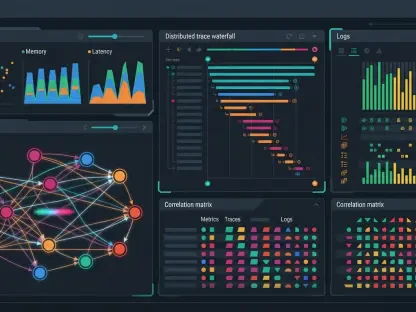
Simultaneously, the integration of advanced analytics has become the only way to solve the “needle in a haystack” problem of infection timing. When an enterprise manages petabytes of data across thousands of virtual machines, manually identifying the exact moment a ransomware variant began its work is an impossible task for human operators. The 2026 market has responded with intelligence-driven platforms that use machine learning to monitor entropy changes and file-system metadata in real-time. These tools provide a clear visual timeline of the infection, allowing administrators to skip over corrupted snapshots and identify the last known good state with surgical precision. By automating this forensic layer, companies can reduce the decision-making window from days to minutes. This shift toward automated “clean-point” identification represents the most significant advance in recovery technology this year, as it directly addresses the human cognitive load that typically paralyzes organizations during a high-pressure security event.
Strategic Analysis of Market-Leading Recovery Platforms
Intelligence-Led Platforms: Mapping the Blast Radius
Rubrik and Cohesity have emerged as the dominant forces in the intelligence-led recovery tier, specifically targeting the complexities of large-scale enterprise environments. Rubrik has set a high bar by integrating Data Security Posture Management (DSPM) directly into its recovery workflow, which allows teams to understand not just what was encrypted, but the sensitivity of the data that might have been exfiltrated. This “blast radius” analysis is vital in 2026, as ransomware is now almost always accompanied by data theft and extortion. By providing a heat map of affected sensitive data, Rubrik enables organizations to prioritize their recovery efforts based on legal and regulatory risk rather than just server names. This intelligence-centric approach ensures that the most critical business functions are restored first, while also providing the forensic evidence needed for mandatory breach disclosures and insurance claims.
Cohesity, particularly following its strategic integration with legacy enterprise assets, has focused on turning the backup repository into a proactive threat-hunting ground. Instead of leaving data to sit idle, the platform constantly crawls through snapshots to identify anomalies that correlate with known attacker behaviors. This creates a feedback loop between the security operations center (SOC) and the backup team, where the backup system serves as a secondary detection layer for threats that might have bypassed primary perimeter defenses. For organizations managing massive, heterogeneous estates, this level of correlation is essential for root-cause investigation. It allows for a unified view of the environment that bridges the gap between infrastructure management and cybersecurity, ensuring that the recovery process is informed by the most recent threat intelligence available within the enterprise ecosystem.
Integrity and Speed: Vaults and Rapid Restoration
When the focus shifts to the physical requirements of data movement and the absolute assurance of data integrity, Commvault and Dell provide the most rigorous architectures. Commvault has successfully productized the “Cleanroom” concept, offering an automated, on-demand environment where recovery can be rehearsed and executed in total isolation. Their inclusion of deception sensors—designed to bait attackers into revealing their presence during the recovery process—adds a layer of active defense that is unique in the market. This approach is specifically tailored for industries like finance and healthcare, where the regulatory consequences of a failed or compromised recovery are catastrophic. By providing a pre-configured, “known-good” space for restoration, Commvault removes the guesswork from the equation, allowing IT teams to execute their recovery playbooks with a high degree of confidence.
Dell and Pure Storage address the hardware-level challenges of massive data restoration, albeit from different angles. Dell’s PowerProtect Cyber Recovery utilizes a “Sealed Vault” pattern, which creates a physical or logical air-gap that is physically disconnected from the network except during synchronized replication windows. This design is the preferred choice for organizations that must demonstrate compliance with the most stringent national security or financial regulations. On the other hand, Pure Storage focuses on the “physics” of speed. In a scenario where an enterprise needs to restore several hundred terabytes, the network and storage throughput become the primary limiters. Pure’s SafeMode snapshots and high-performance flash arrays allow for near-instantaneous hydration of data, ensuring that the restoration of massive volumes does not dictate a week-long downtime. This capability is critical for tier-1 applications where every hour of unavailability results in millions of dollars in lost revenue.
Specialized Solutions for Cloud and Infrastructure Hardening
Cloud-Native Isolation: Protecting the Edge and SaaS
Druva and HYCU have carved out a specialized niche by focusing on the inherent risks of cloud sprawl and the vulnerability of distributed workforces. Druva’s architecture is particularly notable because it operates as a completely separate management plane from the customer’s own cloud or on-premises environment. This means that even if an attacker manages to obtain “God-mode” credentials for an organization’s primary cloud subscription or local domain, they still cannot access or delete the backup data held within Druva’s sovereign cloud. This logical separation provides an inherent air-gap that is managed as a service, significantly reducing the administrative burden on the internal IT staff. In 2026, where identity-based attacks are the most common entry point for ransomware, having a recovery infrastructure that does not share a common identity boundary with the production network is a massive strategic advantage.
HYCU addresses the often-overlooked “forgotten” estate, which includes the hundreds of SaaS applications that modern employees use daily. Their R-Cloud catalog is designed to protect not just the contents of these applications, but the complex interdependencies and configurations that make them functional. For instance, restoring the data in a project management tool is useless if the user permissions and workflow integrations are lost. HYCU ensures that these configurations are backed up with the same rigor as a primary database. This level of granularity is essential for maintaining business continuity in a decentralized environment where a single compromised SaaS account could theoretically stall an entire department’s operations. By focusing on the application layer rather than just the storage layer, HYCU provides a pathway to recovery that accounts for the reality of modern, cloud-first business processes.
Orchestration and Verification: Standards for Modern Resilience
Veeam and Object First have formed a powerful partnership that has become the standard for mid-to-large enterprises seeking a disciplined, rehearsed recovery posture. Veeam’s strength lies in its “Recovery Orchestrator,” which allows organizations to automate the testing of their disaster recovery plans. In 2026, a plan that has not been tested in the last ninety days is generally considered invalid. Veeam’s “SureBackup” technology automatically boots virtual machines in an isolated environment to verify that the OS, applications, and data are all functioning correctly. This proactive verification means that when a real crisis occurs, the IT team is not discovering corrupted backups for the first time; they are simply executing a workflow that they have already seen succeed dozens of times during automated testing cycles.
Object First complements this orchestration by providing a purpose-built, immutable object storage appliance known as Ootbi (Out-of-the-Box Immutability). This hardware is designed specifically to be a hardened target for Veeam backups, removing the complexity and human error often associated with configuring Linux-based hardened repositories. By providing a “zero-trust” storage posture that is essentially “plug-and-play,” Object First allows companies to achieve a high level of security without requiring a specialized team of storage security experts. This combination of software orchestration and hardware hardening represents a balanced approach to resilience, where the ease of management does not come at the expense of security. For the mid-market segment, this pairing offers the most reliable way to achieve enterprise-grade protection with limited internal resources.
Implementing a Multi-Layered Recovery Framework
Tactical Execution: Testing and Validating the Path
Implementing a successful ransomware recovery strategy requires a shift from static planning to active validation, beginning with the “inside man” test. Organizations must periodically simulate a scenario where a high-level administrator’s credentials have been compromised to see if the backup locks hold firm. If any account, regardless of its privilege level, can bypass the immutability settings to delete or modify a backup, the system is fundamentally flawed for the current threat environment. This exercise also extends to the Tiered Recovery Point Objective (RPO) strategy, where different classes of data are assigned different recovery requirements. High-value, revenue-generating applications require continuous data protection and journal-based rewinds, while archival data can rely on more traditional daily snapshots. Aligning these technical capabilities with business priorities ensured that resources were not wasted on over-protecting low-value assets.
The secondary phase of this framework focused on the governance of the staging area and the protection of sensitive information during the recovery process. As recovery often took place in isolated cleanrooms, there was a risk that sensitive data could be exposed to unauthorized internal staff or that privacy regulations could be violated during the hydration of production data. To mitigate this, organizations integrated automated data masking tools into their recovery workflows. This allowed forensic teams to analyze the data for malware and verify application integrity without exposing personally identifiable information (PII). By maintaining strict governance even during a crisis, companies avoided the common trap of solving a security problem while simultaneously creating a compliance disaster. This disciplined approach to staging ensured that the path back to production was both secure and legally sound.
Future-Proofing Strategy: The Layered Defense Model
The strategic consensus reached throughout 2026 emphasized that a single-vendor solution was rarely sufficient for a truly mature enterprise. Instead, the most resilient organizations adopted a layered defense model that combined specialized tools to address specific bottlenecks. A typical robust architecture included a management platform for workflow orchestration, a dedicated hardening layer for immutable storage, and a specialized SaaS protection layer to cover the cloud blind spots. This “best-of-breed” approach allowed companies to remain agile, swapping out components as new threats emerged without having to overhaul their entire backup infrastructure. By diversifying their technology stack, IT leaders effectively mitigated the risk of a single point of failure in their recovery process, ensuring that even if one tool was bypassed, another was in place to provide the necessary “gold copy.”
Ultimately, the final findings of the year showed that the most successful recovery outcomes were achieved by organizations that stopped buying dashboards and started buying stopwatches. The value of an investment was measured strictly by how many minutes it shaved off the recovery timeline. Whether those minutes were saved during the forensic identification of a clean point, the physical movement of data across the network, or the re-configuration of a critical SaaS application, every second regained contributed directly to the bottom line. The strategy moved toward a “rehearsed reality,” where automated testing and granular visibility were the only metrics that mattered. This transition from passive insurance to active operational resilience allowed enterprises to face the evolving ransomware threat with a level of confidence that was previously unattainable, turning the recovery process into a repeatable, professional discipline.