
The architectural shift from monolithic container deployments toward modular, multi-process task management has redefined how high-stakes automation environments prioritize security and execution isolation. As cloud-native ecosystems evolve, the sidecar pattern has transitioned from a niche architectural choice to a foundational requirement for resilient software design. By decoupling auxiliary tasks from the primary application logic, developers achieve a level of operational flexibility that was previously unattainable within single-container deployments. This review examines the current state of sidecar implementation, emphasizing how it serves as a critical bridge between the simplicity of a single deployment unit and the robustness of fully distributed microservices.
In the current landscape of 2026, modularity is no longer an optional feature but a core security mandate. The sidecar pattern allows specialized processes—such as logging agents, security proxies, or code executors—to coexist with a main application without requiring invasive code changes. This capability has fundamentally altered the development lifecycle, enabling security teams to “inject” governance and monitoring tools directly into the application’s runtime environment. The result is a more manageable and predictable deployment cycle where core business logic remains isolated from the infrastructure concerns that often complicate software maintenance.
The significance of this pattern lies in its ability to solve the “monolithic container” problem, where a single process is forced to manage too many disparate responsibilities. By offloading these concerns to a secondary container, organizations can maintain a clean separation of concerns. This methodology ensures that failures in auxiliary tasks do not necessarily compromise the primary service, provided the orchestration layer is configured correctly. As we look at the progress of container technology from 2026 to 2028, the sidecar pattern stands as the most viable strategy for scaling complex applications without sacrificing security or operational ease.
The Foundations of Sidecar Architecture
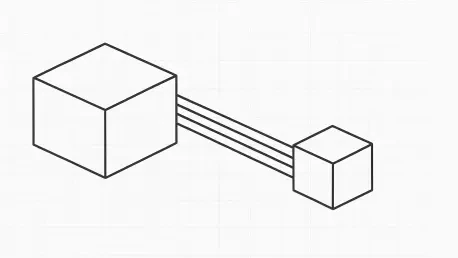
At its core, the sidecar pattern relies on a tightly coupled relationship between a primary application container and a secondary “helper” container. Unlike standard microservices that interact over a wide network or through a message broker, these containers reside within the same deployment unit, such as a Kubernetes Pod or an AWS Fargate Task. This proximity is not merely a matter of convenience; it is a structural requirement that enables the containers to share the same network namespace and lifecycle. This means that for all intents and purposes, the two containers appear to the outside network as a single entity with a single IP address, yet they maintain distinct file systems and memory spaces.
The logic behind this dual-container approach is centered on the principle of isolation. By placing supporting features into a sidecar, the primary application is shielded from the dependencies and potential vulnerabilities of auxiliary tools. For instance, a logging agent might require specific libraries or a higher level of file system access that the main application does not need. Isolating these requirements into a sidecar prevents “dependency hell” and reduces the attack surface of the main application. This architectural choice is particularly effective in large-scale deployments where different teams may be responsible for the core application and the monitoring infrastructure.
Furthermore, the shared lifecycle of the sidecar ensures that neither container exists in a vacuum. When the primary application is scaled up, the sidecar scales with it. When the application is updated or terminated, the sidecar follows suit. This synchronization eliminates the operational headache of managing “zombie” processes or orphaned services that often haunt distributed systems. The sidecar pattern essentially provides the benefits of a modular microservice architecture with the deployment simplicity of a monolith, making it a highly attractive option for organizations moving toward sophisticated container orchestration.
Architectural Components and Functional Mechanics
Shared Network and Lifecycle Integration
The mechanics of a sidecar implementation are defined by the shared network namespace, a feature that allows the two containers to communicate via localhost. This is a critical distinction from traditional service-to-service communication, which usually involves service discovery, DNS resolution, and increased latency. By communicating over localhost, the sidecar and the primary application achieve near-zero latency, which is essential for performance-critical tasks like real-time traffic filtering or data transformation. This internal communication remains invisible to the outside world, providing a private channel that is inherently more secure than traversing a public or even a private virtual network.
Lifecycle integration further solidifies the sidecar’s role as a cohesive part of the deployment unit. In a typical cloud-native environment, the orchestration engine treats the container group as an atomic unit. This means that health checks, resource limits, and restart policies are applied with an awareness of both containers. If a sidecar container is marked as “essential” and it fails, the orchestrator can be configured to restart the entire task, ensuring that the primary application never runs without its necessary support systems. This level of coordination is what differentiates a true sidecar from a collection of loosely related containers running on the same host.
Task Runners and Process Isolation
In modern workflow automation, such as the implementation found in n8n, the sidecar acts as a dedicated task runner to handle arbitrary or untrusted code. When a user writes a script in Python or JavaScript to transform data, running that code within the main application process poses a massive security risk. If the script is malicious or poorly written, it could access the main application’s database credentials, encryption keys, or memory. By moving this execution into a sidecar container—specifically in “external mode”—the main process is effectively air-gapped from the code it is executing.
This process isolation goes beyond simple separation; it includes the enforcement of strict resource and permission boundaries. The task runner in the sidecar can be configured with its own specific environment variables and a restricted set of library imports. For example, a configuration might allow the runner to use basic Python math libraries but strictly forbid access to the os or subprocess modules. This granular control ensures that even if a script manages to execute, its reach is confined to the sidecar’s restricted environment. The primary application acts as a gatekeeper, handing off data for processing and receiving results without ever exposing its internal state to the untrusted code.
Emerging Trends in Container Orchestration
The trajectory of sidecar technology is currently being shaped by the rise of serverless container platforms like AWS Fargate, which offer a more abstracted way to manage these deployments. One of the most significant trends is the move toward independent container resourcing within a single task. In the past, resource limits were often applied to the task as a whole, making it difficult to optimize for different workloads. Today, developers can assign specific CPU and memory allocations to the sidecar independently of the primary application. This allows for precise tuning, such as giving a data-heavy sidecar more processing power while keeping the primary API container lean.
Another emerging trend is the refinement of “essential” and “non-essential” container designations. This allows for a more nuanced approach to system resilience. In some scenarios, it may be preferable for the main application to continue running even if a non-critical sidecar, like a log forwarder, experiences a temporary failure. Conversely, for security-critical sidecars like an authentication proxy, the “essential” flag ensures that the application is immediately shut down if the security layer is compromised. This flexibility enables architects to design systems that are both resilient and secure, adapting the sidecar’s behavior to the specific needs of the business logic.
The shift toward these granular controls is also driving a reduction in the “sidecar tax”—the additional resource overhead traditionally associated with running multiple containers. Orchestration layers are becoming more efficient at managing the shared resources of a pod, reducing the memory footprint of the underlying container runtimes. As these optimizations continue, the sidecar pattern is becoming the default choice for almost any feature that can be decoupled from the core application, leading to a future where applications are composed of multiple, highly specialized containers rather than a single, bloated process.
Real-World Applications and Use Cases
One of the most prominent uses of the sidecar pattern is in the implementation of service meshes, such as Envoy or Istio. In these environments, the sidecar acts as a sophisticated proxy that handles all incoming and outgoing network traffic for a microservice. This allows for features like mutual TLS encryption, circuit breaking, and detailed observability to be added to any application without the developer having to write a single line of networking code. This “plug-and-play” infrastructure is a hallmark of modern DevOps, enabling a consistent security and monitoring posture across hundreds of different services, regardless of the programming language they use.
In the realm of security, sidecars are frequently used for secret management and credential rotation. Rather than giving an application direct access to a secret store, a sidecar can be tasked with fetching the necessary credentials and providing them to the main application over a secure local channel. This limits the exposure of sensitive tokens and ensures that they are never written to disk or stored in environment variables where they might be leaked. By isolating credential management in a sidecar, organizations can implement complex rotation policies and audit logs that are completely transparent to the application itself.
Log aggregation remains a classic and highly effective use case for sidecars. By running a dedicated log shipper alongside the application, developers can ensure that logs are collected, formatted, and transmitted to a central repository in real-time. This approach is superior to logging to a central service over the network because it provides a buffer; if the central logging server is down, the sidecar can temporarily store the logs locally until the connection is restored. This prevents the primary application from stalling due to logging issues and ensures that critical diagnostic information is never lost, even during infrastructure outages.
Challenges and Mitigation Strategies
Despite the clear benefits, the implementation of a sidecar pattern introduces certain complexities that must be managed. One of the primary concerns is the increased overhead in terms of both resource consumption and operational management. Running two containers instead of one naturally requires more memory and CPU, which can lead to higher cloud costs at scale. To mitigate this, teams must use granular resourcing and choose lightweight base images for their sidecars. Using minimalist operating systems or distro-less images for sidecars can significantly reduce the footprint and minimize the attack surface, making the “sidecar tax” more manageable.
Debugging and observability also become more complex in a sidecar-heavy environment. When an error occurs, it is not always immediately clear whether the issue lies in the primary application or the sidecar. Logs are often split across multiple streams, making it harder to reconstruct the sequence of events that led to a failure. To address this, organizations must adopt advanced log correlation techniques, using unique request IDs that span across container boundaries. Centralized logging platforms that can aggregate and interleave logs from multiple containers in a single view are essential for maintaining visibility into the health of the system.
Networking issues, though rare due to the use of localhost, can still occur if there are port conflicts or configuration errors in the shared network namespace. For example, if both the sidecar and the main application attempt to bind to the same port, the container will fail to start. This requires careful coordination during the development phase and the use of environment variables to dynamically assign ports. Standardizing port assignments across the organization can help prevent these conflicts and simplify the deployment of new sidecars. While these challenges are real, the maturity of modern orchestration tools has provided a robust set of strategies for overcoming them.
Future Outlook and Breakthroughs
Looking toward the progress of the industry from 2026 to 2028, the sidecar pattern is expected to evolve into “Ambient” mesh architectures. This approach aims to provide the same benefits of isolation and auxiliary features without the need for a dedicated container for every single application instance. By moving some sidecar functionality into the node-level infrastructure, organizations can further reduce resource overhead while maintaining the security boundaries they require. This shift represents a move toward a more transparent infrastructure layer where the sidecar’s benefits are delivered as a native service of the container platform itself.
Hardware-level isolation within containers is another breakthrough on the horizon. Technologies like confidential computing and secure enclaves are beginning to be integrated into container runtimes, allowing sidecars to run in an even more secure environment. This would enable the execution of highly sensitive tasks, such as cryptographic signing or processing of private user data, with a guarantee that even a compromised host operating system could not access the contents of the sidecar’s memory. As these hardware features become more accessible in public cloud environments, the sidecar will become the primary mechanism for implementing zero-trust security at the process level.
The role of artificial intelligence in managing sidecar lifecycles is also set to expand. We are likely to see intelligent orchestrators that can automatically adjust the resource limits of sidecars based on real-time traffic patterns and performance metrics. This would eliminate the need for manual tuning and ensure that sidecars always have the resources they need to perform their tasks without wasting money on over-provisioned hardware. This trend toward “autonomous infrastructure” will make the sidecar pattern even more accessible to smaller teams who may not have the resources to manually manage complex container configurations.
Summary and Final Assessment
The review of the sidecar pattern demonstrated that this architectural model has moved past the stage of experimentation and established itself as a cornerstone of modern cloud-native development. By providing a shared network namespace and integrated lifecycle management, the sidecar offered a practical solution for isolating specialized tasks from core application logic. The investigation into task runners highlighted how this separation provided an essential security boundary when executing untrusted code, a requirement that grew increasingly important as automation became more pervasive in enterprise environments.
The technical evaluation found that while the sidecar pattern introduced some resource overhead, the benefits of independent scaling and improved security outweighed the associated costs. The flexibility provided by serverless platforms like AWS Fargate allowed for a level of granular control that made the pattern viable even for performance-sensitive applications. Furthermore, the ability to inject infrastructure concerns like logging, security, and service mesh proxies without modifying application code significantly accelerated development timelines and improved the overall reliability of distributed systems.
The decision to adopt the sidecar pattern became a strategic imperative for organizations aiming to build resilient and secure software. The implementation proved to be a robust bridge between the simplicity of early containerization and the complex requirements of modern modular architecture. As the technology progressed, it became clear that the sidecar was not merely a helper but a critical component in the evolution of software delivery. Moving forward, developers should focus on optimizing sidecar footprints and integrating emerging hardware isolation features to further enhance the security and efficiency of their deployments. In the final assessment, the sidecar pattern stood as a mature, proven, and indispensable tool for any organization serious about modern software engineering.