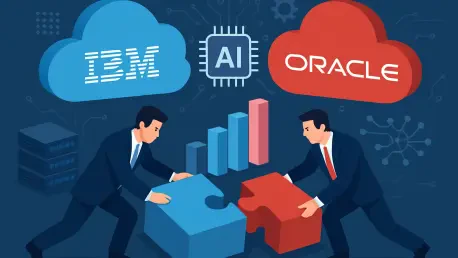

The global enterprise landscape has reached a definitive turning point where the initial excitement surrounding generative artificial intelligence is being tempered by the hard reality of fragmented data silos and outdated legacy systems that cannot support high-velocity scaling. For four decades, the collaboration between IBM and Oracle has served as a foundational pillar for corporate computing, yet the 2026 expansion of this strategic alliance represents a fundamental shift in how large-scale organizations approach digital transformation. By focusing on the integration of “agentic” artificial intelligence and highly flexible hybrid cloud architectures, these two technology giants are working to eliminate the common roadblocks that prevent businesses from moving past the pilot phase of AI implementation. The goal is no longer just to generate content or automate simple tasks but to build a unified digital foundation where autonomous agents can execute complex business processes across disparate environments without manual intervention.
Navigating the New Era of Enterprise Technology
Breaking Down Silos for Intelligent Automation
The era of isolated innovation, where individual departments experimented with standalone AI tools, is rapidly coming to an end as organizations realize that intelligence is only as effective as the data architecture supporting it. Modern enterprises are increasingly demanding integrated foundations that break down long-standing data silos to allow for the kind of intelligent automation that impacts the bottom line. This partnership emphasizes the necessity of interoperability, ensuring that information flows seamlessly between IBM’s analytical tools and Oracle’s robust database environments. When data remains trapped in unreachable pockets, AI models lack the context required to make accurate predictions or take meaningful actions. By prioritizing a unified data strategy, the alliance enables a level of operational synchronization that was previously unattainable, transforming passive archives into active assets that drive real-time decision-making across the entire global enterprise.
Moreover, the shift toward integrated systems allows for a more holistic approach to automation that moves beyond simple task repetition. As businesses move deeper into the current year, the focus has shifted toward creating workflows where AI can understand the nuances of different business units, from supply chain logistics to human resources. This requires a deep level of integration where the underlying infrastructure can handle the massive computational loads required for real-time data processing. The IBM and Oracle collaboration addresses this by optimizing the way their respective platforms communicate, reducing latency and ensuring that AI-driven insights are based on the most current data available. This approach effectively removes the friction that often exists between software layers, allowing organizations to scale their automation efforts without worrying about the underlying technical limitations that have historically hindered growth in complex environments.
Strategic Maturity in the Hybrid Cloud
Moving beyond the simplistic “lift-and-shift” cloud migrations of previous years, the current alliance focuses on sophisticated, architecture-driven deployments that offer true operational flexibility for the modern corporation. Organizations are no longer looking for a one-size-fits-all cloud solution; instead, they require the ability to place specific workloads where they operate most efficiently, whether that is on-premises, in a private cloud, or across multiple public cloud providers. This strategic maturity ensures that performance is never sacrificed for the sake of accessibility. By leveraging Oracle Cloud Infrastructure alongside IBM’s hybrid cloud expertise, companies can now maintain high-performance environments that are specifically tuned for the rigorous demands of AI training and inference. This flexibility is essential for global companies that must balance the need for high-speed processing with the practical realities of managing a diverse and often aging hardware footprint.
This architecture-driven approach also directly addresses the rising global demand for digital sovereignty and localized regulatory compliance. For instance, the launch of specialized services like IBM Envizi in Saudi Arabia reflects a growing trend where organizations must meet regional data requirements while still maintaining a presence in the global market. The alliance provides the necessary framework to ensure that sensitive data remains within specific geographic boundaries while still being accessible to the broader corporate network for analysis and reporting. This level of localization is crucial for industries like finance and healthcare, where data residency laws are becoming increasingly strict. By providing a hybrid cloud environment that is both secure and compliant, IBM and Oracle allow their mutual customers to expand into new markets with the confidence that their technological foundation is both resilient and fully aligned with local legal standards.
Simplifying the Technical Infrastructure
Streamlining Cloud Operating Systems
One of the most significant technical shifts in the current partnership is the direct availability of Red Hat Enterprise Linux within the Oracle Cloud Infrastructure ecosystem. In previous years, customers were often forced to navigate the complexities of a “bring your own subscription” model, which added significant administrative overhead and complicated the scaling process. Now, organizations can purchase and deploy RHEL directly through the Oracle Marketplace using Oracle Universal Credits, a move that drastically simplifies the procurement process. This streamlined approach allows IT teams to focus on deploying applications rather than managing licensing agreements, effectively removing one of the primary hurdles to rapid cloud modernization. By creating this direct link, the alliance bridges the structural gap between IBM’s extensive software ecosystem and Oracle’s high-performance hardware, facilitating a smoother transition for enterprise-level workloads.
Furthermore, this integration provides a stable and consistent operating environment that is essential for maintaining the integrity of mission-critical applications during the migration process. When organizations scale their digital environments, any discrepancy between the on-premises operating system and the cloud version can lead to performance bottlenecks or security vulnerabilities. The direct availability of RHEL on OCI ensures that there is a unified standard across the entire hybrid cloud fabric, allowing for seamless movement of workloads without the need for extensive reconfiguration. This technical synergy is particularly valuable for companies running complex database systems or AI-driven analytics that require a highly optimized and predictable underlying platform. By eliminating the administrative and technical friction associated with operating system management, the alliance provides a clear and efficient path for organizations to modernize their legacy infrastructure.
Enhancing Security and Resource Management
To ensure that the process of scaling does not inadvertently lead to increased security risks or unmanaged “cloud sprawl,” the partnership has integrated IBM Guardium and IBM Turbonomic into the Oracle environment. Guardium provides a comprehensive and unified security posture that extends across Oracle Exadata Database Services, allowing organizations to discover and protect sensitive data regardless of where it resides within the infrastructure. This is a critical development in an era where data breaches can have devastating financial and reputational consequences. By centralizing security management, the alliance enables IT leaders to maintain a consistent set of protocols and compliance standards across their entire digital estate. This proactive approach to security ensures that as AI models access larger and more diverse datasets, the underlying information remains protected against unauthorized access and potential cyber threats.
In addition to robust security, the alliance prioritizes the optimization of compute, storage, and network resources through the verification of IBM Turbonomic on OCI. As the computational demands of artificial intelligence continue to grow, managing cloud costs has become a primary concern for chief information officers. Turbonomic uses AI-driven insights to monitor resource utilization in real-time, making automatic adjustments to ensure that every application has exactly what it needs to perform at its peak without wasting expensive capacity. This level of resource management prevents the common issue of over-provisioning, which often leads to ballooning cloud budgets. By ensuring that the infrastructure remains both protected and cost-effective, IBM and Oracle provide a sustainable framework for long-term growth. This allows organizations to invest more of their capital into innovation and AI development rather than simply maintaining the status quo of their existing cloud environments.
Operational Integration and Agentic AI
Connecting Financial and Operational Data
To solve the persistent problem of disconnected business units, a new technological connector has been developed to link Oracle Fusion Cloud ERP with the IBM Maximo Application Suite. This integration creates a “single pane of glass” view for asset-heavy industries, such as manufacturing and energy, allowing for built-in AI to manage complex processes that span finance, procurement, and facility management simultaneously. Historically, maintenance teams and financial planners operated in separate silos, often leading to discrepancies between operational needs and budgetary constraints. By merging these data streams, the alliance ensures that every operational decision is backed by real-time financial data. This synergy streamlines the entire value chain, allowing companies to predict equipment failures, optimize spare parts inventory, and manage labor costs with a level of precision that was previously impossible without manual reconciliation.
The impact of this operational integration extends beyond simple efficiency gains, as it allows for a more strategic approach to lifecycle management and capital expenditure. When financial and operational data are housed within the same analytical framework, AI models can provide more accurate recommendations for when to repair versus replace aging assets. This leads to a significant reduction in downtime and a more intelligent allocation of corporate resources. Moreover, the unified view provided by the Fusion-Maximo connector allows executives to see the direct financial impact of operational improvements in real-time. This transparency is essential for modern organizations that must remain agile in a fluctuating global market. By aligning the various arms of the business through a common data foundation, IBM and Oracle are helping their customers build more resilient and responsive operations that are better equipped to handle the complexities of the modern industrial landscape.
Aligning Sustainability with Corporate Finance
Environmental, Social, and Governance reporting has evolved from a peripheral activity into a core business requirement that demands the same level of rigor as financial accounting. By hosting IBM Envizi as a SaaS offering on the Oracle Cloud Infrastructure, the alliance allows organizations to store and analyze their ESG data alongside their traditional financial and operational information. This proximity is vital for ensuring the accuracy and transparency required by increasingly strict global regulatory standards. When sustainability metrics are isolated from the rest of the business, it becomes difficult to track the actual impact of green initiatives on the bottom line. By integrating these datasets, companies can now generate comprehensive reports that show the direct correlation between environmental performance and operational efficiency, providing a much clearer picture of the organization’s overall health and long-term viability.
This alignment also facilitates more proactive management of sustainability goals by allowing AI to identify opportunities for energy reduction and waste minimization within the standard business workflow. For example, by analyzing supply chain data through the lens of ESG requirements, an organization can identify which suppliers are contributing most to their carbon footprint and take corrective action. The integration of IBM Envizi on OCI means that these insights are based on high-quality, verifiable data that can withstand the scrutiny of auditors and investors. As the current year progresses, the ability to demonstrate a commitment to sustainability through data-backed reporting has become a significant competitive advantage. By providing a platform where ESG and financial data live together, the IBM-Oracle alliance is enabling a more ethical and transparent approach to corporate management that recognizes the inextricable link between environmental responsibility and financial success.
Advancing Toward Autonomous AI Workflows
The focus of artificial intelligence innovation has undergone a dramatic shift from simple content generation to the development of “agentic” AI, which is capable of executing complex, multi-step workflows with minimal human oversight. Through the deployment of IBM watsonx Orchestrate within the Oracle ecosystem, the partnership has introduced specialized AI agents designed for critical functions such as talent acquisition and professional development. Unlike traditional chatbots that simply provide information, these agents are capable of accessing third-party data sources, evaluating candidate profiles, and managing the scheduling of interviews autonomously. This move signals a transition toward “multi-agent” environments where different AI entities can collaborate to manage entire business functions. This evolution is crucial for organizations looking to scale their operations without a corresponding increase in administrative headcount.
These autonomous workflows represent a significant leap forward in how technology supports human workers by taking over the most repetitive and data-intensive tasks. In a professional development context, an AI agent can analyze a team’s skill gaps, recommend specific training modules, and track progress over time, all while ensuring that these activities align with the broader corporate strategy. This level of autonomy allows human managers to focus on high-value activities like mentorship and strategic planning. The IBM and Oracle collaboration ensures that these agents have the secure, high-performance environment they need to operate at scale. By moving the industry toward functional, outcome-oriented AI, the alliance is helping businesses move past the hype and start realizing the actual productivity gains that have long been promised. This shift toward autonomous workflows is a key component of the next decade of corporate growth and digital evolution.
Orchestrating Modernization with Data-Backed Roadmaps
Success in the modern era of intelligence requires more than just the adoption of new tools; it demands a comprehensive and strategic plan for long-term modernization that is rooted in hard data. IBM Consulting has utilized specialized tools like IBM Txture to provide organizations with clear, data-driven roadmaps for cloud migration, ensuring that every workload is placed in the environment that offers the best architectural fit. This level of “modernization intelligence” moved beyond traditional guesswork, allowing companies to prioritize their migration efforts based on a clear business case and technical feasibility. By analyzing the complexities of legacy systems and identifying the most efficient path to the cloud, the alliance helped mutual customers avoid the common pitfalls that often stall digital transformation projects. This structured approach ensured that the move to Oracle Cloud Infrastructure was not just a change in location, but a fundamental improvement in how applications were managed.
This strategic orchestration was further supported by recent acquisitions and a deep pool of expertise in supply chain management and the broader Oracle ecosystem. Throughout the recent progress of these initiatives, the alliance focused on providing a stable foundation that could support the rapid deployment of new technologies as they became available. By offering a unified vision for the future of enterprise tech, IBM and Oracle enabled organizations to build more resilient and adaptable infrastructures. The conclusion of these modernization efforts resulted in a streamlined path for global organizations to scale their AI capabilities while maintaining security and cost-efficiency. Moving forward, businesses should prioritize the consolidation of their data foundations and the adoption of autonomous agents to maintain a competitive edge. It is recommended that IT leaders continue to leverage these integrated frameworks to further automate their core business processes and ensure that their technical architecture remains aligned with their long-term strategic goals.