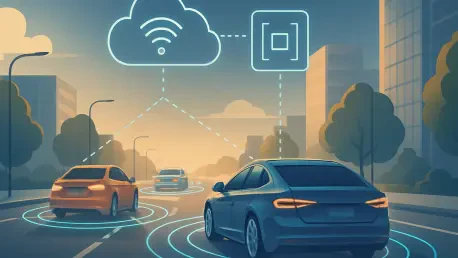

A major challenge in automated driving is ensuring that vehicles can operate effectively in mixed-traffic scenarios alongside non-connected, human-driven cars. For years, the industry has relied on individual vehicle intelligence, where onboard sensors like lidar, radar, and cameras scan the immediate surroundings to navigate. While effective for basic safety, this localized perception creates a reactive environment where every car acts as an isolated silo. When a lead vehicle brakes suddenly, the trailing car must wait for its sensors to detect the change in physical distance before responding. This delay, however slight, ripple through traffic, leading to the “shockwave” effect that causes phantom traffic jams. To move beyond these limitations, a paradigm shift toward a proactive-cooperative model is currently underway. This approach leverages a sophisticated cloud-edge continuum, allowing vehicles to share their specific intentions—such as planned acceleration or deceleration curves—before they are even executed. By transforming cars from reactive units into nodes of a larger, digital network, this technology promises to optimize traffic flow, enhance safety, and drastically reduce the energy consumption of modern transportation systems.
The Strategic Infrastructure of Connected Mobility
The push for a more integrated automotive landscape is grounded in large-scale initiatives like the CUBE-C project, which serves as a vital component of the broader European IPCEI-CIS framework. The mission of this “Important Project of Common European Interest” is to establish a decentralized, energy-efficient cloud-edge infrastructure that can handle the massive data requirements of future mobility. Within this framework, the objective is to create a seamless continuum where data processing can happen at the edge of the network, close to the vehicles themselves. This proximity is essential for safety-critical applications where every millisecond of latency counts. By distributing computational tasks across high-performance remote nodes, the system can manage complex coordination functions that would be too taxing for a single vehicle’s onboard computer. This architecture not only facilitates better traffic management but also supports a multi-provider ecosystem, ensuring that the digital infrastructure of the road is as robust and accessible as the physical asphalt.
Transitioning complex computational tasks to the cloud-edge continuum also addresses the critical issue of vehicle energy efficiency. Modern automated driving systems require immense processing power to interpret sensor data and make split-second decisions, which can significantly drain the battery life of electric vehicles. By offloading these high-intensity calculations to the cloud, the vehicle reduces its local computational burden, allowing its internal systems to focus on immediate tactical maneuvers. This synergy between the car and the remote infrastructure allows for more sophisticated traffic management than any isolated vehicle could achieve. As 5G connectivity becomes the standard for these interactions, the reliability and speed of data exchange reach the levels necessary for real-time control. This strategic shift ensures that the vehicle remains a lean, efficient participant in a much larger, coordinated system that prioritizes both individual safety and collective efficiency across the entire transportation network.
Advancing Predictive Control Through Intent Sharing
At the core of this technological evolution is the development of Connected Adaptive Cruise Control, or CACC. Unlike the standard Adaptive Cruise Control found in many cars today, which merely maintains a set distance from the vehicle ahead using radar, CACC proactively utilizes predictive data shared through the cloud. The key innovation here is “intent sharing,” where connected vehicles continuously transmit their planned motion profiles to the trailing cars in the fleet. This means a following vehicle does not have to wait for its sensors to detect a change in the speed of the car in front; it already knows what that car is going to do several seconds in advance. This anticipatory information allows the entire group of vehicles to adjust their velocity in a synchronized manner. By smoothing out the acceleration and braking cycles, the system effectively eliminates the jerky movements that characterize human-driven traffic, leading to a much more stable and predictable flow on major highways.
The elimination of traffic shockwaves is perhaps the most significant benefit of this predictive control model. These shockwaves occur when one driver brakes, causing the person behind them to brake slightly harder, eventually leading to a complete standstill miles back. Through the use of cloud-based coordination, vehicles can act as a single unit, maintaining consistent distances and speeds even as road conditions change. This level of coordination does more than just save time; it significantly improves the energy efficiency of every vehicle in the chain. By avoiding the constant cycle of stopping and starting, cars consume less fuel or battery power, contributing to a more sustainable environmental footprint. This transformation from reactive sensing to proactive coordination marks a fundamental change in how we perceive road safety and efficiency, moving toward a future where the unpredictability of individual driver behavior no longer dictates the pace of the commute.
Engineering Safety in an Imperfect Digital World
One of the primary concerns for any cloud-based automotive system is the inherent unpredictability of wireless communication networks. In a real-world environment, 5G signals can fluctuate, data packets can be lost, and latency can vary depending on the local network load. To ensure that cooperative driving remains safe even when the digital world is imperfect, researchers have focused on developing “distributionally robust designs.” These control algorithms are built with the assumption that the connection will not always be perfect. Instead of failing when data is delayed, the system uses advanced AI and probabilistic models to predict the most likely path of surrounding vehicles. This approach ensures that the vehicle remains under control and continues to operate safely even during brief periods of network instability. By building uncertainty directly into the software’s logic, engineers are creating a system that is resilient by design rather than one that relies on the hope of constant connectivity.
The integration of AI-enabled predictive control allows these systems to monitor network conditions in real time and adjust their operational parameters accordingly. If the system detects a significant increase in latency, it can proactively increase the safety distance between vehicles or prepare to transition control modes. This continuous assessment of the “communication health” of the environment is a critical safety layer that prevents the vehicle from making aggressive maneuvers based on outdated or incomplete information. This level of robustness is essential for gaining the trust of the public and regulatory bodies, as it demonstrates that the technology can handle the messiness of the real world. By prioritizing “safety by design,” the industry is ensuring that the digital infrastructure supporting automated driving is as dependable as the mechanical systems that have governed automotive safety for the past century.
Resilience Through Systemic Graceful Degradation
A key feature of modern cooperative driving technology is its ability to “degrade gracefully” when a connection is lost or becomes too unstable to support cloud-based coordination. In the context of autonomous systems, graceful degradation refers to a controlled transition where the vehicle shifts from a high-performance cooperative mode back to a standard, sensor-based local control mode. This process must be seamless and instantaneous, ensuring that the passengers never experience a lapse in safety. For instance, if a connected vehicle enters a tunnel or a remote area where 5G coverage is non-existent, the internal logic immediately hands over primary control to the onboard cameras and radar. This fallback mechanism ensures that the vehicle remains fully operational and safe, even without the added benefits of cloud-derived data. The shift occurs without the need for driver intervention, maintaining a smooth experience that prioritizes physical security above all else.
This “safety by design” philosophy is vital for managing the transition between different environments, such as moving from a highly connected urban center to a rural highway. The system is programmed to recognize the boundaries of its digital support network and adjust its behavior accordingly. By maintaining a high-quality local controller as a constant backup, the vehicle is never truly “blind” even when it is disconnected from the cloud. This dual-layer approach—combining the foresight of the cloud with the immediate reliability of local sensors—creates a failsafe environment that addresses the primary anxieties regarding automated transportation. As the infrastructure for 5G and edge computing continues to expand, these transition periods will become less frequent, but the existence of a robust fallback system will always remain a fundamental requirement for any vehicle operating in a complex, unpredictable physical world.
Validating Theoretical Models on the Test Track
To move these concepts from theoretical research into the real world, extensive empirical validation has been conducted on specialized test tracks. These trials focus on high-stakes maneuvers, such as synchronized group starts at traffic lights and coordinated emergency braking. By using prototype vehicles equipped with 5G connectivity and edge-compatible software, researchers have been able to capture quantitative data on velocity, distance, and acceleration. During these tests, drones have often been used to provide a bird’s-eye view, allowing engineers to visualize how a group of connected cars moves as a single, cohesive unit. The results of these trials have been highly promising, demonstrating that cloud-based controllers can successfully maintain precise safety gaps between vehicles even when the network quality is intentionally throttled. This physical evidence proves that the “proactive-cooperative” model is not just a digital simulation but a viable solution for the roads of the present day.
Furthermore, these tests have provided critical insights into how connected vehicles interact within mixed-traffic scenarios. Recognizing that the full automation of the global vehicle fleet will take time, the system is designed to work alongside human-driven cars that lack connectivity. In these cases, the connected vehicles use their cloud-data to optimize their own paths while simultaneously using their local sensors to monitor the unpredictable movements of non-connected neighbors. This hybrid approach ensures that the benefits of cooperative driving—such as smoother traffic flow and reduced braking—can be realized even during the gradual phase-in of the technology. The quantitative data gathered from these real-world tests has confirmed that the algorithms can handle the complexity of human interaction, providing a solid foundation for the mass-market deployment of these systems in the very near future.
Shaping the Future of Cooperative Autonomous Systems
The progress made in the development of cloud-edge cooperative driving has successfully demonstrated that the transition from reactive to proactive mobility is both technically feasible and practically necessary. By utilizing a multidisciplinary approach that integrated control theory, real-time software development, and V2X communication, research teams have resolved many of the fundamental bottlenecks associated with traffic congestion and safety. The implementation of CUBE-C modules and the broader IPCEI-CIS infrastructure provided the necessary computational backbone to support these complex operations. This collaborative effort effectively bridged the gap between theoretical dynamics and hardware deployment, ensuring that the software could thrive in the high-stakes environment of public roads. The focus on distributionally robust designs ensured that the technology remained dependable, even when faced with the inherent uncertainties of wireless communication and the varied behaviors of human drivers.
Looking back at the milestones achieved, it was clear that the successful integration of 5G and edge computing was the primary catalyst for this shift. The industry moved beyond the era of isolated vehicle sensors and embraced a model of shared intelligence that prioritized the collective efficiency of the traffic stream. To build on this foundation, future efforts should prioritize the standardization of intent-sharing protocols across different manufacturers to ensure universal interoperability. Additionally, investment in roadside edge infrastructure will be essential to provide consistent coverage across both urban and rural corridors. As these systems move from the test track to the mainstream market, the focus must remain on the actionable integration of these robust control models into the standard safety suites of all new vehicles. Through these steps, the vision of a road network free from phantom jams and optimized for maximum safety has become a tangible reality, setting a new global standard for how we move through the world.