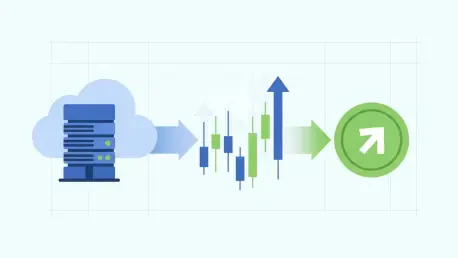

The intricate dance between technological innovation and financial markets often reveals surprising connections, where a serverless computing platform’s anniversary can send distinct ripples through both traditional stock exchanges and the volatile cryptocurrency sector. As Google Cloud Run marks its fifth year of operation, its evolution from a developer-centric tool to a cornerstone of Google’s AI strategy offers a compelling case study in how infrastructure success directly fuels investment narratives. The platform’s ability to simplify complex deployments has not only bolstered Alphabet’s bottom line but has also inadvertently become a bullish indicator for a specific class of digital assets, creating a cross-market dynamic that savvy traders are increasingly monitoring. This analysis uncovers the mechanisms through which a cloud service’s performance translates into tangible trading signals for both Alphabet’s stock and the burgeoning world of AI-driven cryptocurrencies.
The Foundational Success of a Serverless Pioneer
Google Cloud Run’s influence stems from a core value proposition that has resonated deeply within the developer community over the past five years: radical simplicity in a serverless environment. By abstracting away the complexities of managing servers and infrastructure, the platform allows developers to deploy code and containers with remarkable efficiency, embodying the ideal that sophisticated technology should “simply work.” This focus on a seamless user experience has been instrumental in its widespread adoption and has solidified its position as a strategic asset within the broader Google Cloud ecosystem. The platform has matured significantly, with established best practices in resource allocation and security now serving as a testament to its reliability. This operational excellence is not merely a technical achievement; it underpins Google’s competitive strength, providing a robust and scalable foundation that attracts high-value workloads, particularly in the booming field of artificial intelligence, thereby setting the stage for direct financial consequences.
This established technological foundation serves as a critical catalyst for market confidence and a key driver of Google Cloud’s market share growth. The platform’s proven ability to handle demanding, modern applications without imposing a significant operational burden on its users makes it an essential component of Google’s enterprise strategy. As companies increasingly migrate to the cloud to power their digital transformation and AI initiatives, platforms like Cloud Run become a central part of the value chain. This strategic importance enhances Google’s ability to attract and retain large corporate clients, contributing directly to the division’s revenue and profitability. Consequently, investors and market analysts view the continued success and adoption of Cloud Run not just as an engineering milestone but as a leading indicator of Google Cloud’s long-term health and its capacity to compete effectively in the highly contested cloud computing market, which in turn influences Alphabet’s overall valuation.
Translating Cloud Performance into Market Momentum
The tangible success of Google Cloud Run, especially its pivotal role in deploying and scaling AI models, translates directly and measurably into positive financial performance for its parent company, Alphabet Inc. This connection was starkly illustrated in Alphabet’s Q4 2023 earnings report, which revealed a formidable 13% year-over-year revenue increase for Google Cloud, reaching an impressive $9.19 billion. This robust growth, heavily influenced by the platform’s alignment with the market’s insatiable demand for AI capabilities, has become a primary engine of positive investor sentiment. As a result, the performance of the cloud division now acts as a significant factor in bolstering the resilience and appeal of GOOGL shares, providing a fundamental strength that supports its valuation even amidst broader market volatility. This clear line from cloud service efficiency to corporate earnings solidifies the narrative that Google’s infrastructure is a core driver of its future growth.
This fundamental strength creates discernible patterns and opportunities from a trading perspective. Technical analysis of GOOGL stock reveals key levels that traders are closely watching, with a significant resistance point identified around the $150 mark. A decisive break above this level, propelled by continued positive news from the cloud division and favorable macroeconomic conditions, could signal further upward momentum. Conversely, a strong support floor is observed near $140, a price where several key moving averages converge, presenting what many see as a strategic buying opportunity during market pullbacks. This technical landscape is further energized by a noticeable trend of increasing institutional investment. Hedge funds have reportedly been expanding their positions in GOOGL, eager to gain exposure to the pervasive AI theme. This influx of institutional capital not only provides support for the stock but also tends to amplify its movements, strengthening its correlation with the tech-heavy Nasdaq index.
The Cryptocurrency Ripple Effect
The momentum generated by Google Cloud’s advancements extends far beyond the traditional stock market, creating significant ripple effects within the cryptocurrency space. This influence is most pronounced in the niche of AI-focused digital assets, such as Fetch.ai (FET) and SingularityNET (AGIX). The underlying logic connecting these seemingly disparate markets is straightforward: decentralized AI networks are fundamentally dependent on scalable, reliable, and powerful cloud computing infrastructure to function and grow. Therefore, positive milestones for a major provider like Google Cloud, and specifically for a deployment-friendly platform like Cloud Run, are widely interpreted as bullish signals for the long-term viability and potential of the entire AI token ecosystem. This sentiment-driven correlation has historical precedent; in mid-2023, for instance, positive news from Google Cloud was followed by an 8% price surge for FET within a 24-hour period, demonstrating a clear market reaction.
This established correlation has given rise to more sophisticated, cross-market trading strategies designed to capitalize on the interplay between big tech and digital assets. Traders are now actively exploring scenarios where a breakout in GOOGL stock could serve as a leading indicator for a subsequent rally in AI-related cryptocurrencies. For example, a sustained move for GOOGL above the $145 price level might be used as a trigger to enter a long position in the FET/USD pair, with traders setting a potential resistance target near $0.70. This speculative interest is further substantiated by on-chain data, which has shown an increase in “whale accumulations” for these tokens during periods of positive tech news. This suggests that large-scale investors are not just day trading the volatility but are adopting long-term holding strategies, positioning themselves for future growth they believe will be driven by the deepening synergy between centralized cloud infrastructure and decentralized AI innovation.
A New Strategic Outlook for a Connected Market
The strategic implications of this interconnectedness suggested a dual-pronged investment approach that balanced long-term stability with tactical agility. For Alphabet’s stock, the sustained growth of Google Cloud, projected by analysts to push its annual revenue past $40 billion by 2028, supported a long-term, buy-and-hold strategy. The platform’s entrenched position and its role in the AI revolution provided a strong fundamental case for holding GOOGL as a core portfolio asset. In contrast, the more volatile and sentiment-driven AI-related cryptocurrencies offered opportunities for more tactical, short-term trades. Assets like FET and ETH were seen as vehicles to capitalize on the market’s immediate reactions to AI news and shifts in investor sentiment. This combined strategy aimed to capture both the steady, fundamental growth of a tech giant and the high-risk, high-reward dynamics of the emerging digital asset class, creating a holistic approach to a market where technological and financial trends had become deeply intertwined.