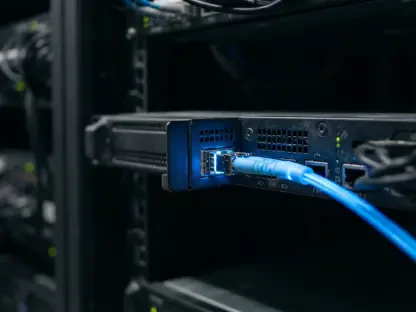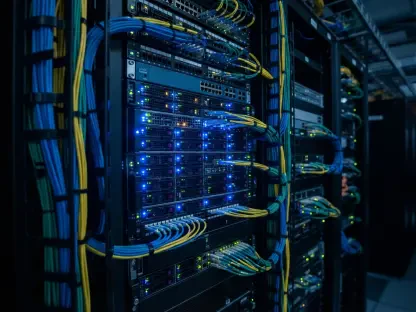

Staring at a rack of humming NVIDIA A100s might feel like a victory, yet the brutal reality of transforming that raw electrical potential into a reliable inference service often humbles even the most seasoned engineering teams. Possessing state-of-the-art silicon is merely the first step in a much longer journey toward operational excellence in artificial intelligence. Without a clear path to deployment, these expensive components remain idle, consuming power and space while failing to deliver any tangible value to the organization.
The transition from raw hardware to a functional service is where the “now what?” phase takes hold. Engineering departments frequently find that while they possess the horsepower, they lack the transmission required to deliver that power to user-facing applications. The result is a stalled initiative where hardware sits like a collection of glorified space heaters, waiting for a management layer that can bridge the gap between physical server and digital intelligence.
The Paperweight Paradox: Why Having Compute Is Not the Same as Having a Service
Owning a rack of top-tier accelerators or a collection of high-end consumer cards is a significant milestone for any engineering team, yet it often marks the beginning of unforeseen frustration. The challenge lies in the fact that hardware does not inherently know how to prioritize requests or manage its own memory limits. Without a software layer to mediate between the model and the metal, the hardware remains an inert asset rather than a dynamic service.
Many organizations discover that the technical expertise required to manage these systems is vastly different from the expertise required to build the AI models themselves. This gap often leads to a scenario where expensive GPUs are underutilized or, worse, entirely inaccessible to the developers who need them most. Consequently, the promise of self-hosted AI is often overshadowed by the sheer difficulty of maintaining the underlying infrastructure.
The Scaling Bottleneck: Why Manual Scripts Fail in Production AI
Managing a self-hosted inference environment manually is a recipe for technical debt and operational burnout that few organizations can sustain for long. Without a dedicated management layer, developers are forced to calculate VRAM requirements by hand and struggle with model sharding across disparate cards. This reliance on brittle Python scripts and manual intervention creates a fragile ecosystem that is prone to failure at the most inconvenient times.
As hardware environments grow more heterogeneous, mixing different architectures and memory capacities, the complexity of load balancing becomes an overwhelming burden. Failure recovery under these circumstances is nearly impossible without automation, distracting engineers from core product development. The manual approach fails to scale, leaving teams trapped in a cycle of constant troubleshooting rather than strategic innovation.
Aggregating Heterogeneous Resources into a Unified Compute Pool
GPUStack solves the fragmentation problem by treating every available GPU, regardless of its location or specific model, as part of a single, cohesive resource pool. By establishing a centralized control plane, it eliminates the need to manage individual nodes as isolated islands that require constant individual attention. This unified approach allows for a more efficient distribution of workloads across the entire cluster.
Whether the hardware consists of bare-metal servers, Kubernetes pods, or varied consumer-grade cards, the system provides a singular dashboard that offers full visibility. This dashboard tracks the health, capacity, and current utilization of the cluster in real time. Organizations benefit from a holistic view of their assets, ensuring that no single resource is overtaxed while others remain underutilized or forgotten.
Streamlining Inference: Intelligent Multi-Backend Orchestration
The platform removes the guesswork from deployment by acting as a sophisticated orchestration layer for top-tier inference engines like vLLM, SGLang, and TensorRT-LLM. Instead of forcing engineers to become experts in every engine’s specific configuration, the system automatically selects the optimal tool for the specific model and hardware configuration. This intelligence reduces the barrier to entry for teams that need high-performance inference without a steep learning curve.
It calculates the necessary resource requirements and intelligently schedules workloads, ensuring that even massive 70B parameter models are appropriately sharded across available hardware. This automation prevents the manual intervention typically required for complex model deployments. By optimizing how models are placed on hardware, the system maximizes throughput and minimizes latency, providing a cloud-like experience on private infrastructure.
Standardizing Model Access Through OpenAI-Compatible API Gateways
To ensure that self-hosted infrastructure is as easy to use as cloud-based alternatives, the system exposes all deployed models through a standardized, OpenAI-compatible REST API. This design choice allows application teams to swap out expensive third-party providers for their own internal infrastructure with a single line of code. It effectively democratizes high-end AI capabilities by making them accessible through familiar protocols.
By maintaining protocol parity, organizations can avoid vendor lock-in and provide their developers with a familiar environment that requires zero learning curve. This compatibility ensures that existing tools and libraries designed for the most popular AI services work seamlessly with the private cluster. Consequently, the transition to self-hosting becomes a matter of changing a base URL rather than rewriting entire application backends.
Evaluating Strategic Benefits: Automated Recovery and Real-Time Monitoring
Operating a private cluster requires more than just deployment; it requires resilience and deep visibility into system performance. Expert consensus suggests that automated failure recovery is the most critical feature for self-hosted environments, where hardware errors or driver mismatches are inevitable. By integrating native monitoring through Prometheus and Grafana, the system provides deep insights into token throughput and VRAM usage.
This proactive approach to infrastructure management ensures that when a node fails, the system reacts immediately to reroute traffic. Maintaining uptime without requiring a midnight intervention from a DevOps engineer is the hallmark of a production-grade system. Real-time monitoring allows administrators to identify bottlenecks before they impact the user experience, leading to a more stable and predictable environment for all stakeholders.
A Practical Framework: Deploying Your Production-Ready Inference Cluster
The transition toward a robust self-hosted model began with a streamlined setup process designed to minimize time-to-value for the organization. The framework involved establishing a lightweight control plane on a basic CPU node, which was followed by the rapid enrollment of worker nodes via a simple command-line interface. Once the cluster was formed, teams utilized the integrated model catalog to pull weights directly from Hugging Face or the Ollama library.
This structured approach allowed organizations to move from unboxing hardware to serving high-throughput inference APIs in a matter of minutes. It effectively bridged the gap between raw compute and functional AI services that drove the next generation of internal applications. Organizations that adopted these automated workflows found that they could scale their internal intelligence capabilities without the proportional increase in operational overhead that previously plagued the industry. Engineers realized that the path toward sovereign AI was not paved with more hardware, but with better management of the hardware they already owned.