
The industrial landscape currently faces a paradoxical challenge where the sheer volume of data generated by factory sensors far exceeds the capacity of legacy systems to process it in a meaningful timeframe. While centralizing information within a cloud space offers significant advantages for long-term storage and complex training, the inherent latency associated with long-distance data transmission often renders real-time decision-making nearly impossible on the shop floor. Modern manufacturing facilities now require a hybrid approach that seamlessly blends the rapid responsiveness of edge computing with the immense processing power found in hyperscale cloud architectures. This integration is no longer a luxury but a fundamental necessity for organizations aiming to deploy artificial intelligence at a scale that impacts global operations. By distributing intelligence across the network, companies ensure that critical safety protocols and quality controls operate with microsecond precision while maintaining a holistic view of the entire enterprise’s productivity.
The Architecture of Scalable Intelligence
Step 1: Bridging Real-Time Latency with Edge Computing
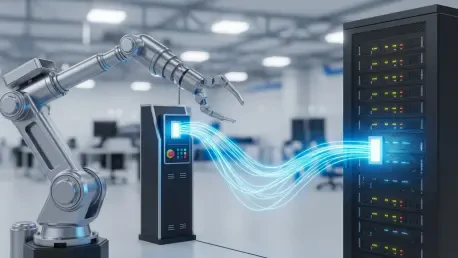
Local processing at the edge involves deploying dedicated hardware units, such as industrial PCs or specialized AI accelerators, directly alongside machinery to analyze telemetry data the moment it is produced. This proximity eliminates the “round-trip” delay that occurs when sending information to a distant server, which is vital for high-speed applications like vibration analysis in rotating equipment or defect detection on fast-moving assembly lines. When an anomaly is detected, the edge device can trigger an immediate shutdown or adjustment, preventing costly damage or waste before a cloud-based alert could even be registered. Furthermore, edge nodes act as intelligent filters that reduce the burden on network bandwidth by only transmitting relevant metadata or anomalous events to the central repository. This selective data transmission not only lowers operational costs but also enhances the overall security posture by keeping sensitive operational data confined locally.
Step 2: Orchestrating Massive Datasets via Cloud Repositories
While the edge handles immediate operational tasks, the cloud serves as the massive computational engine required for the training and refinement of sophisticated deep learning models. These models require access to historical datasets spanning months or even years of operational history to identify subtle patterns that are invisible to local edge nodes. Cloud environments provide the elasticity needed to spin up powerful GPU clusters that can process petabytes of information, allowing for the creation of digital twins that simulate entire production cycles under various hypothetical scenarios. This centralized repository becomes the single source of truth for the organization, where data from diverse sources can be correlated to provide a broader context for the AI. Consequently, the cloud does not replace local intelligence but rather enriches it by providing the high-level insights and strategic foresight that can only be derived from a global perspective of the enterprise’s footprint.
Operational Excellence Through Hybrid Synchronization
Strategy 1: Implementing Feedback Loops for Model Evolution
The true power of an integrated system lies in the bidirectional flow of information, where the edge informs the cloud and the cloud optimizes the edge in a perpetual cycle of refinement. When an edge device encounters a situation it has not been trained for, it flags the event and transmits the raw data back to the cloud for manual review or automated re-incorporation into the training set. This capability allows the system to learn from rare edge cases that occur in the real world, which are often difficult to predict during the initial development phase in a laboratory setting. As the central model matures, the updated logic is compressed and sent back to the edge, resulting in a more resilient and capable local intelligence. This synchronization ensures that the collective knowledge of the entire organization is leveraged to solve problems at a local level, simply turning every machine on the floor into a sensor that contributes to the continuous evolution of technical assets.
Strategy 2: Establishing Resilient Infrastructure Standards
To achieve long-term success, organizations prioritized the creation of a flexible data fabric that treated the entire network as a cohesive entity rather than a collection of disconnected parts. This approach involved establishing clear standards for data interoperability and investing in robust cybersecurity measures that protected sensitive information both at rest and in transit between various nodes. Leaders who successfully navigated this transition focused on building cross-functional teams that bridged the traditional gap between information technology and operational technology departments. They also recognized that scaling industrial AI required more than just technical prowess; it demanded a strategic commitment to continuous learning and adaptation. By implementing these integrated architectures, businesses secured a competitive advantage that allowed them to respond with agility to market fluctuations. The journey toward full integration became the definitive roadmap for those seeking to transform raw data.