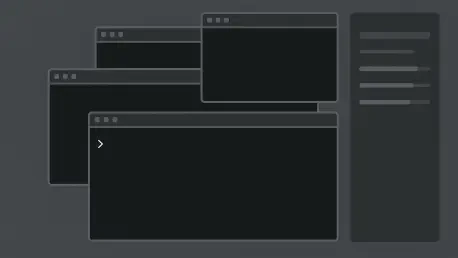

A novel command known as /btw allows programmers to resolve tangential questions in a temporary parallel space without losing their focus on the primary coding sprint. The modern software engineering landscape in 2026 demands a level of agility that traditional, linear AI chatbots simply cannot provide, leading to the rise of sophisticated orchestration platforms. This shift represents a departure from the one-to-one interaction model, where a developer asks a question and receives a single response, toward a multi-agent ecosystem designed for high-velocity output. Claude Code has fundamentally transitioned from a reactive assistant into a proactive “AI Legion” that operates across various layers of the development stack simultaneously. As codebases grow in complexity, the need for a central command hub that can delegate tasks to specialized sub-agents becomes critical. This evolution ensures that the human engineer is no longer constrained by the physical limits of sequential thought, but rather acts as a strategic director of a digital workforce.
The Paradigm of Parallelism: Implementing Nested Sessions
At the core of this technical transformation is the implementation of nested sessions, a feature frequently referred to by industry experts as “Shadow Clones.” This mechanism allows the platform to analyze a complex, multi-faceted prompt and break it down into several distinct, independent threads of execution. Instead of the main chat interface becoming a bottleneck for progress, the system spawns these autonomous sub-sessions to handle specific components of a project in parallel. For instance, while a developer is focused on refining the user interface logic, one nested agent can be refactoring the underlying API endpoints while another simultaneously identifies and fixes memory leaks in the backend. This concurrent execution model effectively multiplies the productivity of a single engineer, allowing for the rapid completion of tasks that would previously have required hours of sequential labor. The architecture ensures that each agent has its own dedicated context, preventing cross-contamination of logic.
The transition toward this multi-agent model necessitates a robust framework for managing the relationship between the primary workstation and its spawned subordinates. Modern orchestration platforms utilize a hierarchical data structure where the main session serves as the root node, overseeing the lifecycle of every sub-task. This setup allows for dynamic resource allocation, where the AI can prioritize certain sub-sessions based on their critical importance to the overall sprint. Furthermore, the isolation of these sessions means that a failure or a logic error in one parallel thread does not compromise the stability of the entire development environment. This resilience is a cornerstone of the 2026 development philosophy, where the focus has moved from individual code snippets to the health of the entire application ecosystem. By delegating the heavy lifting to these background agents, the platform maintains a clean and responsive main thread, allowing the human operator to stay in a state of flow while the AI handles the granular details.
Data Flow Optimization: Mitigating Information Overload
One of the most persistent hurdles in early AI-assisted programming was the phenomenon known as “log pollution,” where the sheer volume of terminal output and error reports obscured meaningful information. The current iteration of Claude Code addresses this by confining the trial-and-error phase of development strictly within the confines of its nested sub-sessions. When an agent is tasked with a complex refactoring job, it may run hundreds of tests and encounter dozens of temporary compilation errors in the background. In a traditional chatbot setup, these logs would flood the main interface, making it nearly impossible for a human to track high-level progress. However, by isolating these processes, the platform ensures that only the relevant outcomes and critical decisions are surfaced to the supervisor. This selective visibility maintains the clarity of the workspace and allows the developer to focus on the broader architectural goals rather than being buried under a mountain of raw, technical diagnostic data.
To bridge the gap between autonomous execution and human oversight, the platform employs an intelligent summarization engine that distills the activity of sub-sessions into concise reports. Once a sub-task reaches its conclusion, the agent generates a high-level overview of the changes made, the tests passed, and any significant anomalies discovered during the process. This information is then integrated back into the main session, providing a clear audit trail without the associated noise. This method mimics a professional corporate hierarchy where an executive receives summarized updates from department heads rather than micromanaging every minor action. Such a structured flow of information is essential for maintaining sanity in large-scale enterprise projects where thousands of lines of code may be modified in a single hour. By refining the data that reaches the human eye, the platform empowers developers to make informed decisions quickly, ensuring that the velocity of the AI does not outpace the human’s ability to verify the integrity of the software.
Strategic Interface Design: Monitoring the Digital Workforce
The shift toward an orchestration-centric model required a complete reimagining of the user interface to support the cognitive demands of supervising multiple AI agents. A sophisticated sidebar dashboard now serves as the nerve center for the entire operation, providing real-time visibility into every active session. This dashboard allows developers to see exactly which agents are currently processing data, which have hit a roadblock requiring intervention, and which have successfully completed their assigned objectives. This “glass box” design philosophy ensures that the AI’s logic remains transparent and accountable at every stage of the development lifecycle. Instead of a mysterious “black box” that produces code without explanation, the platform provides a clear window into the reasoning and current state of every sub-agent. This level of visibility is crucial for building trust between the human engineer and the digital workforce, as it allows for immediate course correction if an agent begins to drift from the intended project parameters.
Complementing the real-time dashboard are interactive “review cards” and dynamic to-do lists that evolve as the project progresses. When an agent identifies a critical junction that requires human judgment—such as choosing between two different architectural patterns or approving a security-sensitive change—it generates a review card. This card presents a concise summary of the situation, the available options, and the predicted impact of each choice, allowing the developer to make a pivot or an approval with a single click. This prevents the need to manually scroll through thousands of lines of history to understand the context of a decision. Furthermore, the automated to-do lists provide a visual representation of the project’s roadmap, updating in real-time as tasks are completed or added. This structured approach to task management ensures that nothing falls through the cracks and that the momentum of the development sprint is maintained even when the human supervisor is juggling multiple high-level priorities.
Workspace Integrity: Environment Persistence and Git Isolation
Environment persistence has emerged as a fundamental pillar of the modern AI workstation, treating the developer’s local and cloud configurations as first-class citizens. The platform now recognizes that setting up directories, establishing SSH connections, and configuring runtimes represents a significant “preparation tax” that can disrupt a programmer’s flow. To combat this, Claude Code allows users to package these complex setups into named “environments” that can be recalled with a single click. This feature ensures that whether a developer is working on a local microservice or a remote cloud infrastructure, the transition between different project contexts is virtually instantaneous. By remembering recently used folders and maintaining the state of connected systems, the platform effectively eliminates the friction of context switching. This level of environmental awareness allows the AI to operate with a deeper understanding of the physical constraints and specific configurations of the codebase, leading to more accurate and deployable suggestions.
To safeguard the codebase against the risks of simultaneous edits by multiple agents, the platform integrates native-level Git Worktree isolation. When several sub-sessions are active, the risk of file conflicts or accidental overwrites becomes a major concern for developers. By utilizing Git Worktree, the orchestration platform can create physically isolated directory structures for different branches of work. This means that while one agent is restructuring the database schema in one isolated workspace, another can safely address UI bugs in a completely separate folder. These parallel efforts do not interfere with each other or the main development branch until the human supervisor intentionally decides to merge the results. This technical isolation provides a layer of security and stability that is essential for professional-grade software engineering. It allows for a truly distributed development process where the local environment remains stable, and the integrity of the version control system is preserved despite the high volume of concurrent changes.
Operational Efficiency: Resource Management and Future Strategies
As the scale of AI involvement in software development increases, the management of computational resources and token consumption has become a critical operational priority. The platform addresses this through a sophisticated mechanism known as “Idle Compaction,” which optimizes the session context during periods of inactivity. When a session remains untouched for a specific duration, the system automatically analyzes the history and compresses it into a high-level state representation. This process ensures that the essential goals, progress, and context of the project are preserved without the financial and technical overhead of maintaining a bloated token cache. Idle Compaction allows long-running projects to remain responsive and cost-effective, preventing the performance degradation that often plagues extensive AI interactions. By managing the underlying resources so efficiently, the platform allows developers to maintain long-term digital partnerships with their AI agents without worrying about the escalating costs or technical limitations of traditional models.
The transition of Claude Code into a comprehensive orchestration platform demonstrated that the future of software engineering would be defined by the effective management of digital agents rather than just manual code entry. Developers were encouraged to view their role as that of a high-level architect who delegated granular tasks to a specialized workforce of AI clones. This evolution solved the fundamental challenges of context switching, log pollution, and environment management, allowing a single individual to operate with the efficiency of an entire engineering team. To prepare for this shift, organizations had to prioritize the adoption of tools that supported parallel processing and robust version control isolation. The ultimate goal became the creation of a seamless, multi-agent environment where the speed of innovation was limited only by the clarity of the developer’s strategic vision. By embracing these orchestration capabilities, the industry established a new standard for productivity, ensuring that the partnership between human creativity and machine execution remained both scalable and sustainable.