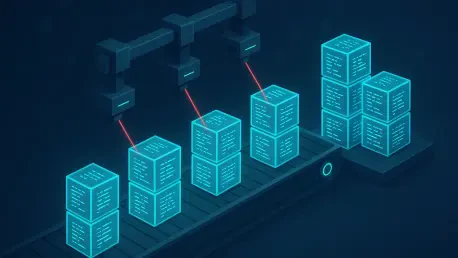

Engineering teams are currently facing an unprecedented inundation of machine-generated pull requests that traditional manual workflows were never designed to handle effectively. This technological bottleneck has paved the way for the meteoric rise of Blacksmith, a Y Combinator-backed startup that has redefined software quality assurance through automated validation. Within the span of a single year, the company has seen its market valuation surge to $550 million, a tenfold increase that mirrors its exponential revenue trajectory. This transition from a niche experimental tool to a mission-critical enterprise asset marks a pivotal moment in the software development lifecycle. As organizations integrate AI coding assistants like GitHub Copilot into their daily operations, the focus has shifted from the speed of creation to the rigor of verification. Blacksmith has successfully positioned itself as the indispensable arbiter of code integrity, ensuring that the velocity of automated development does not compromise the stability of production environments for modern enterprises.
Bridging the Gap in Modern Software Development
Addressing the Volume Crisis and Regulatory Demands
In sectors such as global finance and modern healthcare, the margin for error in software deployment is virtually non-existent, as minor glitches can lead to catastrophic financial losses or compromised patient safety. Blacksmith addresses these high-stakes requirements by providing a specialized safety net that allows these highly regulated industries to adopt AI-driven productivity gains without the typical risks. While the rapid generation of code via large language models offers an undeniable competitive advantage, it also introduces subtle bugs and security vulnerabilities that can evade standard unit tests. By implementing an automated quality control layer, Blacksmith enables organizations to vet every line of machine-generated code against rigorous compliance frameworks and internal safety protocols. This capability is essential for firms that must adhere to strict data sovereignty laws and financial reporting standards, ensuring that their digital transformation efforts remain both innovative and fundamentally secure.
The automation of governance checks represents a significant leap forward for risk-averse institutions that have historically been slow to adopt emerging technologies. Blacksmith integrates directly into the continuous integration and continuous deployment pipelines, acting as a real-time auditor that evaluates code not just for functionality, but for adherence to complex regulatory mandates. This proactive approach eliminates the friction often found between development teams and legal compliance departments, streamlining the release cycle for critical updates. By providing detailed audit trails and automated documentation, the platform simplifies the process of proving software integrity to external regulators and stakeholders. Consequently, large-scale enterprises are moving away from reactive patching strategies toward a model of preventative validation. This shift allows for the seamless scaling of AI-assisted engineering efforts, as the platform identifies potential systemic failures long before they reach the production stage or impact end-user experiences.
Institutional Backing and the Shift in Infrastructure
The strategic importance of this technology is underscored by the high-profile support from prominent venture capital firms like GV and Peak XV Partners. GV’s involvement is particularly telling, as it suggests that the primary architects of the broader AI ecosystem recognize a growing need for independent verification layers that sit outside the core generative models. These institutional investors are betting on the reality that as software becomes increasingly self-authored by machines, the infrastructure used to monitor these machines will become the most valuable segment of the devtools market. This investment trend highlights a fundamental maturation of the AI space, moving from the novelty of generative capabilities toward the practicalities of industrial-grade reliability. By securing substantial capital, Blacksmith is poised to expand its research and development efforts, focusing on the creation of more sophisticated diagnostic tools that can anticipate emergent behaviors in complex, multi-agent software systems across the globe.
Industry analysts are observing a paradigm shift where automated validation is becoming as essential to the modern tech stack as version control systems like Git were in previous decades. In the current landscape, the ability to generate thousands of lines of code per minute is only beneficial if those lines can be verified with equal or greater speed. Blacksmith is establishing the blueprint for this new standard, providing a centralized platform that synchronizes with existing developer environments to provide immediate feedback loops. This creates a culture of accountability where code quality is no longer a secondary consideration relegated to the final stages of a project. Instead, it is an integrated, continuous process that empowers developers to focus on higher-level architecture rather than manual debugging. As more companies realize that manual oversight cannot scale alongside AI, the adoption of specialized validation platforms is accelerating. This widespread integration is setting the stage for a future where software resilience is an automated, rather than human-managed, attribute.
The Future of the Validation Economy
Navigating Market Shifts and Competitive Pressures
As the tools for writing code become more accessible and powerful, the intrinsic value of raw code production is rapidly diminishing, leading to what many experts call the commoditization of coding labor. In this environment, the primary competitive differentiator for a software company is no longer the quantity of features it can produce, but the reliability and security of its digital offerings. Blacksmith sits at the center of this validation era, where the highest premiums are placed on technologies that can guarantee software integrity amidst an ocean of synthetic data. This transition is forcing organizations to re-evaluate their investment priorities, shifting budgets away from simple productivity enhancers and toward sophisticated validation engines. The focus has moved toward identifying and preventing systemic technical debt, which can accumulate at an alarming rate when AI systems generate code without human-level contextual awareness. Companies that fail to adapt to this quality-centric model risk being buried under maintenance costs and the reputational damage of frequent service failures.
Despite its dominant position, Blacksmith faces a complex landscape as established technology giants begin to explore the integration of similar validation features into their existing cloud and development ecosystems. However, the startup’s specialized focus on enterprise-grade security and cross-platform compatibility provides a distinct advantage that broader, more generalized tools often lack. By maintaining independence from the primary AI model providers, Blacksmith offers an unbiased assessment of code quality, which is critical for companies utilizing a multi-cloud or multi-model strategy. This neutrality allows the platform to set new industry standards for what constitutes production-ready code in an automated world. The company’s success also forces larger competitors to reconsider their own quality assurance methodologies, potentially sparking a new wave of acquisitions and partnerships within the sector. As these dynamics unfold, the priority for the industry will remain the creation of a transparent and verifiable software supply chain that can support the next generation of autonomous digital services.
Implementing Resilient Scaling Strategies: Practical Insights
To maintain long-term stability, forward-thinking organizations prioritized the integration of automated validation tools into their early-stage development cycles rather than treating them as an afterthought. This strategic move allowed engineering leads to manage the growing complexity of their codebases while simultaneously reducing the burden of manual code reviews on their senior staff. Successful teams established clear benchmarks for machine-generated output, using Blacksmith to enforce strict architectural guidelines that prevented the proliferation of technical debt. By treating validation as a first-class citizen in the development process, these firms effectively decoupled their growth potential from the limitations of human oversight. The next logical step involved the implementation of localized validation agents that could tailor their testing parameters to the specific needs of individual microservices. This granular approach ensured that every component of a distributed system remained resilient under load. Ultimately, the industry moved toward a model where software was not just built, but continuously proven, ensuring that the transition to AI-driven engineering remained sustainable.