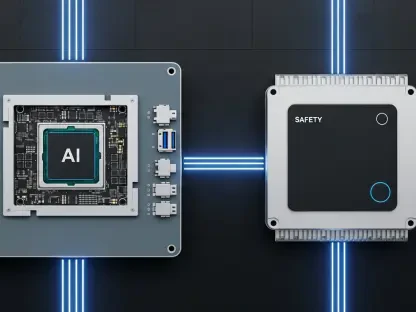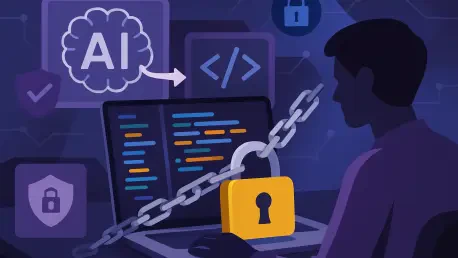

The rapid integration of artificial intelligence into software development has created a critical paradox for security teams, as the very tools designed to accelerate innovation are simultaneously introducing a new wave of complex and often hidden vulnerabilities. As development cycles shrink and the reliance on AI-assisted coding grows, organizations are grappling with an escalating volume of insecure code being embedded directly into their core infrastructure, creating a significant and expanding attack surface. In response to this pressing challenge, cyber exposure management firm Armis has expanded its Centrix platform with a new module specifically engineered to secure code throughout the entire software development lifecycle, from initial creation to final deployment.
A Strategic Response to Modern Development Risks
The Escalating Threat from AI-Assisted Coding
The fundamental challenge addressed by the new Armis Centrix for Application Security module is the proliferation of insecure code, a problem significantly exacerbated by AI-driven development. Executives at Armis, including Co-Founder and CTO Nadir Izrael, have noted that code generated by AI assistants can often introduce more vulnerabilities than code written exclusively by human developers. This issue places immense strain on security and development teams, who must now contend with a higher velocity of code production while simultaneously trying to manage an increased risk of embedded flaws. The pressure to maintain rapid continuous integration and deployment (CI/CD) pipelines often leads to a fragmented security approach, with disparate tools struggling to provide a cohesive view of an application’s security posture. This fragmentation complicates the process of identifying, tracing, and remediating vulnerabilities, leaving critical systems exposed and creating a reactive rather than proactive security environment that struggles to keep pace with modern, agile development practices.
Unifying Security Across the Development Lifecycle
Armis aims to resolve these challenges by providing a unified and integrated solution that streamlines the entire DevSecOps process. The new module is designed to consolidate the often-siloed tools used for application security, offering a single platform to detect and remediate vulnerabilities from their inception. By integrating directly into CI/CD pipelines, it automates the scanning of all application components, including source code, open-source dependencies, container images, and infrastructure-as-code configuration files. This comprehensive scanning capability covers a wide array of programming languages, ensuring broad applicability across diverse development environments. A key differentiator of the platform is its “infrastructure awareness,” which enables it to perform contextual risk analysis. This feature allows the system to consider existing mitigating controls in the production environment, such as firewalls or access controls, thereby providing a more accurate and realistic assessment of a vulnerability’s true risk level, which is a critical step forward from traditional, context-agnostic scanning tools.
Enhanced Efficacy and Enterprise Integration
Driving Efficiency with AI-Powered Precision
A core advantage of the Armis Centrix platform is its proprietary AI-powered scanning engine, which is engineered to dramatically improve the efficiency and accuracy of vulnerability detection. The company asserts that this technology can reduce false positive alarms by as much as 70 percent, a significant improvement that directly addresses the persistent issue of “alert fatigue” plaguing many security teams. By filtering out noise and focusing on genuine threats, the platform helps security professionals prioritize their efforts on the most critical issues. This precision, in turn, contributes to a substantial reduction in the mean time to resolution (MTTR). The system delivers actionable fixes with clear, step-by-step remediation instructions directly to the relevant developers, seamlessly integrating into their existing workflows and toolchains. According to Chief Product Officer Dana Gilboa, this targeted and integrated approach not only accelerates the remediation process but also fosters stronger collaboration between security and development teams, laying a crucial foundation for building “secure-by-default” software delivery pipelines at an enterprise scale.
Validated Performance and Industry Recognition
The effectiveness of the Armis Centrix for Application Security module has been substantiated through rigorous third-party evaluations. In a notable assessment, Armis reported that its solution outperformed several competing tools in the Public CASTLE Benchmark C@250, a standardized test designed to measure the performance of application security testing tools. This independent validation lends significant credibility to the platform’s capabilities in a competitive market. Industry analysts, such as IDC Research Manager Katie Norton, have reinforced the importance of this multi-faceted approach. The consensus is that a combination of AI-native scanning, deep platform context, and independent performance validation is essential for security teams navigating the complexities of the current development landscape. This approach provides organizations with the confidence needed to adopt AI-assisted development practices without compromising their security posture, ensuring that speed and innovation do not come at the expense of resilience and safety against emerging cyber threats.
A Forward-Looking Security Posture
The introduction of the Armis Centrix for Application Security module represented a strategic move to address the inherent security risks that accompanied the widespread adoption of AI in software development. By offering a solution that unified disparate security tools and provided deep, contextual awareness of the production environment, the platform provided a more accurate and efficient way to manage vulnerabilities. The tool’s validated performance and ability to integrate directly into developer workflows helped bridge the gap between security and development teams. This launch ultimately equipped enterprises with a more robust framework for building secure applications from the ground up, marking a significant step toward establishing a “secure-by-default” culture in the age of accelerated, AI-driven innovation.