
Modern organizations are increasingly discovering that the traditional digital whiteboard, once a simple surface for sticky notes, is no longer sufficient for the complexities of high-speed, AI-driven collaborative work. While generic artificial intelligence tools have proliferated across the corporate landscape, a significant “context gap” remains a primary obstacle for teams trying to translate visual brainstorming into actionable, structured outcomes. This gap typically manifests when the spatial logic and creative nuance of a shared whiteboard session are lost during the transition to text-heavy productivity software or isolated AI prompts. To address this friction, the platform has transitioned into a sophisticated operating system that embeds intelligence directly into the visual canvas. This evolution ensures that the relationships between ideas, diagrams, and images are preserved, allowing teams to move from initial ideation to final execution without losing the critical context that defines their collective work.
Bridging the Gap: From Vision to Execution
Intelligent Agents: Contextual Collaboration
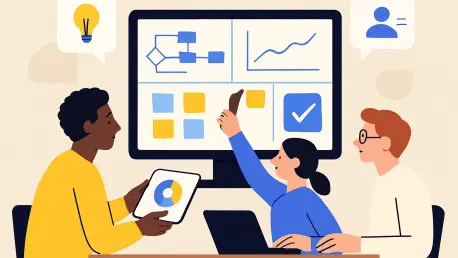
The shift toward context-aware intelligence is best exemplified by the introduction of “Sidekicks,” specialized AI agents designed to inhabit the visual canvas alongside human participants. Unlike standard large language models that require extensive background information to be useful, these agents possess an inherent understanding of the board’s specific contents and the spatial relationships between various elements. They do not merely process text; they interpret the intent behind sticky notes, the hierarchy of diagrams, and the connections within complex flowcharts. This allows for a more fluid interaction where the AI acts as a collaborator that has already “read the room.” By reducing the need for repetitive manual prompting, Sidekicks enable teams to maintain their creative momentum while receiving real-time insights that are grounded in the actual visual data present on the screen.
Furthermore, these agents can be customized with specific domain expertise, ensuring that the assistance provided is relevant to the unique needs of different professional functions. For instance, a Sidekick tailored for a marketing department will analyze a brand brainstorm using a vastly different lens than one designed for a technical engineering team. This specialization prevents the generic, one-size-fits-all responses that often plague individual-focused AI assistants. By integrating these agents into the collaborative environment, the platform transforms the whiteboard from a passive display into an active participant in the problem-solving process. This capability allows teams to synthesize vast amounts of unstructured data into coherent themes almost instantaneously, providing a level of analytical depth that was previously impossible during live, high-energy working sessions.
Strategic Frameworks: Organizational Learning
In the early months of 2026, the acquisition of the professional education leader Reforge signaled a broader ambition to move beyond technical utility and into the realm of strategic organizational growth. This integration pairs advanced AI tools with high-level frameworks used by top-tier product and growth teams, effectively providing users with a blueprint for success. Instead of starting from a blank canvas, teams can now leverage embedded methodologies that guide them through the “what” and “why” of their projects. This synergy ensures that the AI-driven workflows are not just efficient, but are also strategically sound and aligned with industry best practices. By bridging the gap between execution and education, the platform empowers organizations to upskill their workforce while simultaneously completing their most critical daily tasks.
The implementation of “Flows” further enhances this strategic focus by automating multi-step, complex processes while maintaining essential human oversight. These automated sequences allow teams to chain together various AI actions, such as taking a chaotic wall of user research notes and automatically generating a structured product brief or a prioritized development roadmap. This “human-in-the-loop” approach ensures that while the heavy lifting of data organization is handled by the machine, the final decision-making remains firmly in the hands of the human collaborators. Early adopters have reported that these automated flows have drastically reduced innovation cycles, shrinking tasks that once took several days into mere hours. This acceleration is not just about speed; it is about creating a consistent, repeatable standard for excellence across an entire organization.
Tailored Solutions: Cross-Functional Success
Specialized Workflows: Product and Engineering
Product and design departments are increasingly utilizing these advanced capabilities to streamline the transition from initial brainstorming to high-fidelity prototyping. Through deep integrations with industry-standard design tools like Figma, the platform serves as a bridge that maintains the thread of intent from the earliest ideation stages to the final visual output. This connectivity ensures that when a design team sketches out a user journey on the whiteboard, those insights can be directly reflected in the prototype without the need for manual re-entry or descriptive documentation. This seamless flow reduces the likelihood of miscommunication and ensures that the original vision remains intact throughout the development process, fostering a more cohesive and efficient environment for designers and product managers alike.
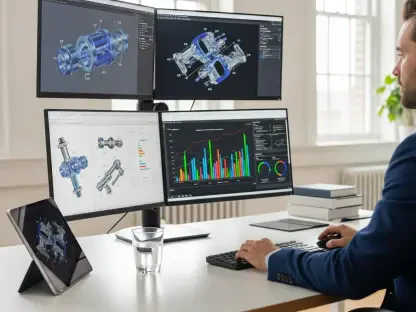
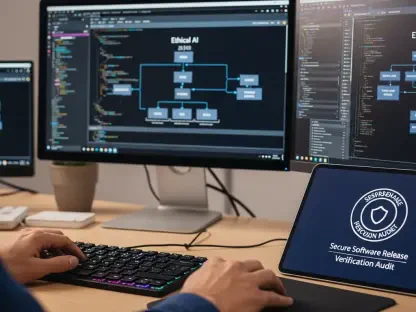
Engineering teams have also seen a radical transformation in how they manage system architecture and code generation through the adoption of the Model Context Protocol. By collaborating with industry leaders such as Anthropic, AWS, and Google, the platform allows architecture diagrams to serve as the direct context for AI coding environments like GitHub Copilot or Cursor. This means that an AI can “see” the structural design of a system on the whiteboard and use that information to generate code that is accurately aligned with the intended architecture. This level of synchronization eliminates the common disconnect between high-level design and low-level implementation, reducing technical debt and accelerating the deployment of complex software systems. It represents a significant move toward a future where the whiteboard is the source of truth for the entire lifecycle.
Engagement Tools: The Future of Meetings
One of the most persistent challenges in modern remote and hybrid work is the “presentation tax”—the hours of manual labor required to turn a collaborative working session into a polished deck for stakeholders. To solve this, the introduction of AI Slides allows teams to automatically convert the results of a brainstorm into a professional presentation with a single click. The AI identifies the most important themes, selects relevant visual elements, and structures the narrative in a way that is ready for executive review. This functionality ensures that the momentum gained during a meeting is not lost to administrative overhead, allowing teams to stay focused on high-value work rather than formatting slides. It changes the nature of the meeting from a static event into a generative process with immediate, tangible outputs.
Beyond reporting, the Miro Engage suite of tools has been developed to combat the passivity that often characterizes large-scale virtual meetings. By using AI to facilitate real-time participation, the platform turns observers into active contributors, ensuring that every voice in the room is captured and analyzed. These tools can automatically cluster similar ideas, highlight divergent viewpoints, and suggest consensus-building exercises based on the current state of the board. This active facilitation helps maintain energy and focus, even during long or complex sessions. By making participation easier and more structured, the platform helps organizations unlock the hidden potential of their teams, ensuring that the collective intelligence of the group is fully utilized. This focus on engagement marks a shift toward more democratic and effective collaboration.
The transition toward a comprehensive, AI-integrated collaboration hub was completed as organizations realized the limitations of solo-focused productivity tools. By embedding context-aware agents and strategic frameworks directly into a visual workspace, the platform successfully bridged the gap between raw ideation and structured execution. Teams across various departments, from engineering to marketing, adopted these workflows to reduce manual labor and maintain a single source of truth for their projects. The acquisition of educational leaders and the development of specialized protocols for technical synchronization provided the necessary infrastructure for this evolution. Ultimately, these advancements allowed global enterprises to move beyond simple digital whiteboarding, establishing a new standard for how collective intelligence is harnessed in a complex digital environment. Teams that utilized these tools effectively reported a significant increase in their ability to align on complex goals and deliver high-quality results in a fraction of the traditional timeframe.