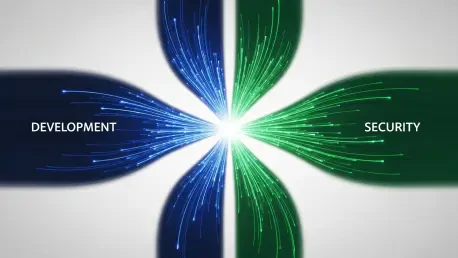

The traditional conflict between rapid software deployment and rigorous security protocols often culminates in a high-stakes standoff during the final stages of a release cycle, where engineering deadlines and compliance requirements clash in a zero-sum game. This friction is not merely a byproduct of differing personalities but is rooted in the structural divergence of incentives, time horizons, and the fundamental definitions of project completion. While developers are typically incentivized to deliver features quickly to satisfy market demands, security teams are tasked with the prevention of incidents, a metric often measured by the absence of observable failures. When these two worlds collide in the modern continuous integration and continuous delivery (CI/CD) pipeline, the resulting tension can lead to significant delays, employee burnout, and a compromised security posture. By 2026, the complexity of cloud-native architectures has only deepened these challenges, requiring a more sophisticated and integrated approach to how these teams interact.
The core of the issue lies in the fact that security is frequently treated as an external audit rather than an intrinsic component of the development lifecycle. When security checks are bolted onto the end of a pipeline, they become a bottleneck that engineers view with resentment rather than as a value-added service. This perspective is exacerbated when the security team is seen as the group that only says “no” or provides a laundry list of vulnerabilities just as a product is ready for launch. Conversely, security professionals often feel like they are constantly cleaning up avoidable messes because they were excluded from the design phase. Bridging this gap requires a fundamental shift in perspective where security is integrated into the daily cadence of engineering work, ensuring that risk management becomes a shared responsibility rather than a specialized chore.
Moving toward a functional dynamic involves more than just purchasing new tools; it requires a cultural alignment that acknowledges the validity of both speed and safety. High-performing organizations have realized that the most expensive version of security work is the audit that happens after the architecture is finalized and the data models are committed. In these late stages, findings are no longer mere suggestions but mandates for costly rework that can derail entire roadmaps. To avoid this, the security team must be invited into the design conversation early, where the cost of making changes is minimal and the opportunity for collaboration is maximal. By establishing clear expectations and automated feedback loops, organizations can transform the security-development relationship from one of mutual suspicion to one of collaborative partnership, ultimately leading to more resilient software and more efficient delivery pipelines.
1. Identifying the Root Causes of Organizational Friction
The friction between security and development teams often begins with the technical limitations of the security tools themselves, particularly regarding the speed of automated scans. If a comprehensive vulnerability scan takes significantly longer than the rest of the automated build and test process, it creates a natural incentive for developers to bypass or ignore these checks to meet their delivery schedules. In a modern development environment where pipelines are expected to run in minutes, a thirty-minute or hour-long security gate is perceived as an intolerable delay. This discrepancy in speed forces engineers to choose between following established security protocols and hitting their performance targets, a choice that almost always results in security being sidelined in favor of operational velocity.
Furthermore, the high frequency of incorrect alerts, commonly known as false positives, severely undermines the credibility of the security process. When a significant portion of the reported vulnerabilities turns out to be irrelevant or inaccurate, developers quickly develop “alert fatigue” and learn to ignore the reports entirely. This noise masks genuine risks and leads to a culture where security warnings are treated as minor nuisances rather than critical indicators of software health. When developers are forced to manually investigate dozens of false alarms for every legitimate issue found, the perceived value of the security pipeline diminishes, and the relationship between the two teams suffers as a result.
The lack of context and actionable information in security reports further complicates the integration of these two disciplines. Simply providing a file path and a line number without explaining the underlying risk or offering a clear path to remediation makes it incredibly difficult for developers to take meaningful action. Without an understanding of the impact of a vulnerability or a suggested fix, engineers are left to research the issues on their own, adding even more time to an already strained process. This issue is often compounded by all-or-nothing blocking rules that fail to differentiate between a critical security flaw and a minor compliance observation. When every type of issue triggers a build failure regardless of the actual risk level, the pipeline becomes a blunt instrument that stops progress unnecessarily and fosters resentment among the engineering staff.
2. Operational Strategies for High-Performance Environments
High-performing organizations have successfully mitigated these issues by shifting security checks from the final release stage to individual code branches. By providing feedback during the pull request stage, security teams ensure that developers can address vulnerabilities while the code is still fresh in their minds and before it has been integrated into the main codebase. This “shift-left” approach significantly reduces the cost of remediation and prevents the accumulation of security debt that typically haunts later stages of the development cycle. When checks are granular and focused on specific changes, they become a natural part of the peer review process, allowing for a more collaborative and less adversarial interaction between development and security personnel.
To sustain this model, organizations must invest in optimizing scan durations to match the speed of the modern development workflow. This often involves selecting tools that offer incremental scanning capabilities or utilizing specialized engines designed for high-speed analysis of specific languages and frameworks. Simultaneously, a constant effort must be made to filter out mistaken alerts and maintain a high signal-to-noise ratio in the reporting. By regularly reviewing and tuning the security rulesets, teams can ensure that only relevant and high-confidence issues are surfaced to the developers. This commitment to data quality builds trust in the security tooling and ensures that when a scan does trigger a warning, it is treated with the seriousness it deserves by the engineering team.
Transparency and integration are also key components of a successful security and development alignment. Reports should not only identify a bug but also include the reason for the rule, the severity of the threat, and a suggested solution or best practice for resolution. This educational aspect empowers developers to write more secure code in the future and reduces the reliance on manual intervention from the security team. Moreover, using the same software to track security issues and feature development ensures that security tasks are prioritized alongside new functionality. Integrating security experts directly into project teams during the design phase further prevents late-stage surprises, as potential risks are identified and mitigated before the first line of code is even written.
3. Practical Integration of Security Tooling and Automation
Building an effective security pipeline requires a multi-layered approach to automation that begins with static code analysis on every pull request. This analysis should be configured to focus exclusively on the changes introduced in that specific submission to keep execution times under five minutes, ensuring that the developer’s flow is not interrupted. In addition to analyzing the source code, the pipeline must also scrutinize third-party libraries and dependencies for known flaws. Given that modern applications rely heavily on external packages, checking for vulnerabilities in these dependencies is a critical step. The automation should be programmed to stop the build for critical vulnerabilities while merely tracking minor issues to be addressed during regular maintenance cycles.
As code progresses through the pipeline, dynamic testing should be conducted in a separate staging environment to identify vulnerabilities that only manifest during runtime. Because dynamic analysis can be time-consuming, it is often more effective to run these tests on a separate schedule rather than making them a mandatory gate for every code review. This allows for deep security probing without slowing down the primary delivery mechanism. Another essential component of the modern pipeline is the automated generation of a software bill of materials (SBOM) for every release. This comprehensive inventory of all software components allows the organization to quickly identify and alert the relevant teams whenever new vulnerabilities are discovered in components that have already been deployed to production.
To maintain the balance between security and speed, the pipeline’s automated “gate” should be configured to block the build only for major risks, such as high-severity flaws or the accidental inclusion of leaked secrets. Lower-priority items should be logged as tasks in the project management system but allowed to pass through to avoid unnecessary delays. Furthermore, a clear and documented process must be established for managers to sign off on known risks when business requirements necessitate a move forward despite an outstanding security observation. Finally, the organization should monitor how often the pipeline stops work and use this data to refine the security gates. Treating the pipeline as a shared product that serves both developers and security ensures that the automation remains a facilitator of success rather than a source of frustration.
4. Navigating the Cultural and Strategic Transformation
The journey toward a unified security and development lifecycle was not merely a matter of technical configuration but required a profound shift in how organizational success was defined. Teams that achieved this alignment moved away from the hostile dynamic of the past, where security was viewed as a final hurdle to be cleared at all costs. Instead, they fostered a culture where security was seen as a fundamental characteristic of high-quality software, much like performance or reliability. By aligning incentives so that security metrics were included in the broader engineering performance reviews, organizations ensured that everyone had a stake in the security posture of the application. This led to a more proactive environment where developers took pride in delivering code that was both functional and secure.
The implementation of these strategies resulted in a significant reduction in the time required to remediate vulnerabilities and a marked decrease in the number of security incidents reaching production. Automated feedback loops and integrated workflows allowed security professionals to transition from being reactive gatekeepers to becoming strategic partners who provided guidance and expertise throughout the lifecycle. As the relationship between the two departments improved, the focus shifted from assigning blame to solving problems collaboratively. This cultural transformation was supported by data-driven adjustments to policies and a commitment to transparency that ensured both teams were working toward the same objective: shipping secure, high-quality software at the speed of business.
In the end, the organizations that thrived in this environment were those that recognized the value of treating their delivery pipeline as a collaborative ecosystem. They moved beyond the rigid silos of the past and embraced a model of shared responsibility that empowered every member of the technical staff. By making security rules clear, automating feedback at the earliest possible stages, and utilizing shared tools for tracking progress, these companies eliminated the traditional bottlenecks that once hindered their agility. The success of this approach was evident in the increased resilience of their systems and the improved morale of their teams, demonstrating that with the right strategies, speed and security were not mutually exclusive but were, in fact, mutually reinforcing.