
The very fabric of the modern workplace is being rewoven as organizations rapidly move away from a patchwork of standalone software toward fully integrated, artificially intelligent productivity and collaboration suites. These powerful platforms, such as Microsoft 365 and Google Workspace, have evolved far beyond their origins as simple collections of office applications. They now function as centralized, cohesive ecosystems that unify operations, streamline communication channels, and deliver significant boosts to employee efficiency and creativity. The recent infusion of sophisticated AI assistants directly into the daily workflow represents a pivotal moment in this evolution, fundamentally reshaping how tasks are performed, projects are managed, and business value is generated. This transition is not merely an upgrade in tooling but a strategic imperative that is redefining what it means to be productive in an increasingly interconnected and fast-paced digital environment. For businesses ranging from multinational corporations to local nonprofits, the adoption of these intelligent suites has become a critical driver of innovation, collaboration, and competitive advantage.
The New Paradigm: From Disparate Tools to Unified Hubs
The Drive for Centralization
A predominant trend fueling this digital transformation is the strategic consolidation from fragmented, disparate software solutions to unified, all-in-one productivity platforms. This movement is largely driven by a pressing need for centralization and standardization, particularly within organizations undergoing significant global operational shifts. As companies transition from siloed, regional business models to more integrated global structures, they require a consistent and reliable technological foundation. This foundation is essential for fostering a common corporate culture, streamlining complex cross-functional processes, and enabling seamless, real-time collaboration among teams spread across different continents and time zones. The ability to have a single, integrated suite of products is no longer considered a forward-thinking advantage but has firmly become “table stakes” for any organization aiming to operate effectively on a global scale. This unified approach eliminates the friction and inefficiencies caused by incompatible systems, ensuring that every employee, regardless of location, has access to the same tools and information, thereby creating a level playing field for productivity and innovation across the entire enterprise.
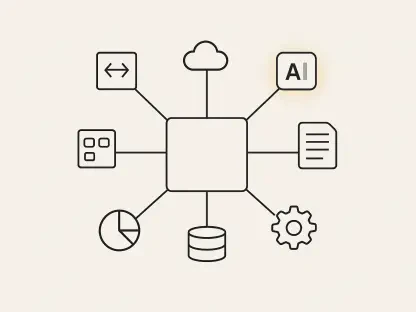
The evolution of these platforms has extended beyond being mere collections of applications; they have matured into central workspaces or “productivity hubs” that serve as the digital nerve center for modern business operations. Industry analysts have observed that tools like Microsoft Teams have become integral to the daily rhythm of work, often representing the primary digital location where employees begin their day, conduct their core tasks, and conclude their work. These sophisticated hubs act as a single pane of glass, consolidating a wide array of essential functions. They bring together diverse communication channels, including persistent chat, video meetings, and enterprise voice calls, alongside comprehensive workflow management systems and immediate access to critical work resources and organizational data. By centralizing these elements, productivity hubs minimize the need for context switching between different applications, which is a known drain on employee focus and efficiency. This integrated environment fosters a more fluid and intuitive workflow, allowing information and collaboration to flow unimpeded, making these hubs the undeniable core of the contemporary digital workplace.
The AI-Powered Productivity Boost
The most significant and forward-looking trend shaping the digital workplace is the deep integration of artificial intelligence directly into these productivity suites. The introduction of powerful AI assistants, most notably Microsoft Copilot and Google Gemini, is being heralded as a major value enhancer, fundamentally changing the relationship between employees and their digital tools. These intelligent agents empower the workforce to operate with greater speed and efficiency by automating and assisting with an extensive range of everyday tasks. This includes capabilities such as writing and responding to emails with appropriate context and tone, summarizing hours-long meetings into concise, actionable notes, generating accurate transcripts in real time, creating complex formulas and analyzing large datasets in spreadsheets, drafting entire documents from simple prompts, and developing professional-grade presentations. According to industry experts, this seamless integration provides a “big uplift in value,” allowing users to achieve far more with their collaboration tools than was previously possible. This directly addresses a key business objective, as highlighted in recent studies indicating that 32% of organizations are actively seeking ways to help their employees use collaboration and communication tools more effectively.
The capabilities of these integrated AI assistants extend far beyond simple task automation; they are increasingly serving as a “thought partner” for employees, augmenting human creativity and problem-solving. Instead of just performing rote tasks, AI can now help generate ideas, refine arguments, and explore different approaches to complex challenges. For instance, an employee can ask the AI to brainstorm marketing slogans, outline a business proposal, or even critique a draft for clarity and impact. This collaborative dynamic frees up significant mental bandwidth, allowing workers to move away from tedious, repetitive work and focus their energy on more strategic, high-value activities that require critical thinking, emotional intelligence, and innovation. This shift not only accelerates productivity but also fosters a more engaged and empowered workforce. By handling the mundane aspects of work, AI enables employees to dedicate more time to their core competencies, ultimately driving greater business outcomes and fostering a culture of continuous improvement and creativity across the organization.
Transformation in Action: Real-World Case Studies
Enterprise-Scale Overhaul at JLL
The commercial real estate giant JLL serves as a compelling example of a large enterprise effectively leveraging a unified platform to support a massive and complex operational overhaul. Approximately seven years ago, JLL embarked on a strategic initiative to shift from a geographically fragmented, regional structure to globally aligned business lines. This fundamental change necessitated the centralization and standardization of its productivity and collaboration tools. Previously, different regions within the company operated with a variety of cloud solutions, including a mix of Microsoft products and their alternatives, leading to inefficiencies and collaboration barriers. As JLL unified its global operations, it made the strategic decision to standardize on Microsoft 365 in 2020, a move that fortuitously coincided with the widespread shift to remote and hybrid work models. This timely standardization provided a cohesive technological backbone that proved crucial for navigating the new world of work. The unified platform enabled JLL’s vast workforce of 112,000 employees worldwide to collaborate seamlessly, breaking down the silos that had previously hindered cross-regional projects and communication.
The strategic implementation of Microsoft 365 at JLL has been both extensive and deep, demonstrating the full potential of an integrated suite. The company’s global CIO, George Thomas, emphasizes the profound impact of being able to “asynchronously collaborate on a document across different time zones,” a capability that saves a significant amount of meeting time and accelerates project timelines. This is supported by the company’s robust use of SharePoint, which now hosts over 140,000 sites for secure document storage and knowledge management. On the productivity front, JLL has gone beyond standard usage by deploying over 5,000 custom Power Apps and 10,500 Power Automate flows to streamline and automate a wide range of business processes, from client onboarding to internal approvals. A key benefit highlighted by the leadership is the seamless integration across the entire suite; an employee can effortlessly move a conversation from an Outlook email to a Teams chat, initiate a video call, and share relevant documents, all within a single, cohesive ecosystem. Thomas states this has been instrumental in driving a common set of processes and a unified corporate culture.
Impact Beyond the Corporation
The transformative benefits of unified productivity suites are not confined to large, multinational corporations, as demonstrated by the Dallas-based nonprofit Atlantic Housing Foundation. This organization, which focuses on providing affordable housing, has relied on Google Workspace as its core operational tool since 2013. The foundation’s IT Manager, Damon Hartman, describes the platform as “absolutely vital,” going so far as to state that the organization “couldn’t work” without it. The nonprofit’s team of over 200 employees utilizes the full suite of Workspace applications, including Gmail for communication, Google Drive for collaborative file storage, Google Meet for virtual meetings, and Google Chat for real-time team messaging. Before adopting this unified solution, the foundation faced significant collaboration challenges, particularly with document version control. The previous process often led to confusion and lost work as multiple versions of documents circulated via email. Google Workspace effectively solved this critical issue with its real-time, simultaneous editing capabilities in Docs, Sheets, and Slides, ensuring that everyone is always working from the most current version of a file. This has been particularly crucial for supporting the organization’s hybrid workforce.
To further support its distributed teams, Atlantic Housing Foundation implemented Google Voice for Business, which allows employees to manage work calls flexibly from their computers or personal smartphones without exposing their private numbers. This integration provides a professional and consistent communication experience for both staff and the communities they serve. While the organization initially utilized the free-for-nonprofits version of the suite, it eventually upgraded to a paid account to gain access to expanded cloud storage and advanced features. Hartman praises the simplicity and power of the Google admin console, which makes user management, security configuration, and maintenance straightforward and efficient, even for a small IT team. The organization has also eagerly embraced the power of artificial intelligence by integrating the Gemini assistant into its daily workflows. The accounting teams now use Gemini to efficiently extract specific lease information from lengthy financial reports, while the community services staff leverage it to refine and improve the newsletters they send to residents. Hartman highlights its immense value in automating “rote tasks,” such as pulling data from a spreadsheet or summarizing a long meeting document, calling the capability a “huge time savings” and foreseeing significant productivity benefits across every department within the foundation.
Efficiency and Savings in Hospitality
The case of Sensei, a luxury wellness retreat operator, provides a powerful testament to the gains in efficiency and substantial cost savings that can be achieved through strategic technological consolidation. When Nick DeMarco joined the company as Vice President of IT two years ago, he was confronted with a fragmented and costly technological landscape consisting of 15 disparate applications, each serving a niche function. Recognizing the inefficiency and expense of maintaining such a complex system, he led a focused consolidation effort to standardize the company’s operations on the Microsoft 365 platform. This decisive move yielded immediate and substantial financial benefits. DeMarco noted that he successfully “brought down the IT budget by at least six figures” in his first year alone, a saving achieved by eliminating redundant software licenses and reducing the administrative overhead required to manage multiple systems. At Sensei’s exclusive properties, Microsoft Teams is now in “constant use” as the primary tool for secure, real-time operational communication, enabling seamless coordination between wellness guides, practitioners, and front desk staff to deliver an exceptional guest experience.
The deep integration within the Microsoft 365 suite has made communication significantly more efficient for Sensei’s staff. For instance, employees can now message colleagues on Teams directly from within the Outlook interface, eliminating the need to constantly switch between applications to perform simple communication tasks. This small but impactful feature reduces friction and saves valuable time throughout the day. In addition to improving communication, Sensei also built a centralized employee hub using SharePoint, providing a single, easily accessible location for all corporate resources, announcements, and internal documentation. The company is also an active user of Microsoft Copilot, employing a strategy of rotating licenses among different employees to maximize its impact across the organization. Those who have used the AI assistant report significant benefits. Meeting summarization has proven particularly valuable for executives, allowing them to quickly catch up on discussions they missed. For other staff members, Copilot serves as a valuable “thought partner,” assisting in drafting professional emails and creating other forms of written content. DeMarco’s enthusiastic endorsement—calling Copilot the “best investment we’ve ever made”—underscores the profound and tangible impact that integrated AI is having on business productivity and operational effectiveness.
A Redefined Future of Work
The widespread adoption of unified, AI-infused collaboration and productivity suites marked a definitive turning point in the evolution of the digital workplace. By consolidating a multitude of disparate tools into integrated platforms, organizations achieved a level of operational cohesion and global collaboration that was previously unattainable. The creation of these centralized digital hubs became the backbone of modern work, streamlining workflows and fostering a more connected and efficient environment. The subsequent integration of powerful AI assistants represented the next logical step in this journey, unlocking unprecedented levels of productivity. These intelligent tools automated routine tasks, generated valuable data-driven insights, and functioned as a creative partner for employees across every business function. The diverse experiences of organizations like JLL, Atlantic Housing Foundation, and Sensei demonstrated that these advanced suites delivered tangible and significant benefits, which included substantial cost savings, dramatic improvements in efficiency, and a more streamlined and intuitive user experience for their entire workforce. These platforms became a critical component of business strategy, reshaping not just how work was done, but the very definition of a modern, agile, and productive organization.