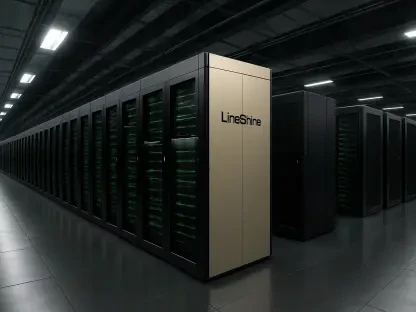

SpaceX is currently leveraging its expanding data-center capacity to transition from a rocket manufacturer into a significant resource provider for global AI labs. This strategic pivot highlights a fundamental shift in how aerospace giants perceive the value of terrestrial and orbital computing infrastructure. The reported $60 billion valuation for Cursor, an AI-native code editor, marks a significant departure from traditional aerospace investments. By integrating advanced software intelligence with its existing Starlink constellation, the company aims to create a closed-loop system where hardware and software evolve in lockstep. This massive bet suggests that the bottleneck for space exploration is no longer just propulsion or materials science, but the speed at which humans can write, debug, and deploy reliable code for autonomous systems. As the demand for high-performance computing grows, SpaceX positions itself not merely as a carrier of cargo, but as a backbone for the next generation of artificial intelligence development.
The Synergy: Software Intelligence and Orbital Infrastructure
The convergence of Starlink’s global connectivity and Cursor’s generative capabilities represents a calculated move to dominate the lifecycle of technical development. As SpaceX scales its Starship launches from 2026 to 2028, the volume of telemetry data and the need for real-time software adjustments will grow exponentially. Cursor provides a unique advantage by allowing engineers to interact with massive codebases using natural language, significantly lowering the barrier to entry for complex system modifications. This is not merely about writing code faster; it is about maintaining a coherent logic across millions of lines of C++ and Rust that power the flight computers and ground stations. By owning a primary stake in the tool used to build their own systems, SpaceX ensures that its proprietary methodologies are baked into the very artificial intelligence that assists its developers. This vertical integration reduces reliance on external software vendors and minimizes the risk of architectural fragmentation during high-stakes missions.
Beyond internal utility, the investment signals a broader intent to monetize the intersection of satellite internet and edge computing. Starlink is no longer just a consumer internet service; it is becoming a distributed data-center network capable of running localized AI models in regions where traditional infrastructure is lacking. Cursor’s ability to function as an intelligent layer over these systems allows for rapid deployment of specialized software directly to orbital hardware. This synergy creates a competitive moat that other aerospace firms struggle to replicate, as they remain tethered to traditional IDEs and manual coding practices. The decision to invest such a substantial sum reflects a belief that AI-assisted development will be the primary driver of aerospace innovation for the next decade. Consequently, the company is effectively building a “developer cloud” in space, where Cursor serves as the primary interface for managing planetary-scale applications. This evolution transforms SpaceX into a multifaceted tech powerhouse that rivals traditional cloud providers while maintaining its lead in heavy-lift launch capabilities.
Engineering Transformation: Redefining Aerospace Development
The operational efficiency gained through AI-driven development has become a cornerstone of the company’s fast-paced iteration cycle. In the demanding environment of rocket testing, where software bugs can lead to catastrophic hardware failure, the precision of Cursor’s context-aware suggestions offers a vital safety net. Traditional development environments often fail to grasp the intricate dependencies within large-scale aerospace projects, leading to oversight and technical debt. In contrast, Cursor’s underlying models are trained to understand the specific nuances of embedded systems and real-time operating systems used in flight control. This deep contextual awareness allows engineers to identify potential logical flaws before a single line of code is pushed to production. Furthermore, the integration of AI allows for the automated generation of unit tests and documentation, which historically occupied a significant portion of an engineer’s time. By automating these rote tasks, SpaceX can focus its human capital on solving the most complex challenges of Martian colonization and lunar logistics.
Industry leaders recognized the necessity of adopting similar AI-native workflows to remain competitive in an increasingly automated economy. The practical application of Cursor within SpaceX demonstrated that the primary value of AI lay in its ability to manage complexity at a scale beyond human cognition. Moving forward, organizations were encouraged to prioritize the integration of intelligent development tools that could bridge the gap between abstract design and physical execution. This approach required a fundamental rethinking of technical debt and software maintenance, treating code as a living organism that evolved alongside the hardware it controlled. The long-term implications suggested that the most successful companies would be those that owned both the data and the tools used to interpret and act upon it. By securing its position at the heart of the AI development pipeline, SpaceX provided a blueprint for how legacy industries could reinvent themselves through strategic technological bets. The transition finalized the company’s status as a provider of both the vehicles for exploration and the intelligence required to navigate the complexities of a multi-planetary existence.