
The introduction of a five hundred thousand token context window allows Grok 4.6 to maintain coherence during massive data processing tasks. This expanded capacity enables the model to ingest entire technical libraries or massive codebases in a single pass without losing the thread of the original query or hallucinating mid-stream. SpaceXAI has positioned this release as a direct challenge to existing enterprise solutions by combining the raw computational power of the X-series clusters with a newly forged alliance with Google Cloud’s infrastructure. This partnership provides the necessary backbone for global scaling, ensuring that high-concurrency environments can utilize the model’s reasoning capabilities without significant performance degradation. As the ecosystem expands, the launch of the dedicated Grok Bot signifies a transition from purely digital interactions to a more integrated, agentic presence within professional workflows. The convergence of high-memory context and cloud-native scalability marks a definitive moment for the industry.
Strategic Infrastructure: Deploying Grok 4.6 on Google Cloud
By moving the primary inference layer to Google Cloud’s Vertex AI platform, SpaceXAI has unlocked access to specialized TPU v6 clusters that are optimized for the transformer architecture underpinning Grok 4.6. This transition was necessitated by the sheer volume of parameters that the 4.6 iteration carries, which requires a more distributed memory architecture than previous standalone deployments could offer. Engineers at both organizations worked to ensure that the data pipeline between the SpaceXAI proprietary training nodes and the Google Cloud delivery endpoints maintains a sub-millisecond response time for critical operations. This synergy allows for a more robust disaster recovery protocol and dynamic load balancing across international regions, making the model accessible to developers in London, Tokyo, and New York simultaneously. The shift indicates a departure from siloed hardware strategies toward a more flexible, multi-cloud approach that prioritizes end-user uptime.
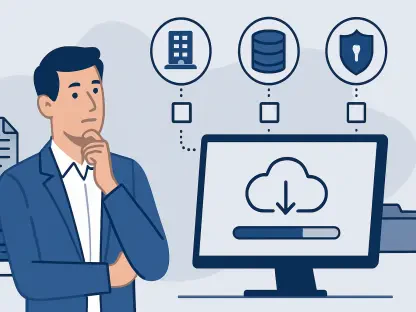
For enterprise clients, this integration means that Grok 4.6 can now be deployed within existing Google Cloud VPCs, ensuring that sensitive data remains within a controlled security perimeter while still benefiting from the generative power of the model. This setup addresses a significant hurdle for the financial and healthcare sectors, where data residency and encryption-at-rest are non-negotiable requirements for adopting third-party AI tools. Furthermore, the collaboration introduces a streamlined billing and management interface, allowing IT administrators to monitor resource consumption and token usage through the familiar Cloud Console. Beyond simple management, the partnership includes pre-configured APIs that allow for seamless embedding of Grok 4.6 into Workspace applications, facilitating automated document synthesis and real-time data analysis across massive spreadsheets. This level of accessibility suggests that the barrier between complex data science and business operations is dissolving.
Functional Agency: The Practical Rollout of the Grok Bot
Accompanying the software update is the Grok Bot, a specialized autonomous agent framework designed to execute multi-step tasks across diverse software environments without constant human supervision. Unlike standard chatbots that respond to isolated prompts, the Grok Bot utilizes a recursive reasoning loop that allows it to break down complex objectives into smaller, actionable sub-tasks. It can interface with external software through secure API hooks, enabling it to manage calendar scheduling, perform complex web research, and even coordinate logistics within supply chain management systems. The bot is powered by a distilled version of the 4.6 engine, optimized for low-latency decision-making while maintaining the core logic of its larger counterpart. This architecture allows the agent to function as a persistent digital coworker that learns the specific preferences and procedural nuances of its assigned environment. By bridging the gap between passive retrieval and active task execution, it represents a phase shift.
The deployment of Grok 4.6 on Google Cloud provided a comprehensive blueprint for how next-generation AI should be delivered to the global market. It demonstrated that the success of a model depended as much on its infrastructure and accessibility as it did on its underlying parameters. Organizations that recognized the importance of integrating these tools into their core workflows gained a significant competitive advantage by reducing operational friction and accelerating data-driven decision-making. Moving forward, the emphasis was placed on creating scalable, secure, and agentic systems that could interact with both digital and physical reality. Stakeholders were encouraged to audit their existing infrastructure to ensure compatibility with high-context models and to begin developing internal ethical guidelines for autonomous agents. By prioritizing early adoption and rigorous safety standards, leaders prepared their teams for a landscape where AI was a foundational pillar. This strategic move ensured that the benefits of the latest breakthroughs were felt across every level.