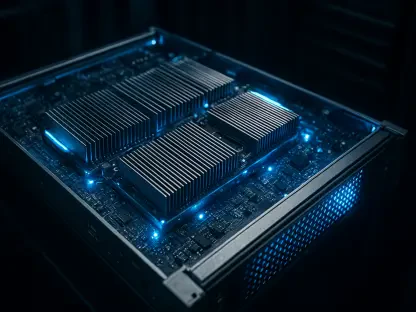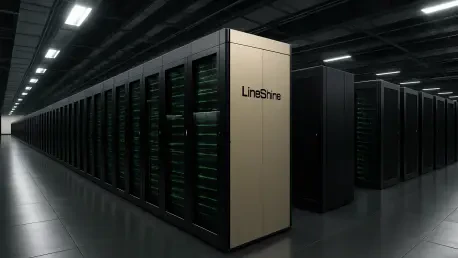

LineShine’s LX2 chiplet-based many-core processors support multiple precisions, including FP64, BF16, and INT8, to serve both traditional physics and modern machine learning. This architectural versatility allowed the system to debut in June 2026 at the National Supercomputer Center in Shenzhen with a record-shattering performance that reclaimed the global lead for high-performance computing. Reaching a sustained High-Performance Linpack benchmark of 2.1984 Exaflops, LineShine became the first CPU-only machine to cross the two-exaflop threshold in double-precision mathematics. The system also secured the top spot on the High-Performance Conjugate Gradients list with 22.0049 Petaflops, a feat that demonstrates its capacity for complex memory handling. This dual achievement suggests the machine is not merely optimized for theoretical peaks but is a balanced tool for scientific inquiry. By ending a long hiatus at the top of the TOP500 list, the installation signals a significant shift toward versatile, large-scale computing architectures globally.
The Paradigm Shift: Why Online Acceleration Matters
The engineering philosophy behind LineShine marks a significant departure from the traditional CPU-plus-external-accelerator model that has dominated the industry for years. In standard supercomputing architectures, moving data between a central processor and a separate graphical processing unit often creates a severe performance bottleneck, particularly in modern workflows that mix high-precision simulations with low-precision artificial intelligence tasks. To solve this, developers implemented a strategy known as Online Acceleration, which integrates acceleration capabilities directly into the central processing unit cores. This eliminates the latency and overhead associated with constant data synchronization between disjointed hardware components. By keeping the computation within a single silicon domain, the system ensures that information moves seamlessly across the hierarchy. This approach reflects a new priority in the field where the focus is on the continuity of the workflow rather than just the speed of isolated math kernels.
This unified execution environment allows different stages of a scientific pipeline, such as numerical simulation and deep learning inference, to share the same memory hierarchy and software stack without friction. By removing the coordination costs associated with moving data between separate hardware domains, LineShine streamlines the execution of massive, data-intensive pipelines that are becoming common in modern research. The tight coupling of vector and matrix operations within the core allows researchers to switch between different precision levels instantly, which is vital for emerging AI-for-Science applications. This level of integration was previously difficult to achieve with discrete hardware setups, which often required complex programming to synchronize memory across disparate caches. The result is a system that handles irregular communication and diverse computational tasks with far greater fluidity. As data sets continue to grow in complexity, the ability to process them within a unified framework will likely become the standard for all future exascale designs.
Architectural Mastery: Inside the LX2 Processor
At the heart of this exascale marvel is the LX2 processor, a chiplet-based many-core unit that integrates 304 cores per chip to provide immense parallel processing power. Each of these cores features native Scalable Matrix Extensions and Scalable Vector Extensions, allowing the hardware to adapt to the specific mathematical needs of an application in real time. This native integration is critical because it enables the processor to handle a vast range of precisions, from traditional FP64 for simulations to INT8 for AI training. To ensure these cores are utilized efficiently, the system employs a full-stack co-design featuring the Kylin operating system and the Lclang compiler. This integrated approach ensures that the software understands the unique underlying silicon, reducing the barrier for complex scientific modeling. The physical scale of the system is equally impressive, housing more than 13 million processor cores across 22,680 nodes, all working in a synchronized fashion to achieve peak performance.
To support such a high concentration of processing power, each compute node is equipped with a sophisticated hierarchical memory system that includes High-Bandwidth Memory alongside standard DDR5 RAM. Data moves across the entire supercomputer via the Lingqi interconnect, which uses a dual-plane, four-rail fat-tree topology specifically designed for high bandwidth and extremely low latency. To maximize this hardware, developers introduced specialized acceleration tools like STAR-Lance for computation and STAR-Helix for converged workflows. These libraries allow applications to utilize dedicated memory access engines and asynchronous data movement with minimal developer intervention. Benchmarking confirms this efficiency, as LineShine achieved over 80% computation efficiency and a rating of 52.07 GFlops per watt. Even on mixed-precision tests required for modern science, the system reached 7.92 Exaflops, highlighting an architectural balance that is rarely seen in the most powerful machines.
Scientific Impact: From Turbulence to Drug Design
The true value of LineShine is demonstrated through its immediate impact on various scientific disciplines, including a massive turbulence simulation involving 16.5 trillion grid points. This study allowed engineers to explore friction dynamics at scales that were previously impossible to model accurately, providing data that could lead to more efficient aerospace designs. In the field of brain science, the system enabled the first whole-brain spiking neural network simulation to reach the 100-trillion-synapse scale, a milestone that brings researchers closer to understanding the human mind. These applications show that the system’s many-core model provides the necessary depth for the most demanding physical and biological simulations. By moving away from specialized accelerators, the system allows these complex models to run in a more flexible environment. The results from these early tests suggest that the many-core CPU architecture is uniquely suited for simulations that require both high-precision math and massive amounts of memory.
Furthermore, the system has revolutionized drug design and earth observation by merging artificial intelligence capabilities with traditional high-performance computing. In one instance, LineShine traversed a chemical space of 10 trillion compounds in less than a day, drastically shortening the timeline for discovering new medicinal candidates. This was achieved by creating a closed loop where AI models suggested molecular structures and physics simulations immediately verified their properties. In earth observation, the machine used a 6.3-billion-parameter generative model to process remote-sensing data, supporting massive compression and reconstruction ratios. By providing a versatile platform that handles high-precision math and intense communication with equal ease, LineShine offers a new blueprint for the next generation of supercomputing architecture. These successes illustrate how a unified computing environment can accelerate the pace of discovery across multiple sectors, making it an indispensable tool for researchers tackling global challenges.
Future Directions: Scaling toward New Computation Standards
The emergence of LineShine redefined the technical boundaries of exascale computing by proving that a general-purpose processor could compete with specialized accelerators. It moved the industry away from a narrow focus on peak theoretical performance toward a more nuanced understanding of sustained capability across diverse workloads. Researchers who utilized the system found that the integration of matrix and vector units within the CPU core provided a level of flexibility that was previously unattainable. This transition allowed for the seamless execution of converged pipelines where simulation and data analysis happened in a single, continuous stream of operations. The hardware-software co-design proved to be the decisive factor in overcoming the traditional bottlenecks of large-scale systems. Consequently, the project demonstrated that architectural balance is more important than raw speed in solving the most complex problems of the current era. This shift in perspective influenced how future supercomputing projects were planned and executed across the globe.
Looking forward, the success of this many-core approach suggested that organizations should prioritize unified memory hierarchies to better support AI-integrated research. The practical lessons learned from the deployment of 13 million cores highlighted the need for more robust interconnect technologies that could handle the increasing density of communication. Industry leaders recommended that future investments focus on full-stack optimization rather than just purchasing faster hardware, as the software ecosystem was shown to be vital for exascale efficiency. By adopting the principles of online acceleration, other research centers began to streamline their workflows and reduce the energy costs associated with data movement. The milestone achieved in Shenzhen served as a roadmap for the next generation of machines, emphasizing that the future of computing lies in the coordination of diverse tasks within a single, cohesive environment. Ultimately, the industry moved toward systems that prioritized scientific versatility over specialized benchmarks, ensuring long-term utility for the research community.