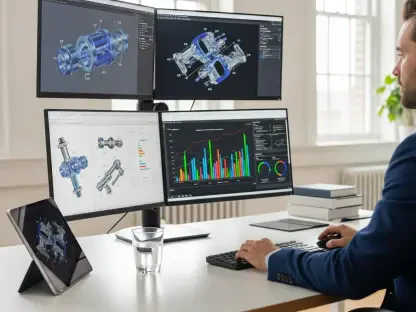

The rapid convergence of high-speed e-commerce demands and national economic diversification strategies has forced a total reimagining of how goods move across the Arabian Peninsula. In this current climate, the Gulf Cooperation Council region is no longer merely reacting to global supply chain disruptions but is actively setting the pace through the adoption of intelligent automation. This sophisticated framework integrates artificial intelligence with cloud-native architectures to create a logistics ecosystem that is as resilient as it is efficient. As the industry advances through 2026, the focus has shifted entirely from rudimentary digitization toward a fully autonomous and data-driven paradigm. Large-scale infrastructure projects in the United Arab Emirates and Saudi Arabia serve as the primary testing grounds for these innovations, proving that the integration of real-time intelligence into distribution networks is essential for maintaining a competitive edge in the global trade arena.
Predictive Intelligence: Moving Beyond Reactive Logistics
Modern warehouse management has successfully transitioned from a reactive model to a proactive one by leveraging the power of AI-driven predictive analytics. These systems are now capable of forecasting demand with an unprecedented degree of accuracy, allowing operators to position inventory based on granular data rather than historical guesswork. By analyzing localized variables such as Middle Eastern consumer buying patterns, regional cultural events, and seasonal fluctuations, facilities can optimize their stock levels to match exact market needs. This shift has drastically reduced the capital tied up in excess inventory while ensuring that high-demand products are always available for rapid fulfillment. This level of foresight is particularly valuable in a fast-paced market where consumer loyalty is often tied directly to the speed of delivery, forcing companies to refine their logistics strategies to keep up with the evolving expectations of the local population.
Furthermore, this predictive intelligence is proving indispensable for managing the unique environmental challenges posed by the region’s climate. In 2026, smart systems are being utilized to manage climate-controlled environments for high-stakes industries like pharmaceuticals and fresh food distribution. By integrating predictive weather models with facility management software, warehouses can preemptively adjust cooling levels to counteract rising exterior temperatures before they impact the interior. This proactive thermal management ensures total product integrity while significantly optimizing energy consumption throughout the year. The ability to maintain strict temperature zones without manual intervention not only reduces the risk of spoilage but also lowers the operational costs associated with high energy usage. This integration of environmental awareness and logistical precision represents a major leap forward in how the region handles sensitive cargo during the hottest months.
Cloud Connectivity: The Rise of the Digital Twin
As logistics networks continue to expand across borders, connecting major hubs like Dubai, Abu Dhabi, and Riyadh, the reliance on cloud-native Warehouse Management Systems has become a fundamental industry standard. These platforms offer a level of real-time visibility that was previously impossible, allowing logistics managers to oversee multiple sites across different countries from a single, unified interface. This centralized data flow is critical for maintaining consistency in operations and ensuring that every node in the supply chain is aligned with the overall corporate strategy. The shift to the cloud has also enabled smaller players in the market to access advanced tools that were once reserved for global giants, leveling the playing field and fostering a more competitive and innovative regional economy. This widespread connectivity serves as the backbone for the modern trade corridors that are currently defining the economic landscape of the GCC.
A key innovation accompanying this digital shift is the widespread implementation of Digital Twin technology, which provides a virtual replica of physical warehouse operations. Operators are now using these virtual environments to simulate complex scenarios, such as massive influxes of orders or changes in warehouse layout, without interrupting actual physical workflows. By testing these variables in a risk-free digital space, companies have significantly reduced the high costs and operational risks traditionally associated with trial-and-error improvements. This technology allows for seamless multi-site synchronization, ensuring that an optimization discovered in a Saudi Arabian facility can be instantly modeled and applied to a branch in Kuwait or Oman. The result is a highly agile network that can adapt to market shifts in real-time, providing a level of operational flexibility that is essential for navigating the complexities of modern international trade and regional logistics.
Robotic Integration: Enhancing Efficiency and Sustainability
The physical landscape of the warehouse is being radically transformed through the integration of advanced robotics and intelligent execution software. Automated Goods-to-Person systems and Autonomous Mobile Robots have become common sights on the warehouse floor, where they handle the repetitive and labor-intensive tasks of moving and sorting inventory. These robots are not merely programmed to follow fixed paths but utilize sophisticated sensors and AI to navigate dynamically around human workers and obstacles. In urban centers where land prices are at a premium, high-density Automated Storage and Retrieval Systems are maximizing vertical space, allowing facilities to hold more stock within a smaller physical footprint. This robotic evolution is not just about replacing human labor but about augmenting it, allowing workers to focus on complex problem-solving while machines handle the high-volume, precision-heavy aspects of the fulfillment process.
In tandem with physical automation, the industry has placed a renewed emphasis on sustainability and energy resilience as core operational requirements. The success of a logistics operation in 2026 is measured by its carbon footprint and energy efficiency just as much as its delivery speed. This has led to the widespread adoption of solar-powered automation systems and energy-efficient cooling technologies that align with national green initiatives. These advancements have provided a clear economic benefit by lowering utility overheads and insulating companies from the volatility of global energy prices. By integrating green technology into the very fabric of the automated warehouse, the GCC logistics sector has managed to turn a geographical challenge into a competitive advantage. This commitment to sustainable growth has ensured that the region remains a leader in modern supply chain management, proving that environmental responsibility and operational excellence are deeply interconnected.
Strategic Migration: The Path Toward Full Autonomy
For organizations across the GCC, the transition to these advanced technological frameworks was achieved through a strategic and modular approach rather than a complete overhaul of existing infrastructure. It was found that integrating new warehouse management technologies with established enterprise resource planning systems allowed businesses to mitigate operational risks during the transition period. Companies that prioritized a phased rollout of automation—starting with core picking and packing functions before adding complex modules like automated customs documentation—reported much higher success rates and faster returns on investment. This incremental migration strategy allowed for the training of the workforce in parallel with the installation of new hardware, ensuring that the human element of the supply chain evolved alongside the digital components. This careful planning was essential for maintaining service levels during a period of such rapid and widespread technological change.
Ultimately, the move toward intelligent automation was supported by localized expertise that tailored global technological standards to the specific regulatory and geographical needs of the Middle East. Providers focused on offering end-to-end solutions that addressed the nuances of regional trade, such as multi-currency invoicing and complex VAT compliance across different jurisdictions. Organizations that embraced these localized, intelligent systems built a foundation that allowed them to thrive as the regional economy modernized and expanded. Moving forward, the industry should prioritize the continued integration of cross-border data sharing and the development of even more energy-independent facilities. Investing in a workforce that is skilled in managing these automated environments was the final piece of the puzzle, ensuring that the infrastructure of the future remained supported by a capable and forward-thinking professional class.