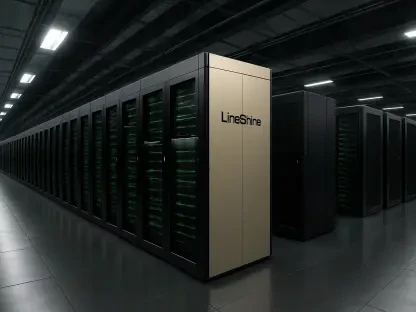

The use of relative-entropy-based measures helps modern AI models filter out background noise, focusing only on the most informative data points within a high-speed network. This technological shift marks a critical turning point for global digital infrastructure, which has recently struggled under the sheer weight of its own success. As of 2026, the reliance on massive, heterogeneous distributed systems has moved from a convenience to a necessity for global commerce, scientific research, and national security. However, this growth has introduced the fragility of scale, a phenomenon where the complexity of managing thousands of interconnected nodes leads to inevitable failures that can cascade through a network. Traditional methods of handling these disruptions have historically relied on reactive measures like simple replication or checkpointing, which often result in significant latency and wasted energy. The emergence of the Adaptive Quantum Neuro-Symbolic Scheduling framework signals a shift toward proactive, self-healing architectures that mitigate these issues before they manifest as critical outages.
Blending Logic with Quantum Probability
Knowledge Graphs: Integrating Logic and Neuro-Symbolic Reasoning
The first pillar of this self-healing approach involves a hybrid decision-making architecture that combines symbolic logic with neural networks. By utilizing a knowledge graph, the system tracks intricate dependencies and hardware capabilities, ensuring that tasks are handled by the most appropriate machines. This neuro-symbolic integration embeds rigid logical rules into a flexible learning environment, allowing the scheduler to reason like a human expert while processing data with the speed of deep learning. This ensures that the system does not just blindly optimize for speed but adheres to the structural constraints of the network, such as data sovereignty and specific hardware requirements for certain computational tasks. The use of first-order logic predicates allows the AI to maintain a consistent state of operation, even when the underlying data is noisy or incomplete, which is a common occurrence in hyper-scale cloud environments.
Building on this logic-driven foundation, the framework employs sophisticated embedding functions to translate categorical relationships into continuous vector spaces. This allows the scheduling algorithm to predict how a change in one node will impact its neighbors, effectively creating a digital twin of the network’s logical structure. Instead of treating every task as an isolated event, the neuro-symbolic layer understands the context of the workload, recognizing that certain scientific simulations require different resource prioritization than consumer-facing web services. This contextual awareness is what allows the system to remain stable during sudden shifts in user demand or unexpected hardware degradation. By maintaining this high-level reasoning capability, the architecture avoids the black-box pitfalls of traditional deep learning, providing a more transparent and reliable method for managing complex distributed systems that are prone to unpredictable behavior.
Quantum Mechanics: Utilizing Probabilistic States on Classical Hardware
The framework further innovates by applying the mathematical principles of quantum mechanics to traditional hardware through quantum-inspired optimization. It represents potential schedules as Q-bits in a state of superposition, enabling the system to explore multiple configurations simultaneously rather than one by one. This approach significantly reduces the time required to find an optimal path in a search space that grows exponentially with the number of tasks. Mechanisms like quantum tunneling allow the scheduler to jump through computational barriers to find the best global solution, avoiding the common problem of getting stuck in local optima. By treating the scheduling problem as a probabilistic landscape, the AI can evaluate thousands of permutations in a fraction of a second, which is essential for maintaining the real-time responsiveness required by modern edge computing applications and high-frequency trading platforms.
Beyond the initial superposition of states, the system utilizes the concept of entanglement to model the inherent links between interdependent tasks. In a distributed environment, the completion of one job often serves as the trigger for several others, creating a chain reaction that can be difficult to manage with linear algorithms. By using entangled Q-bits, the scheduler ensures that any change in the status of a primary task immediately influences the distribution of its dependent tasks across the network. This synchronization happens at a mathematical level, providing a level of coordination that traditional schedulers cannot match. This quantum-inspired layer essentially allows classical computers to mimic the efficiency of quantum processing, providing a bridge between current hardware limitations and the advanced computational needs of 2026. This method has proven particularly effective in reducing the makespan of complex jobs in large data centers.
Decentralized Intelligence and Network Efficiency
Federated Learning: Implementing Privacy-First Distributed Training
The second pillar focuses on how the system learns across a distributed network without compromising security or bandwidth. Through Federated Learning, each individual node or cluster trains a local model based on its specific workload and only shares the learned updates with a central aggregator. This decentralized approach eliminates the need to send raw, sensitive data across the network, reducing the risk of security breaches and preventing the central server from becoming a performance bottleneck. As organizations face stricter data privacy regulations, this method provides a way to improve global system intelligence while keeping proprietary information strictly on-site. The aggregator then synthesizes these local updates into a global model that is distributed back to the nodes, creating a collective intelligence that benefits from the unique experiences of every participant in the distributed network.
In contrast to centralized AI models that require massive data transfers, this federated approach significantly lowers the communication overhead associated with system-wide updates. It allows for the continuous refinement of scheduling policies without saturating the network’s backplane, which is critical for maintaining high throughput in bandwidth-constrained environments like edge locations or remote research stations. Furthermore, the system is designed to handle node dropouts gracefully, ensuring that if a specific location goes offline, the global learning process continues uninterrupted. This resilience is a core component of the self-healing philosophy, as it ensures that the intelligence of the network is not dependent on any single point of failure. By distributing the training process, the framework creates a more robust and scalable solution that can grow alongside the infrastructure it manages, adapting to new hardware and workloads.
Sparse Transformers: Enhancing Performance through Entropy Measures
To maintain efficiency, the framework employs a Sparse Transformer model to process incoming performance data and task logs. Standard AI models often struggle with quadratic complexity, where the computational power required grows exponentially with the amount of data being analyzed. By using a relative-entropy-based measure, the Sparse Transformer filters out noise and focuses only on the most informative data points, such as critical error logs or unexpected latency spikes. This reduction in computational load makes it possible to run sophisticated AI models directly on edge devices with limited power, ensuring the system remains responsive even without a constant connection to a high-power data center. The ability to process large sequences of telemetry data with linear complexity allows the system to identify long-term patterns that shorter-lived models might miss.
This selective attention mechanism is particularly useful in environments where sensors and nodes generate constant streams of mostly redundant data. Instead of wasting cycles processing every heartbeat signal, the Sparse Transformer identifies the anomalies that indicate a pending failure or a shift in network traffic patterns. This efficiency directly translates to lower operational costs and reduced energy consumption, addressing one of the major criticisms of large-scale AI implementations. Moreover, the model’s ability to focus on high-entropy data points ensures that the self-healing mechanisms are triggered only when necessary, preventing the system from over-correcting for minor, self-resolving fluctuations. This balance between sensitivity and efficiency is what allows the framework to provide stable, long-term management for heterogeneous systems that include everything from low-power IoT sensors to high-performance GPUs.
Optimization and Real-World Resilience
Harris Hawks Optimization: Applying Nature-Inspired Hunting Strategies
To refine the final scheduling decisions, the framework adopts Harris Hawks Optimization, a metaheuristic inspired by the cooperative hunting techniques of birds. The algorithm balances global exploration, searching for entirely new scheduling patterns, with local exploitation, which involves fine-tuning current successful strategies. This dynamic balancing act allows the system to adapt its behavior based on escaping-energy variables, resetting its search parameters if the workload suddenly shifts. When the energy level is high, the algorithm roams widely across the potential solution space to find novel ways to distribute tasks. As the energy dissipates, the system focuses on the most promising areas, pouncing on the most efficient schedule with high precision. This biological inspiration provides a level of flexibility that traditional, rigid optimization algorithms lack when faced with chaotic network conditions.
The cooperative nature of the Harris Hawks approach mirrors the collaborative environment of a distributed system where multiple nodes must work together to achieve a common goal. If a specific area of the network becomes congested, the optimizer can pivot its strategy, moving tasks to underutilized resources in a way that mimics a flock of birds surrounding their prey from different angles. This prevents any single machine from becoming a bottleneck and ensures that the overall workload is distributed as evenly as possible. Because the algorithm can reset its energy variable in response to environmental changes, it remains perpetually ready to handle sudden bursts in traffic or the unexpected loss of a major cluster. This continuous adaptation is the final step in creating a truly self-healing system that does not just recover from failure but actively optimizes its own performance in real-time.
Empirical Evidence: Validating Success and Future Trajectories
Rigorous testing using real-world data center metrics, such as the Google Cluster Workload Traces, has demonstrated the effectiveness of this quantum-inspired approach. Empirical results showed a twenty-five percent improvement in task completion times and a significant boost in throughput compared to traditional scheduling methods used over the last few years. The system maintained a reliability rate of nearly ninety percent, proving that it can successfully heal itself and continue operating efficiently even when a large portion of the underlying hardware fails. The study confirmed that by moving to a proactive model, organizations reduced the energy wasted on redundant tasks and significantly lowered their overall downtime. These metrics highlight the practical benefits of moving away from reactive management toward a more intelligent, autonomous architecture that handles the inherent complexity of modern computing.
The synthesis of logic, neural learning, and quantum mechanics marked a departure from the era of reactive computing and established a new baseline for distributed system management. These findings suggested that the future of resilient digital infrastructure depends on the ability of AI to reason, learn, and optimize across disparate layers of hardware. Moving forward, the integration of multimodal learning will likely allow these systems to analyze even more diverse data types, including thermal and power consumption metrics, to further refine their self-healing capabilities. It was concluded that the implementation of such frameworks provides a robust solution for the most demanding computational tasks in the current landscape. Engineers and architects should now prioritize the adoption of federated and sparse models to ensure that the backbone of the digital economy remains self-sustaining and capable of meeting the growing demands of a hyper-connected world.