
The software development world is reckoning with the consequences of a speed-obsessed culture, as the unprecedented velocity gains from the AI boom of 2025 have revealed a critical flaw in the modern DevOps paradigm. For years, the guiding principle was to ship features faster, a goal supercharged by AI copilots and automated pipelines that pushed code at a dizzying pace. However, this singular focus on speed has proven to be an incomplete and, ultimately, unsustainable strategy. The industry now finds itself at a crucial inflection point, grappling with a significant loss of visibility and control over production environments, a sharp increase in reliability incidents, and governance frameworks that are struggling to keep up. The primary question driving engineering teams is no longer “How fast can we ship?” but rather “How effectively can our systems absorb constant change and increased demand while remaining stable?” This marks a fundamental reset, where success is redefined by what happens after code reaches production, placing the emphasis squarely on resilience, stability, and operational excellence.
The Unseen Costs of Hyper-Acceleration
The relentless pressure to accelerate delivery cycles has cultivated a high-risk environment where caution is often sacrificed for speed, leading to a state of perpetual firefighting for many development teams. A recent industry report underscored this reality, revealing that a staggering 81% of DevOps professionals have knowingly shipped “risky code” to meet deadlines. The downstream effect of this practice is severe, with nearly 40% of teams now spending over a quarter of their valuable time managing and resolving production incidents instead of driving innovation. This reactive posture is a direct consequence of the AI-driven automation that, while boosting deployment frequency, also abstracted away critical layers of oversight. As automated systems generated and pushed code with minimal human intervention, the ability for engineers to maintain a deep understanding of system behavior diminished, turning production environments into complex black boxes where small changes could trigger cascading failures, trapping teams in a costly and demoralizing cycle of repair.
This erosion of control extends beyond individual teams, posing a significant organizational risk as governance and compliance struggle to adapt to the new pace of development. The sheer volume and velocity of AI-assisted deployments have overwhelmed traditional change management and review processes, creating a dangerous gap between policy and practice. The long-held focus on pre-production metrics, such as deployment frequency and lead time, created a critical blind spot for post-deployment performance and stability. As a result, organizations found themselves with a diminished ability to answer fundamental questions about their production environments: What exact changes are live? Who approved them? What is their impact on system health? This loss of visibility is not merely a technical problem; it is a core business vulnerability that undermines customer trust and exposes the organization to compliance violations and significant operational disruptions. The pursuit of velocity without a parallel investment in robust governance and runtime control has made high-speed development fundamentally unsafe.
A New Charter for Operational Excellence
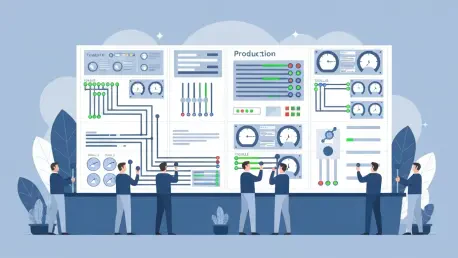
In response to these challenges, a new framework for measuring DevOps performance is taking hold, one that shifts the focus from raw output to sustainable and predictable outcomes. This new charter is built upon three interconnected pillars: Resilience Under Change, Runtime Control, and Governance as a Core KPI. Resilience Under Change directly supplants deployment frequency as the primary indicator of an elite team, evaluating a system’s ability to remain stable while undergoing continuous modification. Success is measured by how quickly teams can detect anomalies, isolate problematic changes, and restore reliable service, proving that their release cadence can withstand real-world pressures. Simultaneously, Runtime Control has been elevated from a reactive safety net to a strategic necessity. It represents the crucial capability to manage, adjust, or disable features directly in production without a new deployment, providing the essential human oversight needed to make AI-driven velocity safe. Finally, Governance as a Core KPI integrates compliance, permissions, and auditability directly into the delivery lifecycle, ensuring that every change is traceable, authorized, and aligned with business policy, transforming governance from a bottleneck into an enabler of trustworthy automation.
Forging a Path Toward Intelligent Delivery
The teams that successfully navigated this industry-wide pivot were those who fundamentally re-evaluated their relationship with speed, shifting their focus from “shipping faster” to “shipping smarter.” This transition was not about slowing down but about building intentional systems designed for resilience from the ground up. These organizations recognized that true velocity is not measured by the speed of deployment but by the stability and reliability of the end-user experience. They made technologies like feature flags, progressive delivery, and real-time rollback capabilities essential components of their toolkit, rather than optional add-ons. By doing so, they managed to harness the immense power and speed offered by AI while maintaining robust, human-centric oversight of the outcomes. Ultimately, the future of DevOps was judged not by the pace of software delivery, but by its operational integrity, with resilience emerging as the new and authentic measure of a high-performing engineering culture.