The modern corporate landscape frequently resembles a high-performance engine being throttled by the very oil meant to lubricate its gears, as administrative rituals slowly consume the creative energy of the most talented engineers. While the primary goal of any project manager is to facilitate the delivery of value, the daily reality often involves a relentless cycle of manual data entry and status chasing. This friction does not merely slow down the pace of development; it fundamentally alters the psychological state of the workforce, shifting focus from innovation to mere survival within complex bureaucratic systems. When professionals are forced to spend more time explaining what they are doing than actually doing it, the organizational health of the company begins to suffer.
Efficiency in the current era is no longer about working harder, but about removing the structural impediments that prevent work from flowing naturally. Recent industry observations suggest that a staggering 90% of professionals lose a significant portion of their productive hours to inefficient internal processes. For approximately half of these individuals, the loss exceeds ten hours per week—a deficit that represents a massive drain on human capital and financial resources. This “work about work” has become the silent killer of productivity, necessitating a radical shift toward automated, agentic solutions that can handle the mundane details of project oversight without human intervention.
The Invisible Clock: How Operational Friction Erodes Productivity
Beyond the lines of code and the strategic roadmaps, project managers often find themselves trapped in a cycle of administrative maintenance that feels like running in place. While a specific technical task might theoretically require only one hour of focused effort, the surrounding logistical noise can easily stretch that timeline by several days. This phenomenon is largely driven by the constant need to clarify requirements, toggle between various browser tabs, and manually update multiple trackers. Such friction points act as an invisible tax on every action, accumulating until the collective delay threatens the viability of the entire project schedule.
This erosion of time is not merely an anecdotal frustration shared among teams; it is a measurable systemic failure that impacts the bottom line of every modern enterprise. As the complexity of software ecosystems grows, the overhead required to manage them tends to grow exponentially rather than linearly. Every new communication channel and every additional reporting layer adds a layer of cognitive load that pulls developers away from their core tasks. Consequently, the challenge for modern leadership is to identify where these temporal leaks are occurring and to implement systems that can plug them effectively, ensuring that the primary focus remains on the product rather than the process.
The cumulative effect of these minor distractions creates a state of perpetual context switching, which research has shown to be one of the most significant barriers to deep work. When an engineer must pause their problem-solving process to navigate a cumbersome project management interface, they lose more than just the minutes spent on the site; they lose the mental momentum required to solve complex architectural problems. By addressing this friction, organizations can reclaim lost hours and restore the sense of flow that is essential for high-quality engineering. The goal is to create a management layer that is supportive rather than intrusive, allowing the work to proceed with minimal external resistance.
The Jira Paradox and the Burden of Heavy Tooling
In the modern development landscape, tools like Jira have established themselves as the undisputed industry standard, yet they frequently top the lists of the most disliked software among technical staff. This creates what many call the Jira Paradox: the very features that provide robust oversight and deep data hierarchies are the same ones that create a prohibitive process overhead. The complexity required to maintain a perfect audit trail often results in developers avoiding the tool altogether, which in turn leads to stale data and inaccurate forecasting. This gap between the necessity of tracking and the friction of the interface creates a vacuum where critical information is lost.
The burden of heavy tooling is felt most acutely when the interface becomes a barrier to entry rather than a facilitator of progress. Many project management platforms were designed for a different era of work, prioritizing centralized control over decentralized agility. When the system requires dozens of clicks to update a single status or log a few hours of labor, the perceived cost of compliance begins to outweigh the perceived benefit. This misalignment forces project managers into the role of “data janitors,” constantly chasing team members for updates that should have been captured automatically. The resulting tension often damages the relationship between management and the development team, further complicating the delivery process.
This friction necessitates the creation of a more streamlined, “invisible” management layer that can operate in the background of a developer’s existing workflow. Instead of forcing highly skilled professionals to adapt to the rigid structures of a legacy database, the goal should be to bring the database to the professionals. By abstracting the complexity of heavy enterprise software through more intuitive interfaces, companies can improve data hygiene without increasing the mental load on their employees. This shift represents a move away from manual oversight toward a model where the tools work for the people, rather than the other way around.
Architecture of a Messenger-Based AI Agent
To bridge the gap between developer focus and project oversight, a chat-based AI agent can be engineered to handle complex operations directly within familiar communication tools. The foundation of this system is the Interaction Layer, which utilizes a messaging API to eliminate the need for context switching. By allowing team members to interact with the project tracker through a simple chat interface, the agent removes the friction associated with opening a browser and navigating a heavy dashboard. This approach meets the users where they already spend most of their time, transforming a chore into a natural extension of their daily conversation.
The core of the system resides in the Command Center, a sophisticated Router node that interprets incoming messages to distinguish between starting tasks, updating progress, and generating reports. Supporting this logic is a State Management system, typically powered by Redis, which ensures the bot remembers conversational context. For example, if a user indicates they are working on a specific ticket, the agent stores that information so that subsequent updates do not require the user to re-identify the task. This memory allows for a fluid, multi-step dialogue that feels more like a conversation with a colleague than an interaction with a database.
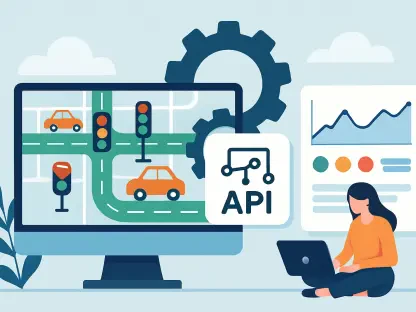
The actual execution of work is handled through a seamless integration with the project management platform’s REST APIs. This allows the AI agent to automate worklogs, status transitions, and attachment uploads without any manual intervention from the user. Finally, a Reasoning Module powered by a Large Language Model is implemented to distill raw data from the project changelog into human-readable summaries. By synthesizing hundreds of individual updates into a coherent executive report, the agent provides stakeholders with immediate visibility into project health. This modular architecture ensures that the system is both robust enough for enterprise use and flexible enough to adapt to changing team needs.
Real-World Use Cases: Automating the Definition of Done
Integrating an AI agent transforms abstract project management rules into automated workflows that enforce data hygiene without increasing the burden on the team. One of the most effective applications is the standardization of task updates through a “minimal Definition of Done.” Before a task can be moved to a completed state in the chat, the agent can require specific inputs, such as a screenshot or a precise time entry. This ensures that every update is backed by evidence and that the project tracker remains an accurate reflection of reality. This automated gatekeeping prevents the accumulation of “ghost tasks” that appear complete but lack the necessary documentation.
Beyond simple tracking, the agent enables one-click transitions that significantly speed up the development lifecycle. Moving a task from a “To Do” state to “In Progress” or “Ready for Review” becomes a matter of clicking an inline button rather than navigating through multiple menus. This ease of use encourages developers to keep their status current, providing the project manager with real-time data for sprint planning and resource allocation. Furthermore, the agent can automatically verify proof of work by attaching visual evidence directly to the issue while simultaneously logging the relevant work hours. This dual-action automation eliminates the need for separate time-tracking software and manual documentation steps.
The final piece of this automation puzzle is the intelligent synthesis of daily activities. By scanning the last twenty-four hours of data, the AI agent can generate a five-sentence executive summary that highlights key accomplishments and potential blockers. This functionality saves the project manager from hours of manual status digging and provides the leadership team with a high-level overview that is both accurate and timely. This shift from manual reporting to automated synthesis represents a major leap in operational efficiency, as it allows the entire organization to stay informed with minimal collective effort. The result is a more transparent and responsive development environment.
Strategies for Building and Scaling Management Autonomy
Implementing an AI agent does not require an extensive technical background, but it does necessitate a strategic approach to workflow design and team integration. Modern low-code environments allow project managers to independently build and refine these agents in a matter of days, significantly reducing the dependence on busy technical teams for internal tool improvements. This democratization of automation means that the people who understand the process friction best are the ones empowered to fix it. By taking ownership of these administrative automations, managers can tailor the agent to the specific nuances of their team’s culture and delivery style.
The adoption of such agents fundamentally alters the stress dynamics within a team by meeting developers where they are. By reducing the mental load associated with heavy enterprise software, the organization demonstrates a commitment to the developer experience, which often leads to higher engagement and better retention. Moreover, this model facilitates a transition from traditional oversight to a 1-to-N management model. In this setup, a single project manager can oversee an agent that monitors multiple teams simultaneously, effectively scaling their impact without increasing their workload. The agent acts as a force multiplier, handling the routine checks while the manager focuses on high-level strategy and conflict resolution.
This evolution eventually led to a system of exception-based management, where the AI agent handled the vast majority of routine administrative tasks and only flagged deviations for human intervention. The project manager transitioned away from the role of a task-tracker and toward the role of an architect of processes. By the end of the implementation phase, the team successfully reduced the time spent on manual updates by nearly seventy percent. This shift allowed for a more focused approach to product development, as the technical staff no longer felt the weight of excessive documentation. The organization realized that autonomy was not just about giving people freedom, but about providing them with the tools to manage that freedom effectively. The final result was a more resilient and agile operation that could respond to market changes with far greater speed than before the automation was introduced. In the end, the project became a testament to the idea that the best management is often the kind that is felt the least.