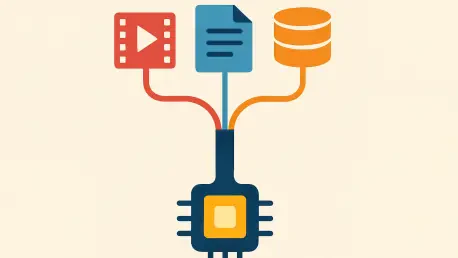

The rapid evolution of artificial intelligence models has created a significant and widening gap between their sophisticated capabilities and the aging data infrastructure designed to power them, presenting a critical challenge for organizations aiming to stay at the forefront of innovation. This disparity often becomes the primary bottleneck, slowing down performance, hindering experimentation, and ultimately capping the potential of the very technologies it is meant to support. Traditional data systems, architected on principles of uniformity and predictability, are proving inadequate for the complex, high-volume, and multiformat data demands of modern AI. The path forward requires a foundational reimagining of data architecture, moving away from fragmented, ad-hoc solutions toward a cohesive, unified data flow capable of managing immense diversity within a single, consistent framework. This paradigm shift is not merely an upgrade but a necessary evolution to resolve the friction inherent in legacy systems and truly unleash the power of next-generation AI.
The Cracks in the Foundation: Why Traditional Pipelines Fail
The Multiformat Data Deluge
Legacy data pipelines were conceived and constructed in an era defined by homogenous and predictable data streams, where information flowed in a steady, uniform manner. The contemporary AI landscape, however, is characterized by its profound heterogeneity, a stark contrast to the simplicity of the past. Modern models are no longer sustained by a single type of data; instead, they integrate a vast and varied array of inputs. This includes visual signals from images and video, unstructured text, machine-generated logs, human-annotated content, real-time data from IoT devices, and massive static datasets. Each new source introduces unique structural characteristics, arrival velocities, file sizes, and layers of complexity that legacy systems are fundamentally ill-equipped to handle. The foundational assumptions that once underpinned data architecture have crumbled under the weight of this diversity, rendering these older systems brittle and inefficient when faced with the realities of today’s AI workloads.
The introduction of multiformat data does more than just stress older systems; it causes a systemic breakdown of their core operational principles. Traditional pipelines assume a consistent flow of information, but this assumption is shattered when the system must simultaneously process a video file, a stream of text data, and a batch of sensor logs. This forces the pipeline to behave erratically, necessitating the development of specialized code paths, complex exception handling, and disparate storage layouts for each data type. Consequently, what was once a streamlined process devolves into a convoluted patchwork of custom fixes and workarounds. The architecture, which was designed for stability and predictability, becomes a source of constant instability. This breakdown is not a minor inconvenience but a fundamental failure that undermines the reliability and efficiency of the entire data infrastructure, turning a once-supportive asset into a significant liability that impedes progress and innovation.
The Consequences of Fragmentation
This architectural breakdown manifests in a tangible and detrimental phenomenon known as pipeline splintering. Instead of a single, coherent workflow, data processing fragments into numerous format-specific tracks that are difficult, if not impossible, to align perfectly. Each track evolves in isolation, with separate teams developing preprocessing logic in silos across different tools and environments. This divergence leads to widespread inconsistencies in how data is cleaned, normalized, and prepared for modeling. An image processing track might handle null values or normalization differently than a text processing track, introducing subtle but significant variations that can corrupt the model training process. This siloed approach not only duplicates engineering effort but also creates a system that is incredibly difficult to manage, debug, and scale. Over time, the entire data infrastructure becomes a fragile web of interconnected yet unaligned processes, where a small change in one track can have unforeseen and catastrophic consequences for others.
The cumulative effect of this fragmentation is immense operational friction that slows down the entire AI development lifecycle. Critical metadata, which provides essential context for model training and validation, becomes inconsistent across these splintered tracks, disrupting downstream processes and making it nearly impossible to trace data lineage or interpret model results accurately. This lack of coherence transforms the pipeline from a powerful enabler into a primary limiting factor. Experimentation, a vital component of AI research and development, becomes a slow and arduous process bogged down by data inconsistencies and debugging challenges. Ultimately, the organization’s ability to innovate is severely hampered, not by a lack of sophisticated models or talented data scientists, but by a foundational data infrastructure that is fundamentally broken and unable to keep pace with the demands of modern artificial intelligence.
A New Blueprint: The Unified Data Flow
The Core Principle of Unification
In direct response to the systemic failures of legacy systems, the unified data flow emerges as the essential modern alternative. This paradigm is not about ignoring the inherent differences between various data types but about creating a single, robust structure capable of absorbing and managing this variation gracefully and efficiently. Instead of relying on a chaotic patchwork of format-specific tools and isolated processes, a unified pipeline applies a consistent set of structural requirements and transformations to all data sources from the moment of ingestion. This disciplined approach ensures a predictable, coherent, and seamless flow from data preparation and cleansing through to delivery for model training and inference. By centralizing data handling, this model eliminates the redundancies and inconsistencies that plague fragmented systems, creating a streamlined and resilient foundation for advanced AI workloads. This trend is increasingly supported by modern platforms like Apache Spark, Ray, and Daft, which are purpose-built to handle multimodal workloads within a common execution model.
The value of this unified paradigm is defined by several distinct and powerful advantages that address the core weaknesses of traditional data infrastructure. It dramatically reduces engineering overhead by eliminating the need to develop, maintain, and debug redundant logic for each new data type, freeing up valuable engineering resources to focus on innovation rather than infrastructure maintenance. By standardizing data handling across the board, it leads to far more predictable and stable behavior during both model training and real-time inference, which is critical for deploying reliable AI applications. Furthermore, it fosters stronger alignment between data preparation steps, ensuring that data, regardless of its origin, is treated with unwavering consistency. Perhaps most importantly, a unified pipeline is inherently future-proof. Changes and optimizations can be implemented in one central location, making it significantly easier to evolve the pipeline to accommodate new data sources or more demanding model requirements over time without requiring a complete architectural overhaul.
Building a Resilient Pipeline
To achieve this level of unification, a modern pipeline must be constructed from specific components designed to work in concert, creating a single, resilient engine for data processing. The foundation begins with adaptive intake layers, which function as a versatile “front door” for the entire system. These layers are engineered to be source-agnostic, capable of accepting data from any origin—be it a streaming API, a relational database, a NoSQL store, or a distributed file system. Their primary function is to immediately convert these varied inputs into a standardized internal representation. This critical first step abstracts away the complexity of the source format, ensuring that the rest of the pipeline interacts with all data in a uniform manner. This eliminates the need for engineers to write custom, format-specific ingestion code every time a new data source is introduced, making the system both more scalable and easier to maintain.
Once ingested and standardized, the raw data moves to cross-format extraction steps, where it undergoes deep analysis and reshaping. This stage is responsible for intelligently extracting the relevant information from each data type and organizing it into a consistent, predictable structure that downstream components can easily process. Following extraction, the data flows into the unified transformation logic, which represents the heart of the system. This central engine comprises a common set of rules for data normalization, cleansing, feature engineering, and shaping. Applying this single, authoritative set of logic across all data modalities is what prevents the divergence and inconsistency that cripples fragmented systems. Finally, throughout this entire workflow, a reliable metadata handling system maintains consistent and accurate metadata. This contextual information, which includes details about data lineage, transformations applied, and data quality metrics, is vital for the model to correctly interpret inputs and for engineers to effectively debug issues and understand the data’s journey from source to model.
Reaping the Rewards: Tangible Benefits for Models and Teams
Elevating Model Performance
Artificial intelligence models thrive on consistency, and their performance is directly tied to the quality and uniformity of the data they are trained on. By ensuring that all data, regardless of its original format, passes through the same rigorous sequence of checks, shaping, and routing, unified data flows eliminate the subtle variations and noise introduced by disparate, format-specific preprocessing. This consistency strengthens the signals that models rely on for learning. Inputs that may have been previously misaligned or even conflicting due to divergent processing paths now become mutually supportive, reinforcing patterns and enhancing the model’s ability to build more accurate and robust internal representations of the data. This direct impact on data quality translates into measurable improvements in model performance, leading to higher accuracy, greater stability, and more reliable predictions in production environments. The model is no longer forced to contend with inconsistencies, allowing it to learn more effectively from the data’s inherent patterns.
This enhanced data consistency creates a virtuous cycle where improved inputs lead to better models, which in turn can tackle more complex problems. When a model is fed data that has been processed through a single, coherent pipeline, its ability to recognize nuanced patterns across different modalities is significantly amplified. For example, a model designed to analyze both text reports and corresponding images can draw more accurate correlations when both data types have been normalized and feature-engineered using a consistent set of rules. The risk of the model learning spurious correlations based on preprocessing artifacts is greatly reduced. This results in AI systems that are not only more accurate but also more generalizable and less prone to unexpected failures when encountering new, unseen data. Ultimately, the transition to a unified pipeline is a direct investment in the quality and reliability of the AI models at the core of the organization’s mission.
Empowering Your Engineering Teams
For the engineering teams tasked with building and maintaining AI infrastructure, the shift from a fragmented to a unified data flow is transformative. It replaces the high-maintenance, anxiety-inducing complexity of a brittle, disconnected system with a coherent, scalable, and predictable framework. The constant strain of managing dozens of separate workflows, each with its own quirks and failure modes, is lifted. This drastically reduces the time and resources spent on firefighting, debugging obscure data inconsistencies, and retrofitting an aging infrastructure to support the latest business requirements. Instead of being perpetually reactive, engineering teams can adopt a more proactive and strategic posture, confident that their foundational data pipeline is robust and resilient. This operational stability allows teams to move faster, deploy with greater confidence, and build more ambitious AI-powered features without being constantly constrained by the limitations of their tools.
This newfound operational efficiency allows teams to redirect their focus from tedious maintenance to high-value innovation. Organizations leveraging modern tools like Daft are already realizing these benefits, effectively managing a diverse array of inputs within a single, high-performance pipeline. By simplifying operations and boosting performance, these platforms empower engineers to spend less time wrestling with infrastructure and more time collaborating with data scientists to solve complex business problems. This strategic reallocation of human capital is one of the most significant advantages of a unified approach. It fosters a culture of innovation where engineers are not just pipeline plumbers but key contributors to the development of next-generation AI capabilities. The result is a more agile, productive, and forward-looking organization, better equipped to harness the full potential of its data and talent.
A Strategic Imperative for Future Growth
In the final analysis, the adoption of unified data flows represented not merely a technical improvement but a defining characteristic of next-generation AI infrastructure. As artificial intelligence models continued their relentless march toward greater sophistication, relying on ever-richer combinations of data, the demands placed on the underlying infrastructure escalated accordingly. Pipelines built on a unified architectural framework were fundamentally better equipped to handle this evolution. They provided a clear and stable pathway for scaling, which allowed organizations to integrate new data types and manage larger volumes without the need for extensive and costly re-engineering projects. Those organizations that adopted this unified approach early gained a significant and durable competitive advantage. This strategic shift enabled them to support more complex workloads, accelerate their development cycles, and maintain pace with the rapid evolution of the AI field, solidifying their position as leaders in a transformative technological landscape.