
The rapid evolution of artificial intelligence has gifted robots with sophisticated minds, yet their physical bodies remain trapped by manufacturing methods that have seen little change since the dawn of the industrial age. This fundamental disconnect between software intelligence and hardware capability has created a critical bottleneck, hindering the widespread deployment of truly versatile and collaborative robots. In response to this industry-wide challenge, robotics company Allonic has secured a landmark $7.2 million in pre-seed funding to commercialize a revolutionary manufacturing platform poised to rebuild the very foundation of how robotic hardware is made. By shifting from slow, manual assembly to a fully automated, bio-inspired production process, the company aims to close this gap, enabling the creation of advanced robots that are not only stronger and more dexterous but also dramatically cheaper and faster to produce, unlocking a new era of innovation.
A Foundational Reinvention of Robotic Manufacturing
The Widening Hardware Software Gap
The modern robotics sector is grappling with a significant and growing chasm between the advanced capabilities of its software and the physical limitations of its hardware. The core of this issue lies in the prevailing manufacturing paradigm, an archaic process reliant on the meticulous and often manual assembly of hundreds of individual, high-precision components such as bearings, screws, delicate joints, and complex cable harnesses. This method is inherently slow, demanding intensive labor and significant capital investment, which translates directly into high production costs. As a result, the final robotic products are expensive to build, difficult to customize for diverse applications, and nearly impossible to manufacture at the scale required for mass adoption. This challenge is compounded as the functional demands on robots escalate; achieving greater dexterity for complex manipulation, ensuring inherent safety for human interaction, and increasing overall robustness all add layers of mechanical complexity, further straining an already inefficient and outdated production model.
The consequences of this manufacturing bottleneck ripple throughout the entire robotics ecosystem, effectively stifling innovation and impeding progress. For startups and research institutions, the prohibitive cost and complexity of hardware development create immense barriers to entry, slowing down the cycle of experimentation and iteration that is vital for technological breakthroughs. Robot designers are constantly forced into a series of compromises, balancing the conflicting demands of durability, softness, dexterity, and strength within the rigid constraints of traditional assembly. This trade-off becomes particularly acute as robots are envisioned to move beyond the structured, predictable confines of factory floors and into dynamic, unstructured environments like homes, hospitals, and retail spaces. In these settings, the need for safe, compliant, and adaptable hardware becomes paramount, yet the very manufacturing processes used to build them remain fundamentally ill-suited to delivering these qualities in an economically viable manner, holding back the potential of the entire industry.
Pioneering a New Production Paradigm
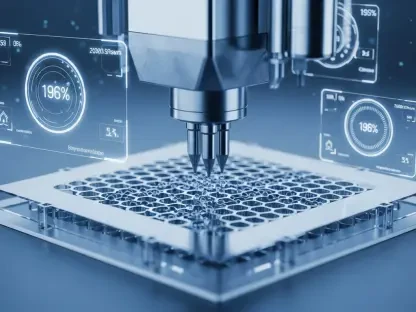
In a direct response to this industry-wide constraint, Allonic has developed a novel solution that addresses the problem at its most fundamental level: the manufacturing infrastructure itself. The company’s core innovation is a proprietary production process named “3D Tissue Braiding,” which fundamentally reimagines how robotic structures are built. This technology abandons the conventional piece-by-piece assembly model in favor of a fully automated and scalable system for producing complex robotic bodies in a single, integrated process. Drawing inspiration from the structural principle of ropes, which derive their immense strength from a woven composition rather than rigid, monolithic materials, Allonic’s platform 3D-weaves customized robotic “tissues”—encompassing tendons, joints, and load-bearing soft structures—directly over a skeletal core. Instead of assembling a multitude of individual parts, a component like a robotic finger can be constructed from just a few “bone-like” core elements, which are then intricately bound together by hundreds of fine, high-strength fibers, mimicking the function of connective tissue in biological systems.
This innovative methodology delivers several transformative advantages that bypass the limitations of traditional manufacturing. By constructing robotic limbs as integrated, woven structures, it eliminates the need for many conventional components and bulky fixtures, which are often the primary sources of mechanical failure and added weight. The resulting robotic bodies are described as being simultaneously strong and compliant, possessing a natural give that makes them inherently safer for close-quarters human-robot collaboration. The automation of this process dramatically simplifies and accelerates production, making advanced hardware significantly cheaper to manufacture. This paradigm shift from complex assembly to automated fabrication places Allonic in a unique position within the industry. As the only company in the world currently automating the production of robotic hardware in this manner, it is not just improving an existing process but creating an entirely new category of manufacturing technology tailored specifically for the next generation of robotics.
The Platform and its Market Impact
An Integrated Design to Production Workflow
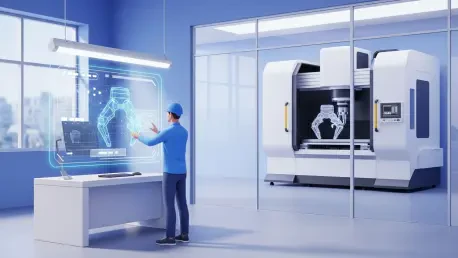
Allonic’s comprehensive platform extends beyond its novel physical braiding process, integrating its proprietary hardware with a sophisticated software layer that creates a seamless digital thread from design to production. This software empowers users to configure high-level robotic designs, which are then automatically translated into executable production code for the manufacturing system. This workflow is conceptually similar to the “slicing” process that has become standard in modern 3D printing, radically simplifying the complex transition from a digital blueprint to a physical product. A crucial feature of the platform is its capacity to integrate multiple materials and components seamlessly within a single, continuous production run. This allows for elastics, electrical wiring, and sensing elements to be embedded directly into the robotic body as it is being formed, effectively manufacturing complete, functional robotic limbs from a digital file.
This integrated approach fundamentally streamlines the creation of advanced robotics by bypassing the immense complexities of managing intricate global supply chains and coordinating disparate fabrication and assembly processes. By collapsing what was once a multi-stage, multi-location endeavor into a single, automated system, the platform drastically reduces the logistical overhead and potential points of failure. The ability to embed electronics and other functional elements during the initial build phase opens up new possibilities for creating more compact, reliable, and capable robots. This direct manufacturing capability means that a designer can move from a concept to a fully functional prototype in a fraction of the time and cost previously required, accelerating development cycles and fostering a more agile and iterative approach to hardware design. Ultimately, this holistic system provides a powerful toolkit for creating sophisticated robotic systems with unprecedented speed and efficiency.
Unlocking Economic Viability and Customization
By abstracting mechanical complexity into an automated production system, Allonic’s platform significantly lowers the barriers to entry for creating advanced robotic hardware, reducing both the capital investment and the specialized engineering expertise required. Production processes that historically took weeks of skilled labor and cost thousands of dollars can now be completed in a matter of minutes at a fraction of the cost. This paradigm shift unlocks a new and more agile operational model for manufacturers, startups, and research institutions, enabling the on-demand design, production, and replacement of manipulators. This newfound agility serves to minimize operational downtime and eliminate the protracted maintenance cycles associated with conventionally assembled robots. If a part breaks, a new one can be fabricated and installed quickly, rather than waiting on a complex supply chain.
The speed and low cost of the 3D Tissue Braiding process also make customized hardware economically viable for the first time on a large scale. This capability is particularly transformative for applications requiring specialized tools or grippers. For instance, robotic end-effectors could be designed for a specific task and produced so affordably that they could be swapped out as easily and inexpensively as disposable gloves, adapting a single robotic arm for a multitude of different functions. This opens the door to hyper-specialized robotic solutions that were previously impractical due to the high cost of custom tooling. The platform’s impact extends across the industry, empowering a wider range of organizations to develop and deploy robotic solutions tailored to their unique needs, thereby accelerating the adoption of automation in new sectors and applications that were previously inaccessible.
Strategic Capital for Accelerated Growth
The company’s recent infusion of capital marked a pivotal moment, enabling a strategic acceleration of its core technology and market expansion efforts. The $7.2 million pre-seed round, led by Visionaries Club with participation from other key investors, validated the market’s recognition of the critical need to solve the hardware manufacturing problem. This funding was earmarked to fast-track the development and refinement of the 3D Tissue Braiding platform, allowing the company to move from early prototypes to a more robust, commercially ready system. A significant portion of the investment was allocated to expanding the company’s interdisciplinary engineering and operations teams, bringing in the specialized talent required to scale both the technology and the business. Furthermore, the capital provided the necessary resources to support additional pilot programs and forge early commercial deployments with key industrial partners. These efforts, backed by the confidence of investors from both the commercial and academic worlds, solidified Allonic’s position as a leader in foundational robotic innovation and set the stage for its next phase of growth.