
Scientists at Washington State University are at the forefront of addressing one of the most critical paradoxes of our time, exploring the dual role of Artificial Intelligence in shaping the nation’s energy grid and cybersecurity framework. AI is simultaneously a source of immense strain on these vital systems and a potential key to their salvation. WSU is leveraging its deep expertise in both fields to navigate this complex landscape, developing innovative solutions to manage and protect the essential infrastructure of the future. The university’s research underscores a crucial consensus: a proactive, interdisciplinary, and ethically minded approach is necessary to harness AI’s benefits while mitigating its significant risks to national stability and security.
The Modern Grid Overloaded and Overhauled
A Modern Grid Under Unprecedented Strain
The traditional electrical grid was once a simple, one-way street, where power flowed predictably from a handful of central plants to millions of consumers. Today’s grid, however, is being rapidly transformed into a complex, decentralized web, integrating large-scale renewable sources like wind and solar farms alongside a new class of participants known as “prosumers.” These are individuals and businesses who both consume and produce energy through technologies like rooftop solar panels and bidirectional electric vehicle chargers. While this evolution is vital for a sustainable energy future, it also introduces countless new control points and variables. This intricate, two-way network makes the fundamental task of balancing electricity supply with demand more challenging than ever before, creating new vulnerabilities and operational hurdles that legacy systems were never designed to handle, pushing the limits of grid stability on a daily basis.
A primary factor complicating this new reality is the voracious energy consumption of Artificial Intelligence itself. The massive data centers that power the AI revolution place a rapidly growing and often unpredictable load on the grid, demanding a colossal amount of electricity to function. A single hyperscale AI data center, for instance, can consume as much electricity as 80,000 homes, creating a concentrated point of extreme demand. This staggering surge in power consumption, highlighted by WSU experts like Dr. Anamika Dubey, is a central piece of the energy puzzle that researchers are working urgently to solve. This unprecedented load not only strains the physical infrastructure but also complicates energy forecasting and planning, forcing utilities to reconsider how they build and manage the grid to accommodate this new, power-hungry industrial force without compromising reliability for all other users or driving up consumer costs.
Harnessing AI for a Smarter, Resilient Grid
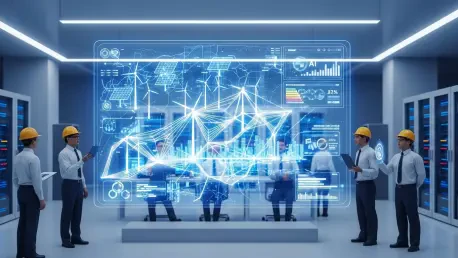
Despite being a significant cause of the problem, AI is also being positioned as a critical part of the solution for a more robust power grid. Pioneering research at WSU, led by Dr. Anamika Dubey, focuses on deploying AI and machine learning algorithms to manage the grid’s newfound complexity with precision and speed. These intelligent systems are being developed to coordinate the grid’s countless distributed assets, such as solar panels, batteries, and electric vehicles, to ensure greater overall efficiency and stability. The work includes developing applications that can deploy “microgrids”—localized, self-sufficient energy systems—to help communities recover swiftly from power outages. Furthermore, advanced AI modeling is being used for long-term planning, allowing grid operators to better protect essential infrastructure against the growing threats of natural disasters and extreme weather events fueled by climate change, thereby building a more resilient system from the ground up.
The potential of AI to revolutionize grid operations is immense, offering the ability to provide rapid, data-driven insights that were previously unattainable. These systems can forecast energy supply and demand with far greater accuracy, a crucial capability when dealing with the inherent variability of renewable sources like wind and solar power. Moreover, AI can optimize long-term strategic planning, helping to determine the most effective placement for new power generation facilities and transmission lines to meet future needs. However, Dr. Dubey wisely cautions that significant research is still required to ensure these advanced AI algorithms are completely reliable, trustworthy, and robust enough for real-time, critical decision-making where failure is not an option. This pursuit of dependable AI is paramount, as the grid also continues to face persistent threats from its own aging infrastructure and a growing need for sophisticated cyber-defenses to protect it from attack.
The Cybersecurity Arms Race
AI as a Double-Edged Sword in Digital Defense
The same paradox seen in the energy sector is starkly mirrored in the realm of cybersecurity, where Artificial Intelligence has emerged as a formidable double-edged sword. On one side, malicious actors are increasingly weaponizing AI to create sophisticated and elusive threats at an alarming scale. Advanced, AI-generated malware can adapt to security measures in real time, while highly convincing deepfake scams are used to deceive individuals and infiltrate corporate networks with terrifying effectiveness. This AI-powered offensive contributes to a global cybercrime cost that now runs into the trillions of dollars annually, overwhelming traditional security approaches. This escalating threat landscape creates a rapidly intensifying technological arms race, where the tools of innovation are simultaneously used for both protection and destruction, forcing defenders into a constant state of high alert and adaptation.
On the other side of this conflict, cyber defense has become critically dependent on AI and machine learning to have any chance of keeping pace with the deluge of automated attacks. Modern networks generate an immense volume of data traffic, and it is humanly impossible to sift through it all to identify malicious activity. Automated AI systems are now essential for this task, capable of analyzing patterns and flagging anomalies in real time to neutralize threats before they can cause significant damage. Recognizing this critical need, WSU has established itself as a national leader in the field, earning a designation as a National Center for Academic Excellence in Cyber Research. The university’s commitment is further solidified by the VICEROY Institute for Cybersecurity Education and Research (CySER), which provides comprehensive training in cyber defense and operations, preparing the next generation of experts to wield AI as a crucial shield in this ongoing digital conflict.
Innovating Past the Privacy Barrier
A major and persistent hurdle in the development of effective AI-driven cybersecurity is the inherent conflict between the need for security and the right to privacy. To be effective, defensive AI and machine-learning models require vast amounts of training data derived from real-world cyberattacks. This data is the lifeblood of algorithm development, allowing models to learn the signatures and behaviors of actual threats. However, information from a genuine breach of a financial institution or healthcare provider is highly sensitive and replete with private, personally identifiable information. Due to strict privacy regulations and ethical considerations, this invaluable data is largely inaccessible for public research and development, creating a significant data shortage that has historically created a bottleneck in advancing our collective cybersecurity defenses against emerging threats.
To solve this critical data-shortage problem, Dr. Assefaw Gebremedhin’s lab at WSU is pioneering an elegant and innovative solution: using AI to generate high-fidelity synthetic data. This artificially created information meticulously mimics the statistical properties and complex characteristics of real-world threat data without containing any actual private information from individuals or organizations. By augmenting limited, real-world datasets with this rich synthetic data, researchers can effectively train more robust, accurate, and adaptable AI defense systems. This breakthrough method elegantly resolves the conflict between the need for large-scale data and the ethical imperative to protect privacy, thereby overcoming a major barrier to progress in the field. This work not only strengthens our digital shields but also reflects a sophisticated approach to the ethical dimensions of AI, ensuring that the pursuit of security does not come at the cost of individual rights.
A Unified Front for a Secure Future
The research undertaken at Washington State University revealed a clear and unified path forward for navigating the complexities of Artificial Intelligence in critical infrastructure. The work demonstrated that the challenges posed by AI in both the energy and cybersecurity sectors were not isolated issues but deeply interconnected ones, demanding a holistic and collaborative response. Innovations in one area, such as the creation of privacy-preserving synthetic data, provided direct insights and potential applications for the other, fostering an environment of interdisciplinary problem-solving. This integrated approach underscored the necessity of moving beyond siloed research to develop comprehensive strategies that addressed the dual nature of AI as both a powerful tool and a potential threat. The efforts ultimately highlighted that a resilient future depended on a unified front, where ethical considerations, technological advancement, and strategic planning were seamlessly woven together.