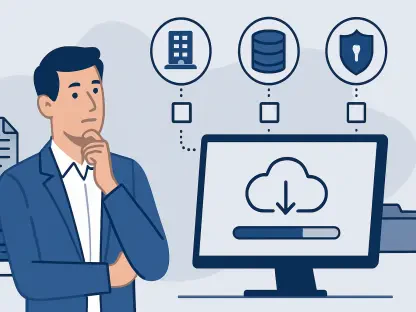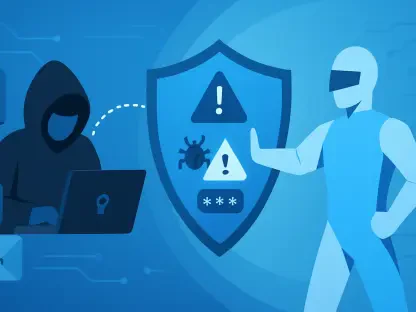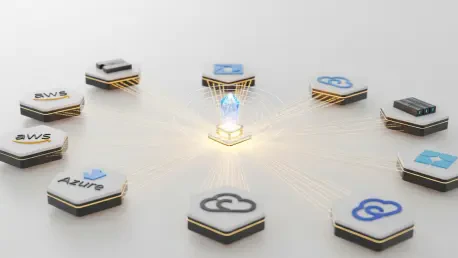

Modern cyber threats no longer respect the traditional boundaries between local hardware and virtualized infrastructure, creating a dangerous visibility gap that sophisticated actors exploit with ease. Security teams often find themselves toggling between endpoint detection and response (EDR) platforms and cloud-native application protection platforms (CNAPP), losing precious time and context in the shuffle. Upwind has addressed this fragmentation by introducing a specialized AI sensor designed to provide a unified view of security across these disparate environments. This technology leverages machine learning to correlate endpoint activities with cloud-level permissions and network traffic in real-time. By doing so, it eliminates the silos that previously hindered rapid incident response. As enterprises continue to scale their multi-cloud deployments through 2026 and 2027, the need for such integrated telemetry becomes paramount for maintaining a robust and resilient security posture in a volatile threat landscape.
Integrating Runtime Intelligence: Bridging Hybrid Infrastructure Gaps
The deployment of this new AI sensor represents a significant shift toward runtime-centric security architectures that prioritize live behavioral analysis over static vulnerability scanning. Traditional security tools often rely on periodic snapshots of a system, which can miss transient threats that exist only in memory or within ephemeral container workloads. Upwind’s sensor sits directly within the runtime environment, monitoring system calls, file integrity, and process execution patterns to detect anomalies as they occur. This level of granularity is essential for identifying zero-day exploits and sophisticated lateral movement attempts that circumvent standard firewall rules or signature-based antivirus solutions. Integration of artificial intelligence allows the sensor to distinguish between legitimate administrative tasks and malicious activities by learning the baseline behavior of specific applications, reducing false positives for analysts.
Beyond simple detection, the AI sensor facilitates a deeper understanding of the relationship between local processes and the broader cloud infrastructure. For instance, if an unauthorized process attempts to access a specific set of credentials stored within a cloud key vault, the sensor immediately links that endpoint event to the corresponding cloud identity and access management policy. This cross-layer visibility is crucial for stopping credential harvesting attacks that often serve as the entry point for larger data breaches. By mapping these interactions in real-time, the technology provides a comprehensive map of the attack surface, allowing organizations to visualize how an attacker might move from a compromised workstation to a sensitive production database. This proactive approach to mapping dependencies ensures that security teams are not just reacting to alerts but are actively hardening their environments against potential paths of exploitation.
Advancing Strategic Resilience: Evolution of Threat Detection and Response
The shift toward integrated security telemetry provided a clear path for organizations aiming to overcome the limitations of fragmented monitoring systems throughout the middle of the decade. By adopting a unified AI sensor, security leaders moved away from reactive postures and embraced a more holistic strategy that prioritized real-time visibility across all environments. This transition was marked by a measurable reduction in mean time to detect and respond to threats, as the contextual links between endpoints and cloud assets became more transparent. Organizations that prioritized this integration found themselves better equipped to handle the complexities of multi-cloud architectures without increasing the burden on their operational teams. The historical reliance on siloed tools was replaced by a more streamlined approach that consolidated data and automated the enrichment process for security alerts, providing teams with a much more accurate representation of their current risk level.
Moving forward, the focus for technology executives involved the continuous refinement of these automated systems to stay ahead of automated attack vectors. It became clear that the most effective strategy for the coming years, including 2027 and 2028, centered on the deep integration of identity, endpoint, and cloud signals into a single analytical framework. To maintain this momentum, organizations were encouraged to audit their existing security stacks and identify areas where lack of visibility created hidden risks. Investing in technologies that offered cross-platform correlation emerged as a primary recommendation for those looking to harden their digital infrastructure against emerging threats. Furthermore, the collaboration between security and development teams was strengthened by the insights provided by runtime monitoring, which led to the creation of more secure-by-design applications that effectively countered the evolving tactics of modern adversaries.