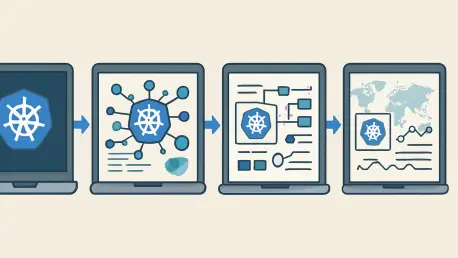

The current technological landscape demonstrates that the days of managing Kubernetes through a single, localized desktop application are rapidly fading into historical obscurity as enterprise requirements evolve. While individual resource browsers once provided a necessary window into the nascent world of containers, the sheer complexity of modern infrastructure demands a more integrated approach. Platform engineers now find that the localized convenience of a desktop client often conflicts with the broader goals of transparency and collaboration. This shift marks a fundamental move away from the isolated developer experience toward a holistic view of the entire cloud-native ecosystem.
The Shifting Paradigm of Cluster Inspection and Management
In the present 2026 environment, the transition from IDE-centric tools to integrated platform visibility has become a necessity for organizations scaling their digital operations. The reliance on local environments often creates silos that hinder the collective efficiency of site reliability engineering teams. As clusters multiply across various regions and providers, the old “single-pane” view of a single cluster no longer serves the needs of a global enterprise. Industry observers note that the expansion of these environments requires a transition to platforms that can aggregate data from hundreds of sources simultaneously.
The strategic migration currently underway focuses on moving from individual developer convenience to governed, collaborative oversight. This change ensures that every stakeholder, from security audits to financial analysts, has access to the specific data they need without compromising the stability of the system. By integrating visibility directly into the management platform, organizations eliminate the friction inherent in decentralized toolsets. The goal is to create a unified environment where visibility is not just a feature but a fundamental component of the infrastructure itself.
Deconstructing the Limitations of Individualized Desktop Clients
Scaling Challenges in the Era of Massive Distributed Fleets
Modern fleets often encompass hundreds of clusters distributed across diverse geographic regions and cloud providers, presenting a scale that traditional desktop clients were never designed to handle. When an engineer attempts to use a point-and-click interface to manage such a vast array of resources, the result is often significant latency and a lack of clear, actionable data. Many practitioners have observed that localized tools struggle to maintain performance when the metadata of thousands of pods must be refreshed in real-time. This performance degradation creates a bottleneck that slows down incident response and routine maintenance tasks.
Contrast this with the demands of automated orchestration, where global visibility is paramount for maintaining service-level objectives. The friction caused by manual context-switching between different cluster configurations often leads to human error and inconsistent deployments. Relying on a decentralized toolset means there is no “single source of truth” for the state of the infrastructure across the entire organization. Consequently, the industry has seen a move toward centralized hubs that can handle the massive throughput of telemetry data required for modern fleet management.
The Critical Gap Between Visibility and Enterprise Governance
One of the most significant challenges with standalone IDEs is the inherent conflict with rigorous Role-Based Access Control (RBAC) requirements in production environments. Standalone clients often require elevated permissions that bypass the granular security protocols established by the platform team. This creates a phenomenon known as “shadow operations,” where individual tool configurations allow for changes that are not captured by centralized auditing systems. Security experts have frequently highlighted the risks associated with these unmonitored access points, which can become vulnerabilities during a breach.
To mitigate these risks, the necessity of moving toward tools that natively respect organizational boundaries has become a top priority. Modern visibility solutions must be able to mirror the complex permission hierarchies of a large corporation, ensuring that users only see and interact with the resources they are authorized to manage. This alignment with enterprise governance ensures that visibility does not come at the cost of security. By enforcing standardized protocols through the visibility layer, organizations can maintain a high level of integrity across their entire cloud-native stack.
Beyond Pod Status: The Integration of Observability and Context
The shift from viewing flat resource lists to understanding deep system health marks a major evolution in how clusters are monitored. Modern visibility must incorporate correlated logs, metrics, and traces to provide a comprehensive picture of the environment. Simply knowing that a pod is “running” is no longer sufficient; engineers need to know how it is performing and how it interacts with other services in the mesh. This level of full-stack awareness allows for more rapid troubleshooting and a better understanding of the overall user experience.
Furthermore, actionable visibility now incorporates ownership data and cost-management insights, which are critical for the modern platform engineer. Understanding who owns a resource and how much it costs to run is essential for optimizing infrastructure spending and ensuring accountability. The assumption that “seeing” a resource is equivalent to “monitoring” a service has been thoroughly challenged. In 2026, the focus is on providing context that allows for informed decision-making, rather than just raw data points that require manual interpretation.
Synchronizing Visualization with GitOps and Modern Workflows
A disconnect often exists between manual dashboard interventions and the “infrastructure as code” philosophy that drives modern deployment strategies. Tools like ArgoCD and Flux have revolutionized how desired states are defined, but visualizers must keep pace with these automated workflows. When an engineer makes a change in a dashboard that is not reflected in the version control system, it creates a configuration drift that can lead to catastrophic failures. Collaborative incident response requires that the visualization tool acts as a bridge, not a barrier, to the underlying automation.
Comparing the value of read-only visualizers versus platforms that facilitate automated deployment validation reveals a clear preference for the latter. Modern tools are increasingly designed to highlight the differences between the current cluster state and the desired state defined in Git. This synchronization ensures that the entire team is working from the same playbook and that any manual interventions are temporary and tracked. By bridging this gap, organizations can maintain the speed of development while ensuring the stability of their production environments.
Strategic Alternatives and Selection Frameworks for Platform Teams
The ecosystem currently offers a diverse range of alternatives, from terminal-based power tools like K9s to enterprise management hubs like Rancher. K9s remains a favorite for engineers who value terminal efficiency, while Rancher provides the centralized governance required by large organizations. Other solutions, such as the official Kubernetes Dashboard or specialized observability platforms like Grafana, offer different balances of simplicity and depth. Choosing the right tool requires a clear understanding of the team’s operational maturity and the specific security mandates they must follow.
A roadmap for selecting a visibility solution should start with an assessment of the organization’s scale and the complexity of its multi-cluster environment. Platform teams are encouraged to implement “Golden Paths” that embed visibility directly into the deployment pipeline, making it a natural part of the developer workflow. This approach reduces the cognitive load on individual contributors and ensures that visibility is consistent across the entire organization. By providing a curated set of tools, platform teams can guide developers toward more efficient and secure practices.
The Future of Actionable Insights in Cloud-Native Ecosystems
Organizations recognized that the transition of Kubernetes visibility from a personal preference to a core pillar of platform engineering was an essential step for long-term scalability. This evolution allowed teams to move beyond simple resource browsing and toward a more holistic understanding of their infrastructure. By consolidating tools and aligning visibility with organizational goals, businesses improved their ability to respond to incidents and optimize their cloud spending. The focus shifted from mere observation to the integration of data into every strategic operational decision.
The implementation of these advanced visibility strategies fostered a more collaborative environment where developers and operations teams shared a unified view of the system. This alignment reduced the time spent on manual troubleshooting and increased the reliability of automated deployments. Leaders in the field moved toward platforms that offered native support for GitOps and rigorous governance, ensuring that security remained a top priority. Ultimately, the industry embraced a future where cluster data was no longer siloed but served as a transparent foundation for all cloud-native operations.