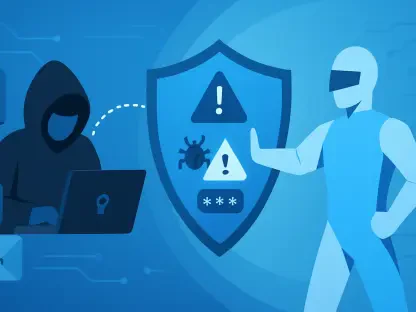

The current threat landscape for cloud infrastructure is shifting rapidly as highly skilled software engineers find themselves in the crosshairs of sophisticated phishing campaigns designed to circumvent modern security protocols. These campaigns are notably distinct from broad-spectrum spam because they leverage high-fidelity replicas of the Amazon Web Services Management Console to deceive technically savvy professionals who usually recognize traditional social engineering tactics. By utilizing adversary-in-the-middle frameworks, attackers are effectively intercepting authentication tokens in real-time, rendering standard SMS or app-based one-time passwords nearly useless against a determined intrusion. This escalation in complexity suggests that the historical reliance on traditional multi-factor authentication is no longer a sufficient deterrent for securing high-privilege access within cloud environments. As organizations scale their infrastructure throughout 2026, the urgency for adopting hardware-based authentication became a top priority for leads.
Mechanisms of Adversary-in-the-Middle Attacks
The technical execution of these targeted attacks relies on the deployment of proxy servers that act as a transparent bridge between the victim and the legitimate AWS login portal. When a developer receives a deceptive notification—often disguised as an urgent security alert regarding an unauthorized login attempt—they are directed to a URL that appears remarkably authentic. Once the user enters their credentials, the proxy server forwards this information to the actual AWS server in real-time, simultaneously capturing the multi-factor authentication request. The victim enters their one-time code on the phishing site, which the attacker immediately relays to the genuine service to establish a valid session. This process allows the threat actor to seize the resulting session cookie, granting them full access to the cloud environment without ever needing to know the user’s permanent password. This method exploits the trust users place in the visual fidelity of the login interface while bypassing the temporal protection.
Beyond the initial credential harvest, these campaigns are frequently characterized by their focus on developers who possess extensive permissions, such as those with AdministratorAccess or PowerUser roles. Attackers are increasingly using social engineering techniques that involve fake job offers or collaborative project invitations sent via professional networking platforms or specialized forums. These lures are meticulously crafted to bypass traditional email filters by utilizing reputable third-party services to host malicious redirectors or deceptive login forms. Once a session is hijacked, the intruder often moves quickly to establish persistence by creating new Identity and Access Management users or attaching backdoored policies to existing roles. This rapid escalation ensures that even if the original session cookie expires, the attacker maintains a foothold. The use of automated scripts allows these actors to scan for sensitive variables to lead to broader lateral movement across repositories.
Modern Defense: Shifting toward Phishing-Resistant Security Architectures
The persistent success of these attacks has prompted a critical reevaluation of the internal security frameworks used by major engineering teams to protect their cloud assets. Security professionals are now moving away from legacy multi-factor methods, such as push notifications or time-based one-time passwords, which remain vulnerable to interception and relaying. In their place, the industry is witnessing a significant surge in the adoption of FIDO2-compliant hardware security keys, which provide a cryptographic binding between the user’s identity and the specific domain of the service. These physical tokens ensure that authentication only succeeds if the website’s origin matches the registered credentials, effectively neutralizing the proxy-based redirection used in modern phishing. By implementing these phishing-resistant standards across all high-privilege accounts, organizations can significantly reduce their attack surface and mitigate the risk of account takeovers in an increasingly complex threat environment.
To combat these evolving threats, engineering leads adopted a more rigorous approach to identity management that extended beyond simple credential validation. They integrated conditional access policies that scrutinized the context of every login attempt, such as the geographic location, device health, and network reputation of the connecting client. This strategy ensured that even if a session token was compromised, the attacker found it difficult to utilize the stolen credentials from an unrecognized environment. Furthermore, companies prioritized the implementation of short-lived credentials and just-in-time access, which limited the window of opportunity for an intruder to cause damage. Security architects concluded that moving forward, teams benefited most from deprecating all non-phishing-resistant MFA methods for users with access to production environments. Regular red-teaming verified these controls. By investing in hardware-backed security, organizations fortified their perimeters.