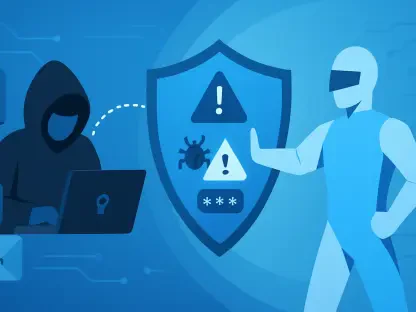

The modern cybersecurity landscape currently stands at a precarious crossroads where the theoretical threat of quantum decryption and the immediate risks of unvetted artificial intelligence development have merged into a singular, systemic emergency for global digital infrastructure. Security architects and executive leadership now find themselves navigating a uniquely dangerous period defined by these two overlapping crises. While the advent of quantum computing and the proliferation of AI-assisted engineering might appear to be distinct challenges belonging to different domains, they are fundamentally linked by a common systemic failure: the rapid adoption of high-leverage technologies without the corresponding maturation of governance, visibility, and defensive discipline.
Two metaphorical clocks are currently ticking toward a zero hour that threatens the foundation of digital trust. One clock tracks the slow but inevitable approach of Cryptographically Relevant Quantum Computers (CRQCs), which will eventually render the foundational public-key cryptography—the RSA and ECDSA algorithms securing the global economy—obsolete. The second, much faster clock tracks the explosive integration of generative AI into the software development lifecycle. This dual-threat environment suggests that the traditional approach of siloed security fixes is no longer viable. Success in this new era requires a unified defensive strategy that addresses the technical debt of the past while securing the automated innovations of the present.
The Concurrent Countdown: Why AI and Quantum Threats Are Now Inseparable
The intersection of quantum computing and artificial intelligence represents a shift in how vulnerabilities are both created and exploited. On one side, the promise of Shor’s algorithm looms over every encrypted transaction, suggesting that current data protection has an expiration date. On the other side, developers are increasingly relying on AI agents to generate massive volumes of code at a speed that outpaces human review. This creates a dangerous feedback loop where AI may inadvertently implement legacy, quantum-vulnerable cryptographic standards into modern applications, effectively hardcoding obsolescence into the very software meant to drive future growth.
This convergence is not merely a matter of bad timing; it is a fundamental collision of speed and scale. As organizations accelerate their digital transformation using AI, they are expanding their attack surface and deepening their reliance on cryptographic protocols that are already under siege. The integration of these technologies demands a shift from reactive patching to a proactive, architectural resilience. If the security community fails to synchronize the response to these two threats, the resulting vulnerabilities will be too numerous and too complex to manage through traditional human-led intervention alone.
The Roots of the Crisis: Rapid Technological Adoption Versus Systematic Security Maturity
The current predicament is rooted in a widening gap between the speed of technological capability and the slow pace of institutional security maturity. For years, the industry has prioritized “feature-first” development, often treating security as a secondary hurdle to be cleared just before deployment. This culture has allowed a massive accumulation of technical debt, particularly in the realm of cryptography. Many organizations lack a comprehensive inventory of their production environments, leaving them unable to identify which internal certificates or legacy load balancers are still running on algorithms that lack a clear migration path to post-quantum standards.
Furthermore, the lack of visibility extends into the newer realms of AI-assisted development. While software engineering teams have been quick to embrace AI tools for productivity gains, the governance frameworks required to audit these tools have lagged behind. Without automated guardrails and strict oversight, the speed of AI development becomes a liability rather than an asset. The crisis is characterized by a “visibility gap” where the infrastructure is evolving so quickly that the security teams charged with protecting it are essentially flying blind, unable to verify the integrity of the code being written or the strength of the encryption being utilized.
The Quantum Migration Deadline: NIST Standards and the Threat of Retrospective Decryption
The transition to Post-Quantum Cryptography (PQC) moved from a theoretical exercise to a mandatory regulatory requirement in 2025. The National Institute of Standards and Technology (NIST) has finalized the first set of standards, including FIPS 203, 204, and 205, which provide a mathematical framework for lattice-based and hash-based encryption. A critical development in this space was the addition of HQC as a fourth algorithm, serving as a mathematical hedge. This ensures that if a vulnerability is discovered in lattice-based cryptography, a vetted alternative is already in place to maintain global security.
The urgency is driven by the “harvest now, decrypt later” strategy employed by sophisticated adversaries. These actors are currently intercepting and storing encrypted communications with the intention of breaking them once quantum hardware reaches sufficient maturity. This threat model makes the sensitivity of data over time a critical metric for any organization. Data with long-term value, such as intellectual property or sensitive government records, must be protected with PQC today. Regulatory bodies have signaled the end of the road for legacy systems, with the National Security Agency mandating a 2030 deadline for national security systems and NIST calling for the total deprecation of RSA and ECDSA by 2035.
The Rise of Vibe Coding: Analyzing Security Vulnerabilities in AI-Assisted Engineering
The emergence of “vibe coding” has fundamentally altered the security profile of modern software. This term describes a development style where engineers prompt AI agents to generate complex functions and then iterate based on general functionality rather than conducting rigorous, line-by-line code reviews. While this approach dramatically increases the volume of code produced, it also introduces a high density of security flaws. Recent reports indicate that AI-generated code fails secure-coding benchmarks approximately 45% of the time, with certain languages like Java seeing failure rates as high as 72%.
These vulnerabilities are rarely simple syntax errors; they are more often fundamental design flaws. AI models do not naturally reason about authentication or access control unless explicitly instructed, leading to the creation of functional code that completely lacks necessary security gates. This trend has contributed to a sharp increase in AI-attributable common vulnerabilities and exposures (CVEs). When developers prioritize the “vibe” or the immediate output of the tool over the underlying security logic, they inadvertently create an environment where functional software is also fundamentally insecure, providing an easy entry point for attackers.
Infrastructure Lag: Why Backend Systems Struggle to Match Frontend Post-Quantum Progress
Despite the progress in establishing PQC standards, the actual rollout across the global tech stack remains highly uneven. Data from late 2025 highlights a stark disparity between consumer-facing technology and backend infrastructure. Browser vendors and mobile operating systems have moved quickly; for instance, the release of major mobile updates triggered a significant jump in post-quantum-capable requests, which now account for over half of all TLS 1.3 traffic globally. The front-facing edge of the internet is increasingly ready for the quantum future, but the core systems are not.
The server-side or “origin” infrastructure continues to lag, with adoption rates hovering around 10%. This delay is largely due to the “legacy weight” of backend environments, which often rely on hardcoded cipher suites, aging load balancers, and third-party vendor appliances that are notoriously difficult to update. This creates a dangerous bottleneck where the user’s connection to the edge is secure, but the internal traffic between the edge and the data center remains vulnerable. Solving this requires a deep refactoring of internal networks that many organizations have been hesitant to undertake due to the perceived risk of service disruption.
Expert Insights: Evaluating Cryptographic Side-Channels and Hidden Unicode Injection Risks
Technical experts have warned that even the newest security standards are not immune to implementation errors or creative exploitation. The “KyberSlash” incident demonstrated that a mathematically sound algorithm can be undermined by timing side-channel vulnerabilities in its implementation. By measuring the time taken for certain cryptographic operations, an attacker could potentially reconstruct a private key. This highlights the reality that simply switching to post-quantum algorithms is not enough; the implementations themselves must be hardened against the same types of physical and logical side-channel attacks that have plagued classical cryptography for decades.
Simultaneously, the threat model for AI development has evolved to include indirect attacks on the development environment itself. The discovery of “Rules File Backdoor” attacks revealed how adversaries can use hidden Unicode characters—such as zero-width joiners—within AI configuration files to manipulate the output of coding assistants. These characters are invisible to human eyes but are parsed as instructions by the AI, which may then silently generate backdoored code. This type of attack allows a repository to be compromised without ever modifying the visible source code, illustrating the need for much more sophisticated auditing of the tools that developers use to write software.
A Blueprint for Resilience: Hardening the CI/CD Pipeline Through Crypto-Agility and AI Guardrails
To address these twin pressures, organizations must implement a structured, layered defense that integrates cryptographic agility with AI governance. The first line of defense should be the Continuous Integration and Continuous Deployment (CI/CD) pipeline. Every AI-assisted commit must be subjected to automated secret scanning and static analysis to identify vulnerabilities before they reach production. Furthermore, pipelines should be configured to scan for invisible Unicode characters in configuration files, ensuring that the AI assistants themselves have not been compromised by malicious prompts or poisoned rules files.
At the heart of quantum readiness lies the concept of crypto-agility. Rather than hardcoding specific signature algorithms into their software, development teams should utilize abstraction layers that allow for the centralized management of cryptographic decisions. This enables an organization to update its encryption standards across an entire fleet via a single configuration change, rather than requiring a manual refactoring of millions of lines of code. Deployment strategies must also adopt hybrid key exchanges, combining classical and quantum-resistant algorithms to ensure compatibility while the industry continues its slow migration toward a fully post-quantum future.
The overarching consensus from the analysis of these trends was that the security challenges of the next decade were not solved through isolated efforts. The “end-to-end” scenario illustrated how various security layers worked in tandem; when an AI generated a piece of code that utilized an outdated algorithm, a crypto-aware CI pipeline identified the flaw and triggered a mandatory human review. This integrated approach ensured that the “two clocks” did not run out on the digital infrastructure of the era. The goal was not to retreat from innovation but to build systems that assumed change was constant. By establishing rigorous visibility and implementing strict guardrails, organizations successfully navigated the transition into a quantum-resistant and AI-driven world. The discipline of governance finally caught up to the power of the capabilities that were unleashed, proving that resilience was a matter of architectural design rather than reactive luck. Managers who prioritized agility over rigid legacy systems were the ones who ultimately protected their assets against the rising tide of automated threats and the eventual quantum break. This period in history served as a reminder that the speed of progress must always be matched by the strength of its foundations.