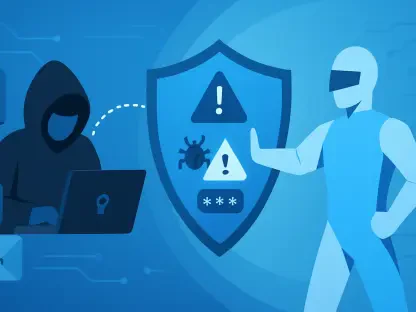

The invisible workforce of billions of autonomous software entities has finally surpassed the human population of the internet to become the dominant force within the modern corporate network architecture. In the current enterprise landscape, for every human employee logging into a workstation, there are now more than 80 non-human entities operating silently in the background. These service accounts, API keys, container workloads, and automated bots constitute a silent majority that never sleeps and never takes a lunch break. Most critically, these identities often operate entirely outside the traditional multi-factor authentication protocols that have long been the gold standard for protecting human users. This fundamental shift has forced a total re-evaluation of digital trust, as the security perimeter is no longer defined by who is accessing the data, but by what is accessing it.
The emergence of autonomous AI agents has accelerated this trend, creating a reality where machines act on behalf of other machines without any human intervention. While organizations have spent the last decade perfecting human identity and access management, a massive identity gap has appeared. This gap exists because non-human entities require a level of speed and scale that traditional security frameworks were never designed to handle. A human might log in twice a day, but a microservice might request access to a database ten thousand times a minute. Consequently, the legacy methods of “trusting” a connection based on a persistent login or a static password have become a liability that threat actors are eager to exploit.
The Silent Majority Governing the Modern Network
As of 2026, the quantifiable reality of network activity reveals that machine identities have become the primary subjects of security policy. Data from recent identity landscape reports indicates that the sheer volume of non-human actors—including cloud workloads, serverless functions, and automated CI/CD pipelines—is growing at an exponential rate compared to the human workforce. This explosion is driven by the shift toward decentralized, cloud-native architectures where every individual component of an application requires its own set of credentials to communicate with other services. Unlike humans, these entities do not have biometrics to verify, nor can they respond to a push notification on a smartphone.
The lack of visibility into these accounts creates a significant blind spot for modern security operations centers. Many organizations still struggle to inventory their machine identities, let alone manage their lifecycles. This results in “zombie” service accounts that persist long after their associated projects have been decommissioned, providing attackers with a forgotten backdoor into sensitive environments. Because these identities often possess broad, administrative privileges to facilitate automation, a single compromised API key can offer a level of access that would take an attacker months to achieve through a human-centric phishing campaign. The silent nature of these interactions means that an unauthorized machine agent can traverse a network for weeks without triggering the behavioral alerts designed for human users.
Moreover, the rise of the autonomous AI agent has introduced a new layer of complexity to this silent majority. These agents do not just perform static tasks; they make decisions and chain multiple API calls together in sub-second intervals to achieve complex goals. When an AI agent performs a transaction, it often does so by “borrowing” the permissions of the human who initiated the request, or by using a generic service account that lacks granular restrictions. This creates a governance nightmare, as security teams must now distinguish between a legitimate automated process and a malicious actor masquerading as a high-velocity machine identity. The perimeter has effectively moved from the edge of the network to the very heart of the software code.
From Human Logins to Machine Velocity
The transition from human-centric to machine-centric environments is fundamentally a transition of velocity. Traditional Identity and Access Management frameworks were built for human sessions characterized by clear start and end points, typically spanning several hours. In contrast, modern microservices and containerized applications function at a scale that renders human-speed security obsolete. When an application scales up in response to traffic, it might spin up hundreds of new machine identities in seconds. Expecting a manual approval process or a static credential to secure these instances is an operational impossibility. This velocity requires a move toward dynamic, ephemeral identities that exist only as long as they are needed.
This evolution has rendered static credentials, such as long-lived passwords and persistent API tokens, a primary point of failure. These “secret” strings of text are often hardcoded into configuration files or stored in insecure environments where they can be easily harvested by attackers. Once stolen, a static credential provides “standing trust,” allowing an unauthorized user to maintain access indefinitely until the password is manually changed. In a world of machine velocity, trust must be earned for every single transaction rather than granted once for an entire session. The industry is therefore shifting toward a model where credentials are automatically rotated every few minutes or hours, significantly narrowing the window of opportunity for any potential compromise.
The disconnect between the speed of business automation and the speed of security governance has led to the aforementioned identity gap. While developers have embraced the agility of DevOps and automated pipelines, security teams have often been left behind, trying to apply old rules to a new game. This friction often leads to “shadow identities,” where developers bypass official security protocols to maintain the speed of deployment. However, the modern security perimeter cannot be maintained through restriction alone; it must be built into the very fabric of the automated workflow. By integrating identity issuance directly into the deployment pipeline, organizations can ensure that every machine is born with a verifiable identity, rather than being granted one as an afterthought.
Redefining Trust Through Cryptographic Attestation and SPIFFE
Treating machine identities as first-class citizens requires a move away from network-based trust toward identity-based trust. Historically, security teams trusted a workload because it resided on a specific, “safe” internal IP address. However, in modern cloud environments, IP addresses are transient and can be reused by different services within minutes. This makes the IP address a poor indicator of legitimacy. Instead, the industry is gravitating toward the SPIFFE (Secure Production Identity Framework For Everyone) standard as the primary method for establishing trust. SPIFFE provides a universal identity plane that allows services to authenticate each other regardless of where they are running, whether it be on-premises, in a public cloud, or across a hybrid environment.
At the heart of this framework is the concept of cryptographic attestation. Before a machine identity is granted access, it must prove its origin and attributes through a rigorous verification process. This involves a software agent—known as a workload—presenting its “credentials” to a local server that checks its characteristics against a set of predefined policies. Only after the workload’s identity is verified does it receive a short-lived, automatically refreshed credential known as a SPIFFE Verifiable Identity Document (SVID). These documents use X.509 certificates or JWT tokens to provide a cryptographically signed proof of identity that is much harder to forge or steal than a simple password.
This shift toward identity-based trust ensures that authorization is as dynamic as the environment it inhabits. By using service meshes and mutual TLS (mTLS), organizations can enforce a policy where no two services can talk to each other without first verifying their respective identities. This creates a granular perimeter that surrounds every individual workload, effectively neutralizing the threat of lateral movement. If an attacker manages to compromise one container, they are unable to move to another part of the network because they lack the necessary cryptographic proof to establish a new connection. This level of discipline is the only way to manage the thousands of interactions occurring every second in a modern distributed system.
The 47-Day Ticking Clock and Lessons From the Salesloft Breach
The urgency of this transition is underscored by recent industry mandates that are making manual identity management an operational impossibility. The CA/Browser Forum, led by major ecosystem players like Apple and Google, has begun a systematic phase-down of the maximum lifespan for public TLS certificates. By the end of this decade, these certificates will expire in just 47 days. This reduction is a deliberate move to force organizations away from manual renewal processes toward automated rotation. When certificates lasted for several years, a human could track them in a spreadsheet; at a 47-day cadence, a single missed renewal can lead to a catastrophic service outage, as seen in numerous high-profile incidents over the past year.
The 2025 Salesloft Drift breach serves as a stark warning about the dangers of lingering, unmanaged machine trust. In this incident, attackers did not break through a firewall or guess a password; they leveraged stolen OAuth refresh tokens. These tokens were designed to allow different software platforms to communicate without requiring a human to re-authenticate. Because the tokens were over-permissioned and lacked a short expiration window, the attackers were able to maintain broad access across 700 different organizations for ten days. The breach demonstrated that without automated rotation and time-boxed trust, the machine identity landscape becomes a massive liability for cascading compromises that can span an entire software supply chain.
These events have collectively signaled the end of the era of “set it and forget it” security. The ticking clock of 47-day certificate lifespans and the reality of token-based attacks mean that automation is no longer a luxury for the most advanced tech companies; it is a load-bearing requirement for every enterprise. Security teams are now realizing that the risk of a long-lived, static credential being exploited by a sophisticated threat actor far outweighs the effort required to implement an automated rotation system. The goal is to reach a state where no credential is valid for more than a few hours, ensuring that even a successful theft results in a token that is useless by the time an attacker attempts to use it.
A Three-Layer Roadmap for Machine Identity Governance
To secure the perimeter in this machine-dominated era, organizations must implement a structured framework that prioritizes automation over manual intervention. The first essential component is the Identity Issuance Layer. This layer ensures that every workload, container, and AI agent is provided with a unique, short-lived ID at the moment of creation. This is achieved by integrating identity providers directly with orchestration tools like Kubernetes or cloud-native provisioning systems. By automating the “birth” of an identity, security teams can ensure that no unmanaged entities are running in their environment, effectively eliminating the shadow identity problem that plagued earlier cloud adoption efforts.
The second component is the Enforcement Layer, which governs how these identities are allowed to interact. This layer utilizes service meshes and API gateways to perform per-call authorization. Instead of trusting a connection because it originated from an “internal” source, the Enforcement Layer validates the identity and scope of every single request against a centralized policy engine. This ensures that a machine identity can only perform the specific tasks it was designed for, adhering to the principle of least privilege. If a service account designed to read from a database suddenly attempts to delete records or access a different server, the Enforcement Layer can detect and block the anomaly in real time.
The final component is the Lifecycle Layer, which serves as the engine that keeps the entire system secure and up to date. This layer is responsible for the automated rotation of secrets, tokens, and certificates, ensuring they meet the new industry standards for short lifespans. This transition toward a machine-first identity paradigm represented the most significant architectural overhaul in recent history. Organizations that embraced this shift successfully eliminated static credentials and moved toward a state of continuous verification. These strategic investments transformed identity from a point of vulnerability into a robust foundation for innovation. The industry learned that in a world governed by machines, security was not a barrier to speed, but the very mechanism that made speed sustainable. The results proved that automation was the only viable path forward to maintain a resilient and trustworthy digital ecosystem.