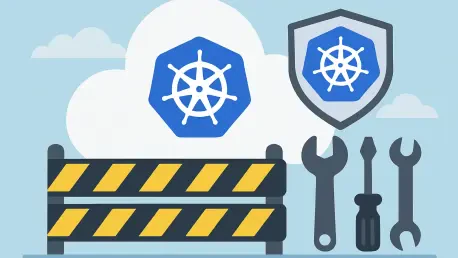

The very declarative nature that makes Kubernetes the undisputed king of container orchestration has paradoxically become the primary source of systemic risk for the modern enterprise, where simple YAML misconfigurations often cause more damage than sophisticated cyber threats. Kubernetes guardrail technology represents a significant advancement in cloud-native operations and security. As organizations scale their Kubernetes adoption, the complexity of managing configurations for reliability, security, and cost becomes a critical challenge. This review will explore the evolution of guardrail tools designed to address this complexity, their key features, performance metrics, and the impact they have had on enterprise engineering workflows. The purpose of this review is to provide a thorough understanding of this technology, its current capabilities, and its potential future development.
The Genesis of the Kubernetes Governance Problem
Kubernetes has cemented its position as the de facto standard for container orchestration, largely due to its powerful, declarative model. This model allows developers to define the desired state of their applications in YAML files, which the system then works to achieve. While this approach offers unparalleled flexibility and automation, it also introduces a significant challenge at scale. In large organizations with hundreds or thousands of developers, the volume of configuration files being created and modified daily becomes immense. Expecting every developer to be an expert in the intricate nuances of Kubernetes security, reliability, and cost optimization is simply unrealistic.
Consequently, manual configuration review by platform or SRE teams transforms into an unsustainable bottleneck. This process is not only slow and error-prone but also scales poorly, creating friction between development and operations teams. In the fast-paced world of DevOps and DevSecOps, where release velocity is paramount, such a reactive gatekeeping model fails to keep pace with business demands. It is within this context of escalating complexity and the failure of traditional oversight that automated guardrail technology has emerged as a critical enabler for safe and efficient cloud-native development.
Anatomy of a Modern Guardrail Platform
Modern guardrail platforms are far more sophisticated than simple YAML linters. They represent a holistic governance framework designed to integrate seamlessly into existing developer workflows. These tools operate on the principle of proactive prevention rather than reactive detection, analyzing configurations against a comprehensive set of policies before they can cause harm. By providing immediate, context-aware feedback, they transform governance from a centralized, top-down mandate into a distributed, developer-led responsibility.
Empowering Developers by Shifting Governance Left
The core tenet of modern guardrail technology is the concept of “shifting left.” This involves moving validation and governance checks from late-stage CI/CD pipelines directly to the developer’s immediate workflow. By integrating with Git providers like GitHub, GitLab, and Bitbucket, these tools provide real-time feedback directly within a pull or merge request. When a developer proposes a change containing a misconfiguration—such as a container running as root or a missing readiness probe—the tool immediately flags the issue with a clear, actionable explanation.
This approach fundamentally alters the development cycle. Instead of waiting for a pipeline to fail minutes or hours later, developers receive instant insights, allowing them to correct errors on the spot. This not only accelerates development velocity by reducing rework and eliminating failed builds but also empowers developers with autonomy. They are no longer passively submitting code for review but are actively engaged in ensuring its quality, security, and efficiency from the moment of creation.
Comprehensive Policy as Code Enforcement
At the heart of these guardrail tools lies a powerful policy engine that enables organizations to codify their specific best practices and compliance requirements into enforceable rules. This “policy-as-code” approach allows for consistent enforcement across multiple domains. In the realm of security, policies can prevent common vulnerabilities like running privileged containers, using wildcard ingress hosts, or failing to define restrictive network policies. For reliability, they can enforce the presence of liveness and readiness probes, mandate the use of Pod Disruption Budgets, and prohibit the use of the latest image tag to ensure deterministic deployments.
Furthermore, these engines are not limited to generic rules. They allow enterprises to translate their unique operational knowledge and tribal wisdom into automated checks. By leveraging standardized policy languages, platform teams can author, manage, and distribute a central set of policies that reflect their organization’s standards. This ensures that every configuration change, regardless of the team or developer who authors it, adheres to the same high bar for quality and safety.
Proactive Cloud Cost Optimization
Beyond security and reliability, Kubernetes guardrails function as powerful, proactive cost-optimization engines. A significant portion of cloud waste stems from suboptimal configurations that are deployed without scrutiny. These tools identify and block such wasteful patterns before they ever reach a production environment and begin incurring costs. For example, a guardrail can prevent developers from provisioning expensive LoadBalancer services when a shared Ingress controller would suffice, a common mistake that can add hundreds of dollars per month for each unnecessary service.
Other examples include enforcing the use of more cost-effective storage classes, such as AWS GP3 over the older GP2, or ensuring that all workloads have appropriate resource requests and limits defined. Without these settings, cluster autoscalers may provision unneeded nodes, and runaway applications can destabilize entire clusters. By catching these issues in the pull request, guardrail tools shift cost management from a reactive, after-the-fact analysis to a proactive, preventative discipline embedded directly in the development process.
Multi Cloud Standardization and Compliance
In today’s enterprise landscape, it is common for organizations to operate across multiple cloud providers (such as Amazon EKS, Google GKE, and Azure AKS) as well as on-premise clusters. This hybrid and multi-cloud reality creates significant governance challenges, as each environment has its own unique annotations, best practices, and implementation details. Guardrail tools address this by providing a unified abstraction layer for policy enforcement.
This capability is crucial for ensuring consistent application of security and compliance standards, regardless of the underlying infrastructure. A single policy, for instance, can mandate that all publicly exposed services use TLS encryption, and the tool will enforce it consistently across an EKS cluster in one region and a GKE cluster in another. This “compliance-as-code” approach dramatically streamlines audit processes. Instead of manually inspecting configurations across disparate environments, auditors can simply review the codified policies, providing a clear and verifiable record of compliance controls.
Emerging Trends in Automated Governance
The field of automated Kubernetes governance is rapidly evolving beyond simple configuration validation. The most significant trend is the shift from basic YAML linting toward context-aware analysis. Early tools focused on the syntax and structure of a single file, but modern platforms can now understand the broader context, such as how a proposed change will interact with existing cluster resources or policies. This allows for more intelligent and nuanced decision-making, reducing false positives and providing more relevant feedback to developers.
Another major development is the integration of artificial intelligence and machine learning to offer intelligent policy recommendations. These systems can analyze an organization’s historical deployment data, identify recurring patterns of misconfigurations, and suggest new policies to prevent them. They can also help developers by recommending optimal resource requests based on an application’s observed performance, further enhancing both reliability and cost efficiency. This trend points toward a future where governance tools act not just as enforcers but as intelligent partners in the development process. Finally, there is a growing movement where platform teams leverage these tools to build true self-service infrastructure platforms, empowering developers with safe autonomy rather than acting as manual gatekeepers.
Real World Applications and Impact
The practical impact of Kubernetes guardrail tools is most pronounced in sectors where the stakes are highest. In highly regulated industries such as finance and healthcare, these tools are becoming indispensable for enforcing strict compliance standards like PCI DSS and HIPAA. By codifying compliance rules, organizations can ensure that all deployments adhere to required security controls from the outset, dramatically simplifying the audit process and reducing regulatory risk.
In large technology enterprises, the primary driver for adoption is often reliability and the prevention of customer-facing outages. Common misconfigurations, such as failing to define Pod Disruption Budgets or using the nondeterministic latest image tag, have been identified as root causes of significant service downtime. By catching these simple but critical errors before they reach production, guardrail tools prevent entire classes of incidents, freeing up SRE and on-call teams to focus on more complex, systemic challenges rather than firefighting preventable configuration mistakes.
Adoption Challenges and Technical Hurdles
Despite their clear benefits, the widespread adoption of Kubernetes guardrail tools is not without its challenges. One of the most significant hurdles is the complexity of creating and managing a comprehensive policy set. If policies are too restrictive, they can stifle developer innovation and slow down delivery. Conversely, if they are too permissive, they fail to provide meaningful protection. Striking the right balance requires a deep understanding of both the technology and the organization’s specific needs.
Beyond the technical aspect, there is a crucial cultural shift required. These tools work best in an environment where developers are empowered to take ownership of the operational health of their applications. This transition from a siloed model, where a central team is responsible for governance, to a shared responsibility model can be met with resistance. Finally, integrating a new tool seamlessly into diverse and mature CI/CD toolchains presents its own technical challenge, requiring careful planning and execution to avoid disrupting established workflows.
The Future of Proactive Kubernetes Management
Looking ahead, the trajectory of proactive Kubernetes management points toward even deeper integration into the developer experience. The next frontier is real-time feedback directly within the Integrated Development Environment (IDE). As developers write their YAML manifests, the IDE itself could offer instant suggestions and warnings, catching potential issues at the absolute earliest point in the lifecycle—before the code is even committed. This would represent the ultimate “shift left,” making governance an invisible and frictionless part of the creative process.
In parallel, the role of artificial intelligence will likely expand from recommendation to automated remediation. Future systems may not only detect suboptimal configurations but also automatically propose and, with approval, apply corrections based on historical performance data and established best practices. This evolution will further transform the roles of SRE, Platform, and Security teams. They will move away from writing individual rules and toward curating and training intelligent systems that manage governance autonomously, allowing them to focus on higher-level architectural and strategic initiatives.
Conclusion: The Imperative for Automated Guardrails
The review of Kubernetes guardrail technologies has demonstrated their evolution from simple validation scripts to sophisticated, developer-centric governance platforms. The analysis has shown that these tools address critical challenges in security, reliability, cost, and compliance that arise from the inherent complexity of managing Kubernetes at scale. By shifting governance left, they empower developers, accelerate delivery pipelines, and prevent entire classes of production incidents and financial waste before they occur. The challenges in adoption, while real, are primarily related to the cultural and organizational adjustments needed to embrace a more proactive and distributed model of governance. The evidence positions automated guardrail tools not as an optional accessory but as an essential, foundational component of any modern cloud-native technology stack, critical for achieving the trifecta of speed, safety, and efficiency.