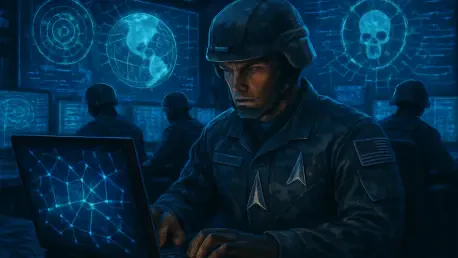

As the global reliance on satellite-based communication, navigation, and intelligence grows, the once-uncontested domain of space has transformed into a critical and vulnerable frontier for national security. The United States Space Force, the newest branch of the armed forces, finds itself at the forefront of this new battleground, where the most significant threats may not come from kinetic weapons but from silent, sophisticated cyberattacks capable of crippling essential infrastructure from thousands of miles away. Recognizing this existential threat, the Space Force is embarking on a monumental overhaul of its digital infrastructure, a foundational effort to secure its assets against an ever-evolving landscape of digital warfare. This modernization is not merely an upgrade; it is a fundamental reimagining of how the military’s space operations are protected, connected, and sustained in an era where digital resilience is synonymous with mission success. The initiative, spearheaded through a major contract with CACI International, signals a proactive shift to fortify the digital backbone that supports America’s eyes and ears in orbit.
Overhauling the Digital Frontier
The Mandate for Modernization
The urgency behind the Space Force’s network overhaul stems from the inherent vulnerabilities of its legacy infrastructure, a system designed decades ago for a vastly different technological and geopolitical environment. This “digital backbone” was never engineered to handle the massive data volumes generated by modern sensors and systems, nor was it built to support the cloud-centric operations that have become standard across the Department of Defense. More critically, its outdated architecture presents a soft target for sophisticated state-sponsored hackers and other malicious actors seeking to disrupt or disable American space capabilities. The current networks lack the inherent security features needed to counter advanced persistent threats, making them susceptible to infiltration and manipulation. This extensive modernization project is, therefore, a direct response to the clear and present danger posed by cyber warfare, aiming to replace a fragile, aging system with a resilient, high-throughput network capable of defending against the threats of today and tomorrow. This initiative is a core component of the larger Base Infrastructure Modernization (BIM) program, a decade-long, $12.5 billion endeavor led by the Air Force to future-proof its critical installations.
The scope of this ambitious project extends across the entire constellation of U.S. Space Force installations, encompassing all 14 bases, from the strategic launch hub at Patrick Space Force Base in Florida to the vital command center at Buckley Space Force Base in Colorado and even remote outposts like Pituffik Space Base in Greenland. The effort involves a comprehensive upgrade of both classified and unclassified networks, ensuring that every link in the chain is fortified. Central to this transformation is the implementation of a zero-trust security architecture, a modern cybersecurity model that operates on the principle of “never trust, always verify.” This approach eliminates implicit trust within the network, requiring continuous verification for any user or device attempting to access resources. Alongside this security-first framework, the upgraded infrastructure will provide robust support for cloud-based applications, enabling the Space Force to leverage scalable, off-premise computing and data storage. The end goal is to create a seamless, resilient, and secure digital environment that provides the high-speed connectivity necessary for complex space operations in a contested domain.
A New Model for Procurement and Sustainment
Driving this modernization is an innovative contracting model designed for agility and long-term effectiveness, moving away from traditional, rigid procurement processes. The BIM program utilizes an indefinite delivery/indefinite quantity (IDIQ) contract, which establishes a pool of 22 pre-qualified vendors, including the defense contractor CACI International, which secured a five-year task order valued at up to $212 million. This structure allows the government to issue specific task orders to these vendors as new requirements arise, providing the flexibility needed to adapt to rapidly evolving technology and threat landscapes. Instead of being locked into a single, monolithic contract, the Space Force can tap into a diverse range of expertise and solutions, fostering competition and ensuring it receives the most advanced technology available. This approach significantly shortens acquisition timelines and allows for a more dynamic and responsive modernization effort, ensuring that the network infrastructure can keep pace with the speed of innovation in the private sector and the evolving tactics of adversaries.
Furthermore, the program embraces an “enterprise IT as a service” (EITaaS) model, representing a significant strategic shift in how the military manages its technological infrastructure. Under this framework, contractors like CACI are responsible not only for the initial design and installation of the new networks but also for their continuous sustainment, maintenance, and modernization over the life of the contract. This turns the relationship from a one-time transaction into an ongoing partnership where the contractor has a vested interest in the long-term performance and security of the system. This service-based approach alleviates the burden on military personnel to manage complex IT systems, allowing them to focus on their core missions. It also ensures that the infrastructure remains at the cutting edge, with regular updates and technology refreshes built into the service agreement. This comprehensive model is a cornerstone of a broader Pentagon strategy to shed the weight of legacy systems and adopt a more agile, resilient, and operationally focused posture for the digital age.
The Strategic Imperative of Cyber Resilience
Fortifying the Final Frontier Against Digital Threats
The decision to overhaul the Space Force’s digital infrastructure was a strategic imperative driven by the realities of modern warfare. In today’s contested environments, space is no longer a sanctuary but a domain where adversaries actively seek to gain an advantage through cyber operations. A successful attack on satellite command and control systems, ground stations, or the networks that transmit critical data could have catastrophic consequences, blinding intelligence-gathering capabilities, disrupting GPS navigation essential for military and civilian life, and severing communication links for deployed forces. The modernization effort, therefore, is about more than just faster internet speeds; it is about ensuring mission assurance. By embedding a zero-trust architecture and enhancing cloud connectivity, the Space Force is building a network that is inherently more defensible. This hardened digital foundation will enable operators to detect, resist, and recover from cyberattacks more effectively, ensuring that American space assets can continue to function even while under direct assault in the digital realm.
This forward-leaning investment in cyber resilience directly enhances the operational readiness of the Space Force and its ability to support joint-force operations around the globe. Every branch of the military relies on the capabilities provided by space-based assets, from precision-guided munitions to secure communications. A compromised space network would create a ripple effect, degrading the effectiveness of terrestrial, air, and sea forces. The new, modernized infrastructure will provide the secure, high-bandwidth connectivity needed to process and disseminate vast amounts of data from next-generation sensors in near-real time, giving warfighters a decisive information advantage. This project is a foundational step in ensuring the United States can maintain its strategic edge in an era where victory on the battlefield is increasingly dependent on dominance in the digital and space domains. It positions the Space Force not just to defend its current assets but to confidently integrate future technologies and maintain its role as the guardian of the nation’s interests in the ultimate high ground.
A Pioneering Digital Future
The comprehensive network modernization undertaken by the Space Force represented a pivotal moment in its development, establishing a digital foundation that was not merely an upgrade but a strategic re-platforming for an era of persistent digital conflict. This initiative went beyond replacing aging hardware; it institutionalized a new philosophy of cyber resilience, embedding principles of zero trust and continuous sustainment into the very fabric of its operations. The adoption of the “enterprise IT as a service” model fundamentally altered the relationship between the military and its industry partners, creating a dynamic ecosystem where technological innovation could be integrated at the speed of relevance. This flexible and forward-looking approach ensured that the Space Force’s digital backbone would not become another static legacy system but would evolve in lockstep with emerging threats and technological opportunities, from advanced artificial intelligence integration to quantum-resistant cryptography.
Ultimately, the successful execution of the Base Infrastructure Modernization program equipped the Space Force with the secure, high-performance network it needed to operate and prevail in the contested domain of the 21st century. The fortified infrastructure across its global bases provided the resilience necessary to assure mission success even under a sophisticated cyberattack, directly enhancing the lethality and effectiveness of the entire joint force that depends on space-based capabilities. By proactively addressing its digital vulnerabilities, the Space Force not only secured its own assets but also set a new standard for cybersecurity and IT modernization across the Department of Defense. This foundational investment was a clear signal that in modern warfare, control of the digital frontier had become as critical as control of the physical domains, and the nation’s newest military branch was prepared to lead the charge.