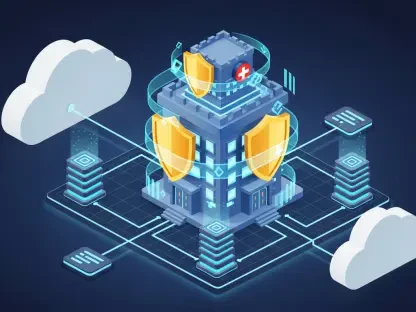

The landscape of corporate cybersecurity has fundamentally shifted from a period of experimental multicloud adoption to a state of total AI-native integration where generative AI and autonomous agents drive core operations. This rapid evolution creates a persistent challenge for security leaders who must balance the need for high-speed innovation with the absolute necessity of maintaining a rigorous defense posture. The Cloud Network & AI Risk Assessment, known as CLARA, represents a critical development in this environment by offering a zero-impact methodology for discovering distributed workloads and benchmarking existing defenses. It serves as a strategic decision-support framework that bridges the gap between the velocity of technological advancement and the requirements for enterprise-grade oversight. By synthesizing deep network telemetry with context-aware analysis, CLARA ensures that high-stakes digital projects can proceed with the documented assurance that boardrooms now demand.
Navigating the Complexity of Hidden AI Assets
The rapid proliferation of unmanaged AI agents and third-party models has introduced the phenomenon of shadow AI, where specialized tools are integrated into the corporate ecosystem without the explicit knowledge or oversight of the centralized security office. This lack of visibility is particularly dangerous in 2026 because traditional monitoring solutions often fail to inspect the high-volume internal traffic moving between various cloud workloads, effectively leaving the door open for lateral movement and data exfiltration. CLARA addresses this invisibility by providing a comprehensive single pane of glass view across the major public cloud providers, including Amazon Web Services, Microsoft Azure, and Google Cloud Platform. By automatically inventorying virtual machines, containers, and serverless functions, the framework ensures that no asset remains hidden from the protective gaze of the security team. This level of transparency is essential for modern enterprises looking to close the gap on blind exposure.
Beyond simple asset tracking, the assessment methodology utilizes deep network telemetry to analyze inbound, outbound, and internal application flows to identify uninspected AI runtime calls that might bypass traditional controls. This process eliminates the operational noise that typically obscures architectural weak points and helps administrators understand how data interacts with sensitive large language models. The discovery phase is non-disruptive, allowing organizations to maintain their current operational cadence while simultaneously mapping out their entire cloud footprint with precision. Consequently, security teams can transition from a reactive stance to a proactive one, identifying potential vulnerabilities before they are exploited by sophisticated threat actors. This systematic approach transforms a fragmented and often chaotic cloud environment into a secured, fully mapped landscape that is ready to support the next generation of AI-driven business strategies.
Quantifying Defense Performance against Advanced Exploits
While the security tools provided by native cloud service providers offer a foundational level of protection, they frequently prove insufficient when faced with the highly specialized and automated exploits that target modern AI workloads. CLARA introduces a rigorous benchmarking process designed to measure the actual effectiveness of an organization’s current defensive stack compared to high-performance, enterprise-grade software firewalls. This empirical data is then compiled into a comprehensive Security Validation Report, which provides executive leadership with the objective evidence necessary to justify critical security investments. By moving past a mindset of basic compliance, organizations can address the specific weaknesses that native tools often overlook, such as advanced deep packet inspection and zero-trust verification for internal traffic. This data-driven strategy ensures that security expenditures are aligned with actual risks rather than perceived threats or generic recommendations.
The benchmarking phase is critical for establishing a consistent and unified security policy across diverse and often siloed cloud environments that characterize the modern digital estate. By simulating real-world exploit scenarios, the assessment quantifies the specific gap between foundational cloud security and the robust protection required for AI-native innovation to thrive. This process allows technical teams to optimize their defensive architectures, ensuring that their most valuable data assets and proprietary models are shielded by advanced security protocols rather than platform-specific controls. Furthermore, the Security Validation Report serves as a roadmap for architectural improvement, highlighting exactly where native firewalls may fall short in preventing sophisticated attacks like model inversion or unauthorized data extraction. Ultimately, this rigorous validation process empowers the Chief Information Security Officer to present a clear, evidence-based case for a more resilient and integrated security infrastructure.
Strengthening Model Resilience through Red Teaming
As artificial intelligence models become the primary engines for strategic business decisions and customer interactions, maintaining the absolute integrity of these systems has become a mission-critical priority. Conventional vulnerability scanners are typically designed for legacy software and are often unable to detect unique risks inherent to AI, such as prompt injections, model tampering, or the execution of malicious scripts. CLARA’s advanced red teaming component addresses this specific shortfall by executing targeted, context-aware tests against an organization’s active models to identify potential attack vectors and data leakages. These stress tests provide a detailed map of how an adversary might manipulate a model’s logic to produce unintended outputs or gain access to restricted backend data. By uncovering these vulnerabilities in a controlled environment, organizations can implement defensive measures that are specifically tuned to the nuances of generative AI and large language models.
The findings from these simulations were translated into actionable intelligence and specific policy recommendations that allowed enterprises to move from a position of uncertainty to one of absolute confidence. By proactively identifying deep-seated malware and vulnerabilities within the model logic itself, the framework ensured that the AI projects powering the business remained resilient and impenetrable. Organizations that adopted these measures successfully avoided the brand damage and operational disruptions associated with compromised AI systems. Looking ahead, the focus must remain on the continuous validation of model integrity and the refinement of automated response protocols to match the speed of evolving digital threats. The transition to a more secure AI-native state required a shift in perspective where risk assessment became an ongoing business enabler rather than a one-time compliance hurdle. This strategic approach provided the necessary documented assurance to scale innovation safely and effectively.