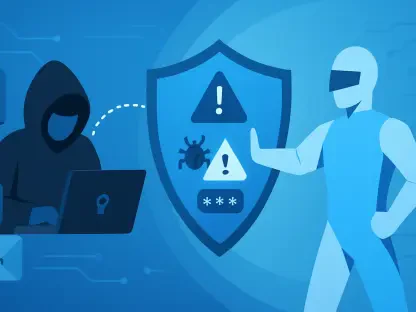

The silent infiltration of millions of private home networks represents one of the most sophisticated challenges in modern cybersecurity, turning everyday appliances into unwitting participants in global cyber warfare. In a landmark operation coordinated between Google’s Threat Intelligence Group (GTIG) and the Federal Bureau of Investigation, authorities have successfully executed a precision strike against a massive residential proxy network that had compromised devices on a global scale. This operation was not merely a localized cleanup but a strategic dismantling of a commercialized infrastructure that allowed threat actors to hide behind the legitimate internet traffic of unsuspecting citizens. By leveraging deep technical insights from the private sector alongside the legal and investigative powers of federal law enforcement, the coalition managed to seize hundreds of domains critical to the operation of NetNut, a service linked to Alarum Technologies. This intervention highlights a critical turning point in how technology giants and government agencies collaborate to protect the integrity of the digital ecosystem from organized criminal exploitation. The successful seizure signifies a significant disruption in the supply chain for cybercrime, specifically targeting the anonymous routing services that many advanced persistent threat groups rely upon to conduct their operations without detection.
1. Overview: The Scale of the Joint Enforcement Action
The partnership between Google’s Threat Intelligence Group and the FBI, supported by a network of international infrastructure providers, represents a sophisticated response to the industrialization of cybercrime. This joint enforcement action specifically targeted the operational backbone of NetNut, a prominent residential proxy service that functioned by routing traffic through millions of compromised consumer devices. By securing court orders to seize hundreds of domain names used for command-and-control communication, the FBI effectively severed the link between the proxy service and its hijacked fleet of hardware. This move forced a massive disconnect in the network, rendering the illegitimate proxy services inaccessible to the paying customers who utilized them for malicious activities. The inclusion of major infrastructure providers ensured that the domains could not simply be migrated to other registrars, effectively creating a perimeter that prevented the immediate resurgence of the botnet’s core functionality within the global IP space.
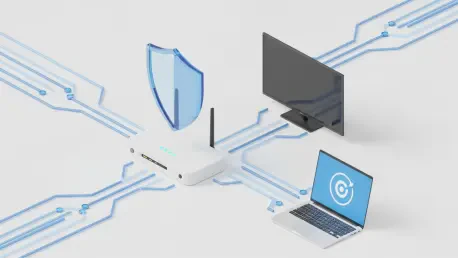
The scope of this compromise was particularly alarming due to the sheer number of endpoints involved, which spanned across various continents and included millions of household items. Residential proxy networks like this one operate by turning standard consumer electronics—from routers to smart kitchen appliances—into nodes that relay internet traffic for third parties. While some services claim to use consensual methods to build these networks, the investigation revealed that a significant portion of this infrastructure was powered by unauthorized access obtained through malware. The takedown demonstrates that the scale of modern botnets has reached a point where single-entity defenses are no longer sufficient. Only through the sharing of telemetry data from Google and the exercise of sovereign legal authority by the FBI could such a sprawling and technically complex network be dismantled. This action has effectively raised the cost for operators of these services, showing that high-capacity proxy networks are now high-priority targets for international law enforcement agencies.
2. Investigation: Connecting the Infrastructure to the Popa Botnet
The genesis of this enforcement action can be traced back to extensive investigative work that linked the NetNut service to a specific malware strain known as the Popa botnet. Forensic analysis conducted by threat researchers uncovered that this botnet had successfully infected approximately two million devices, creating a massive pool of residential IP addresses for commercial resale. The Popa botnet was designed with stealth as its primary objective, utilizing sophisticated obfuscation techniques to remain resident on consumer hardware without alerting the owner to its presence. Once a device was infected, it would register itself with a central server and begin quietly fulfilling requests to mask the origin of external web traffic. This connection between a commercial service and a known malware operation provided the necessary legal basis for federal intervention, as it proved that the underlying infrastructure was built upon a foundation of illegal digital trespassing and data manipulation.
One of the most troubling aspects of the Popa botnet’s operation was the complete lack of awareness among the affected users, who continued to use their hardware while it facilitated global cyberattacks. Most victims were infected through seemingly benign channels, such as free software downloads, third-party browser extensions, or compromised mobile applications that contained the hidden botnet payload. Because the malware consumed only a fraction of the device’s processing power and bandwidth, there were few visible signs of infection, such as significant slowdowns or increased data bills. This level of stealth allowed the network to persist and grow over a long period, providing a stable and reliable platform for various threat actors. The successful mapping of these connections required months of patient observation, as researchers tracked the flow of data from infected endpoints to the command-and-control servers operated by the proxy service, eventually uncovering the full architecture of the illicit operation.
3. Strategic Value: Why Cybercriminals Use Residential Proxies
Residential proxies have become the gold standard for cybercriminals because they provide a level of anonymity and legitimacy that traditional data center IPs cannot match. When a threat actor uses a commercial data center IP, security filters often flag the traffic as suspicious because it originates from a known server farm rather than a household connection. In contrast, residential IPs belong to legitimate Internet Service Providers and carry the digital reputation of a standard household user, making them highly effective at bypassing automated defense systems. This characteristic is invaluable for activities like web scraping, where bot detection algorithms are tuned to trust residential traffic to avoid blocking real customers. By masquerading as a typical consumer, an attacker can perform thousands of requests without triggering the rate-limiting or CAPTCHA challenges that would normally stop a bot from a non-residential source.
The strategic utility of these networks extends far beyond simple web scraping, reaching into the realms of state-sponsored espionage and high-stakes financial crime. Advanced persistent threat groups utilize these proxy layers to conduct password-spraying attacks and credential harvesting, as the distributed nature of the residential IPs prevents security teams from identifying a single source of the attack. For example, an attempt to log into ten thousand different accounts from a single IP would be blocked instantly, but spreading those attempts across ten thousand different residential IPs makes the activity look like a series of unrelated, legitimate login failures. Furthermore, these networks are used for data reconnaissance, allowing actors to probe corporate networks and sensitive databases without revealing their true location or intent. The ability to blend in with billions of daily domestic internet sessions provides a nearly impenetrable veil for actors who require high-volume access while maintaining a low-profile signature.
4. Modern Threats: Vulnerabilities in the Smart Home Ecosystem
The rapid expansion of the Internet of Things has created an unprecedented attack surface, providing cybercriminals with a nearly endless supply of vulnerable endpoints. Modern households are now filled with smart TVs, streaming sticks, home automation hubs, and connected security cameras, many of which lack the robust security architectures found in traditional computers and smartphones. These devices are often designed with convenience and cost in mind rather than long-term security, frequently shipping with default passwords or unpatched software vulnerabilities. Because many of these “smart” items are essentially small computers with permanent internet connections, they are ideal candidates for botnet recruitment. Once a single device on a home network is compromised, it can often serve as a bridge to infect other gadgets on the same local network, further expanding the reach of the malicious proxy service within a single household.
A significant contributor to this vulnerability is the lack of long-term software support for many low-cost electronic products that flood the consumer market. Manufacturers often release these devices with a focus on initial sales, providing few or no security updates after the first year of the product’s lifecycle. This leaves millions of gadgets running outdated firmware that is susceptible to well-known exploits, which botnet operators are quick to weaponize. Additionally, some infections are traced back to the supply chain itself, where pre-installed malicious software or third-party applications bundle hidden proxy functionality into their code. Users who install “free” media players or utility apps on their streaming devices may unknowingly be consenting to share their bandwidth in exchange for the service, effectively turning their home network into a node for a global proxy provider. This blurring of lines between legitimate software and malware makes it increasingly difficult for the average consumer to maintain a secure digital environment.
5. Security Guidance: Safety Protocols for Homeowners
Protecting a modern home network from being hijacked into a botnet requires a proactive approach to device management and a healthy skepticism toward unverified software. Homeowners should prioritize purchasing smart electronics from reputable brands that have a proven track record of providing long-term security patches and transparent update policies. While budget-friendly alternatives may be tempting, they often represent a greater risk due to the lack of ongoing maintenance and vulnerability disclosure programs. When setting up a new device, it is essential to change any default administrative credentials immediately and to disable any features that are not strictly necessary for the device’s function. By limiting the number of open ports and active services on a piece of hardware, users can significantly reduce the potential entry points that a botnet operator might exploit to gain unauthorized access to the system.
In addition to hardware selection, the software ecosystem within the home must be carefully monitored to prevent the accidental installation of proxy-related malware. Users should only download and install programs from verified app stores or official marketplaces, as these platforms typically perform some level of security vetting to catch malicious code. It is also vital to maintain the latest versions of all operating systems and internal software across every connected device, as these updates frequently contain critical fixes for security holes. Homeowners should be particularly wary of any software that requests excessive permissions or offers to “pay” for the use of a data connection, as these are common hallmarks of legitimate-looking apps that secretly join a proxy network. Periodically checking the home router’s list of connected devices can also help identify mystery hardware or legacy gadgets that may be compromised and should be removed from the network entirely to ensure continued safety.
6. Persistence: Challenges in Permanent Network Dismantling
Despite the success of the Google and FBI operation, the complete eradication of residential proxy botnets remains an elusive goal due to the decentralized architecture of these systems. Modern proxy services are designed to be highly resilient, often utilizing complex reseller programs and white-labeling strategies to mask their underlying infrastructure. This means that when one part of the network is dismantled, the operators can often shift their traffic to other nodes or re-establish their command structure using new domains and hosting providers. The high demand for residential IPs in the market for both legitimate and illegitimate purposes ensures that there is always a financial incentive for new actors to fill the void left by a takedown. Criminal enterprises are also increasingly using peer-to-peer communication methods that do not rely on a centralized domain, making it much harder for law enforcement to cut off the head of the operation with a single legal action.
Law enforcement agencies are responding to this persistence by shifting their focus from simple malware removal to targeting the commercial and financial pillars that support these ecosystems. Instead of just chasing individual infected devices, investigators are now going after the domain registrars, payment processors, and advertising networks that allow these services to function as a business. By making it difficult for proxy operators to collect payments from customers or to market their services to the public, authorities can degrade the profitability of the enterprise. This economic pressure is often more effective in the long run than technical interventions alone, as it attacks the motivation of the individuals running the operation. Furthermore, the evolution of takedown tactics involves deeper cooperation between the public and private sectors, ensuring that once a network is disrupted, the technical signatures of that network are shared globally to prevent it from regenerating under a different name.
7. Strategic Evolution: Future Outlook for Corporate Defense
The disruption of the NetNut network has profound implications for how businesses must approach their digital security strategies in the coming years. Organizations can no longer rely on simple IP-based blocking as their primary line of defense, as the availability of millions of residential IPs makes static blocklists largely obsolete. Instead, defensive measures must transition toward advanced behavioral analytics and anomaly detection that can distinguish between a human user and an automated script regardless of the source IP. By focusing on the patterns of interaction—such as the speed of navigation, the order of pages visited, and the specific headers used in requests—security systems can identify bot activity even when it originates from a “clean” household connection. This shift toward intent-based security allows companies to protect their assets while minimizing the friction for legitimate customers who may be sharing the same IP space.
Building on this foundation, the future of global internet security depends on sustained and proactive collaboration between tech giants, law enforcement, and the general public. As threat actors continue to refine their methods for hijacking domestic infrastructure, the exchange of real-time threat intelligence becomes the most critical tool for prevention. Corporations should invest in automated sharing platforms that can disseminate indicators of compromise to peers and authorities as soon as they are detected. For individual users, the takeaway from these operations is that every connected device is a potential target and must be treated with the same level of security consciousness as a personal computer. The long-term solution lies in creating a digital environment where the cost of maintaining a botnet exceeds the potential profit, a goal that can only be achieved through continuous technical innovation and the persistent application of international law. Businesses and individuals must remain vigilant, adapting their habits and technologies to meet the challenges of an increasingly connected and contested digital landscape. Since the infrastructure of the internet is inherently shared, its defense must remain a collective responsibility that evolves as quickly as the threats themselves. In the years following 2026, the industry will likely see even more integrated defense mechanisms that combine artificial intelligence with human intelligence to stay one step ahead of global botnet operators. Managers and IT professionals have successfully transitioned to these more dynamic models of oversight to protect sensitive data and maintain consumer trust in an age of pervasive connectivity.