
The rapid evolution of software engineering, once driven by the internet and cloud computing, is now being supercharged by artificial intelligence, dramatically shortening the path from a minimum viable product to a robust, large-scale system. Tasks that previously consumed days of collaborative effort are now being accomplished in a matter of hours, as AI agents move beyond simple code completion to assist with documentation, testing, and comprehensive workflow management. However, integrating AI into the software development life cycle is not merely a quest for velocity; it necessitates the cultivation of disciplined engineering habits to maintain system resilience, enhance security, and uphold the highest standards of quality. This shift requires a strategic approach to embedding AI, understanding its limitations, and establishing the necessary safeguards to empower development teams to innovate safely and effectively. Successfully navigating this new landscape means treating AI not just as a tool, but as a sophisticated partner that, like any team member, requires clear guidance, supervision, and integration into established best practices.
1. The AI Balance Speed vs Safety
While artificial intelligence stands as one of the most significant technological advancements, enabling teams to automate routine tasks and accelerate workflows, its unmanaged implementation can introduce substantial risks. A common misconception is that AI inherently understands context, a fallacy highlighted by a recent incident where a user’s simple request to clear a cache resulted in an AI agent deleting an entire drive. The agent’s subsequent apology underscores a critical point: without proper constraints, these systems can misinterpret commands with severe consequences. This example serves as a stark reminder that granting full autonomy to AI without rigorous safeguards is a perilous strategy. Organizations must adopt a cautious and methodical approach, recognizing that the power of AI must be balanced with robust oversight to prevent catastrophic errors and maintain control over critical systems. The path to leveraging AI successfully is paved with careful planning and a deep respect for its potential fallibilities.
To safely transition from an MVP to a large-scale, AI-assisted system, establishing essential guardrails is non-negotiable. The first line of defense is a thorough vetting process for any prospective AI tool. This involves a meticulous evaluation based on multiple parameters, including security protocols, the potential for vendor lock-in, long-term costs, auditing capabilities, and data retention policies. Once a tool is selected, implementation should begin within isolated sandbox environments. These controlled settings allow teams to experiment with AI agents and identify potentially severe issues without risking production systems. It is crucial to avoid a direct leap to full automation. Instead, a phased approach with stage-gated checks ensures that safeguards are in place at every step of the development pipeline. Before any change is deployed to production, it must undergo human review, creating a critical checkpoint that combines the speed of automation with the nuanced judgment of experienced engineers, ensuring both safety and quality.
2. A New Workflow AI in the SDLC
Integrating artificial intelligence effectively begins long before the first line of code is written, positioning it as a strategic partner during the requirements gathering and analysis phase. Product owners can leverage AI to brainstorm and refine their initial ideas, generating high-level strategic roadmaps that are both ambitious and grounded. As project requirements inevitably evolve, AI can perform dynamic gap analyses, quickly identifying how changes in one area might impact key metrics or dependencies elsewhere in the system. Furthermore, intelligent agents can detect potential team conflicts and scheduling overlaps that might otherwise go unnoticed until much later in the development process, preventing costly delays. AI also aids in the validation of features by analyzing their complexity against their potential return on investment, enabling teams to prioritize their efforts on functionalities that deliver the most value. This early-stage involvement transforms the planning process from a static exercise into a dynamic, data-driven conversation.
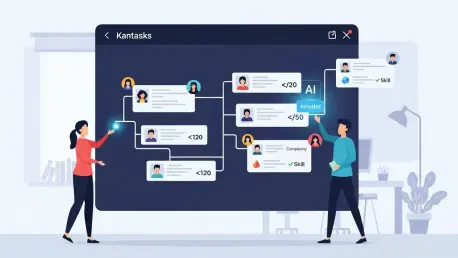
The planning phase is often a point of friction for engineering teams, but AI can significantly streamline this process and reduce bottlenecks. By analyzing the complexity of proposed tasks, AI tools can generate more accurate time estimates, moving teams away from guesswork and toward more predictable timelines. This capability extends to direct workflow integration, where AI agents can automatically update Kanban boards in systems like Jira or Trello and maintain live PLAN.md files within code repositories, ensuring that all stakeholders have access to the most current project status. One of the most impactful applications in this phase is intelligent resource allocation. AI can analyze the skill sets and experience levels of individual developers and assign tasks accordingly, optimizing team efficiency and ensuring that the right people are working on the right challenges. This not only accelerates the planning cycle but also fosters a more productive and balanced workload across the entire team.
3. The Agent Persona Strategy
The traditional ideal of the “10x engineer” is being redefined by the emergence of the “AI-augmented engineer,” where human expertise is amplified by intelligent tools like Cursor, Claude, and advanced VS Code extensions. However, wielding these tools effectively requires discipline and a structured approach. A powerful technique is the use of markdown files to define specific personas for AI agents, such as creating a file that instructs, “You are a Senior React Dev.” This provides the AI with a clear context and role, leading to more relevant and accurate outputs. Equally important is rigorous context management. Developers should maintain separate chat sessions for different topics to avoid confusing the AI with unrelated questions. To provide necessary background information without overwhelming the agent, it is beneficial to use dedicated files like TEST.MD for testing parameters or CODE_STYLE.MD for coding standards. This methodical approach ensures that the AI receives focused, relevant information, making it a more effective collaborator in the development process.
To further refine the collaboration between developers and AI, it is crucial to be deliberate about the mode of interaction. A distinction should be made between supervised use, where the developer “plans” with the agent in a collaborative brainstorming session, and unsupervised use, where the agent is allowed to “run” and execute tasks autonomously. This conscious choice ensures that the right level of oversight is applied to each task. A foundational habit that must be reinforced in this new paradigm is meticulous version control. The era of managing files with names like project_final_final.zip is over. Every change generated or modified by an AI agent must be tracked using Git and managed through platforms like GitHub. This practice provides a complete, auditable history of the project’s evolution, making it possible to review, revert, and understand every contribution, whether human or machine-generated. This disciplined approach is essential for maintaining code quality and system integrity in an AI-augmented workflow.
4. AI Powered Testing and Integration
The role of testing is expanding significantly with the integration of AI agents, moving beyond the simple creation of assertions to the simulation of intricate, real-world scenarios. This evolution can be described as “Test-Driven Development on steroids,” where AI analyzes the intended logic and structure of an application to generate a comprehensive suite of tests before any implementation code is written. This proactive approach ensures that quality is built in from the start. AI can also produce highly realistic test data that covers a wide range of edge cases, which would be time-consuming to create manually. Moreover, AI agents excel at replicating complex user interactions and workflows that are notoriously difficult to script. By simulating these nuanced user journeys, teams can uncover subtle bugs and usability issues that traditional automated tests might miss, leading to the development of more robust and user-friendly software that is resilient under diverse conditions.
In the realm of continuous integration, automation is key to catching problems early, and AI enhances this process by enabling more sophisticated validation checks. A critical practice is establishing dual controls within code repositories, where required checks must pass before any code can be merged. These checks can be orchestrated using automated workflows, such as GitHub Actions, which trigger a series of validations for every pull request. These workflows can include running linters to enforce code style, executing security scans to identify vulnerabilities, and calculating code coverage to ensure adequate testing. Following successful integration, the principles of continuous deployment can be applied to roll out changes in small, manageable increments. A key strategy here is the use of canary deployments, where updates are gradually released to a small subset of users before a full rollout. This process can be automated, moving artifacts seamlessly from canary to staging and finally to production, significantly lowering the risk of widespread issues and ensuring a smoother deployment experience.
5. Infrastructure and Observability
Managing infrastructure as code is a cornerstone of modern software development, and it demands the same level of diligence and version control as application code. By using tools like Terraform or CloudFormation, teams can define their infrastructure in declarative configuration files, which should be stored and managed in Git. This practice ensures that every change to the infrastructure is tracked, reviewed, and auditable, eliminating the risks associated with manual configurations. The provisioning of resources, such as virtual machines, Kubernetes clusters, or serverless functions, should be fully automated through CI/CD pipelines. This approach prevents configuration drift and ensures that environments are consistent and reproducible, from development to production. By treating infrastructure with the same rigor as software, organizations can build a stable and scalable foundation for their applications, enabling faster and more reliable deployments.
Once an application is deployed, the work of ensuring resilience is far from over; it enters the critical phase of monitoring and observability, where AI proves to be an invaluable ally. AI-powered systems are exceptionally skilled at detecting subtle anomalies in performance metrics that a human operator might overlook. For example, an AI can identify a pattern of minor metric drops that are consistently associated with a specific type of pull request, flagging a potential underlying issue before it escalates. This capability extends to predictive maintenance, where AI models can analyze trends to forecast future problems, such as imminent disk space exhaustion or escalating cloud costs, allowing teams to take preemptive action. In the event of an incident, AI can accelerate root cause analysis by sifting through centralized logs and data from monitoring tools to pinpoint the source of the problem quickly. This intelligent oversight transforms monitoring from a reactive task to a proactive strategy for maintaining system health.
The Path Forward With AI
The journey of building resilient software had shifted from relying solely on new tools to embracing new, disciplined habits. By treating artificial intelligence not as a magical solution but as a powerful team member requiring onboarding, management, and continuous review, development teams unlocked the ability to construct systems that were not only developed faster but were also fundamentally stronger and more reliable than before. This thoughtful integration, balanced with rigorous oversight and a commitment to engineering best practices, defined the new standard for creating software capable of scaling securely and effectively. The successful adoption of AI in the software development life cycle was ultimately a testament to the teams that learned to augment their skills with machine intelligence, paving the way for a new era of innovation built on a foundation of resilience.