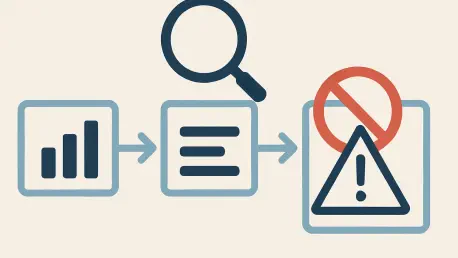

A critical risk dashboard flags no errors and all data pipelines complete successfully, yet a subtle schema mismatch in an upstream table silently causes a major financial institution to understate its portfolio positions by a staggering eight percent. This scenario, where data is technically present but functionally wrong, represents a silent data failure, a pervasive threat that undermines the very foundation of data-driven decision-making. These errors often go undetected until they manifest as costly business mistakes, long after the root cause has been obscured by complex transformations and aggregations. This guide details a structural solution to this challenge, demonstrating how to embed proactive quality checkpoints directly into a Medallion data architecture. By transforming data quality from a downstream afterthought into an integrated, automated process, organizations can build resilient pipelines that catch errors at the source, ensuring data is trustworthy from ingestion to final analysis.
From Late-Stage Firefights to Proactive Data Integrity
The conventional approach to data quality often resembles a late-stage firefight, where analytics teams scramble to diagnose incorrect dashboard figures long after the problematic data has permeated the system. This reactive posture is inefficient and erodes trust in the data platform. When an issue is finally identified in a high-level report, tracing it back through layers of joins, aggregations, and business logic becomes a complex forensic exercise. The core issue is not a lack of monitoring tools but a systemic flaw in where and when quality is assessed.
The Medallion architecture, with its distinct Bronze, Silver, and Gold layers, offers a powerful framework for shifting this paradigm. By design, it creates natural control points for embedding validation logic throughout the data’s journey from raw to refined. This guide explores how to leverage this structure to implement three critical quality checkpoints, transforming data pipelines from brittle conduits into robust, self-validating systems. The ultimate goal is to move beyond dashboard-level problem-solving and cultivate a proactive culture of data integrity, where quality is an inherent property of the pipeline itself.
The Anatomy of a Silent Data Failure
Silent data failures are particularly insidious because they do not trigger conventional alerts; the pipeline does not crash, jobs do not fail, and systems report a clean bill of health. Instead, the data itself becomes corrupted, leading to flawed insights and misguided strategies. These errors can originate from countless sources, such as an unexpected change in a source schema, a subtle bug in a transformation script, or an incomplete data transfer. Because they propagate quietly, they are typically discovered only by chance when a subject matter expert notices an anomaly in a downstream application, by which point the damage may already be done.
Consider a real-world scenario where a daily process aggregates trading positions. A minor, unannounced change in a source system altered a key field, causing a join condition to silently exclude a subset of records. The job completed successfully every day, but the resulting Gold table consistently understated portfolio values by 8%. When risk officers finally questioned the figures three days later, the data engineering team had to unravel a complex chain of transformations to find the source of the discrepancy. The problem was not the final dashboard but the absence of predictable validation checkpoints within the pipeline to catch the data mismatch at the point of entry.
The Three Essential Quality Checkpoints in a Medallion Pipeline
To combat silent failures, a systematic approach to data validation is required at each stage of the Medallion architecture. By implementing quality gates as data transitions from one layer to the next, teams can isolate and address issues at their source, preventing them from contaminating downstream analytics. This layered defense model ensures that data is progressively validated, with each checkpoint building upon the integrity established by the last. This methodology transforms the pipeline into an active participant in maintaining data quality rather than a passive conduit for potentially flawed information.
Each checkpoint serves a distinct purpose tailored to the state of the data within its respective layer. In the Bronze layer, the focus is on completeness to ensure the full expected dataset has arrived from the source. In the Silver layer, the emphasis shifts to transformation integrity, verifying that cleaning and business logic are applied correctly without unintended data loss. Finally, in the Gold layer, reconciliation checks confirm that high-level business aggregates are mathematically consistent with the granular data from which they were derived. The following sections detail the practical implementation of these gates, illustrated with real-world failure scenarios and their resolutions.
Checkpoint 1: Ensuring Data Completeness in the Bronze Layer
The first quality gate resides at the very beginning of the pipeline, where raw data is ingested into the Bronze layer. This checkpoint is fundamentally concerned with data completeness, answering the critical question: “Did all the expected data arrive?” It acts as the first line of defense against a host of upstream issues, including network interruptions, API failures, incomplete file transfers, or problems within the source system itself. By validating the volume of ingested data against a known baseline, organizations can immediately detect and respond to data loss before it ever enters the transformation process.
This check is not merely about preventing errors; it is about establishing a foundational layer of trust. If the initial ingestion is incomplete, any subsequent analysis, no matter how sophisticated, will be built on a flawed premise. Implementing a simple but robust completeness check ensures that the pipeline is operating on a full deck of data, providing confidence that downstream processes are starting from a reliable and comprehensive dataset.
The Real-World Impact of Incomplete Ingestion
An organization relying on an IoT sensor data stream to monitor industrial equipment experienced a sudden, unexplained drop in reported operational efficiency. The downstream analytics dashboards reflected this decline, prompting an urgent investigation into equipment performance. However, the root cause was not mechanical; an upstream API had begun rate-limiting the data connection, causing the ingestion volume to fall to just 25% of its normal level. A pre-configured row count check in the Bronze layer immediately triggered an alert when the number of ingested records deviated significantly from the historical average.
This simple validation check allowed the data engineering team to diagnose the problem in minutes rather than days. Instead of launching a costly and time-consuming investigation into the physical sensors, the team quickly identified the API issue, adjusted connection pooling, and restored the full data flow. This immediate detection prevented days of inaccurate analytics and averted potentially flawed operational decisions based on incomplete sensor readings.
A PySpark Snapshot for Row Count Validation
Implementing a row count validation check can be straightforwardly accomplished using a framework like Apache Spark. A PySpark script can be integrated into the ingestion job to programmatically verify data completeness. The logic involves first loading the newly arrived data into a DataFrame and then calculating the total number of rows. This count is then compared against an expected value, which can be derived from several sources.
For instance, the expected count could be stored in a manifest file that accompanies the data transfer, or it could be based on a historical average calculated from previous ingestion cycles. The PySpark job would define a variance threshold, such as 10%, and if the ingested row count falls outside this acceptable range, the job would fail explicitly. This “fail-fast” approach ensures that incomplete data is never committed to the Bronze layer, forcing an immediate investigation into the upstream data source and preventing the silent propagation of an incomplete dataset.
Checkpoint 2: Validating Transformation Integrity in the Silver Layer
Once data has been successfully ingested into the Bronze layer, it moves to the Silver layer for cleaning, enrichment, and the application of business logic. This stage is ripe with potential for silent data failures, as transformations can inadvertently filter out, corrupt, or drop records. The second quality checkpoint focuses on transformation integrity, ensuring that these operations behave as expected and that any data removed during the process is fully accounted for. This gate is crucial for maintaining transparency and auditability in the data refinement process.
The core principle of this checkpoint is that no record should ever silently disappear. If a transformation is designed to remove records—for example, by filtering out invalid entries or duplicates—that action must be explicitly logged. Establishing an audit trail for all removed data provides an essential diagnostic tool, allowing teams to quickly distinguish between expected filtering and an unforeseen bug in the transformation logic.
Preventing Silent Record Loss During Cleansing
In a common scenario, a data engineering team updated a library dependency that included a function for email validation. Unbeknownst to them, the upgrade introduced a stricter regex pattern that was incompatible with some of the organization’s legacy email formats. The subsequent pipeline run silently dropped 12% of the customer records during the cleansing step because their email addresses were now considered invalid. Since the job completed without error, this significant data loss went unnoticed.
Fortunately, the pipeline included a transformation integrity check. An audit table, designed to capture any records removed during the cleansing process, immediately showed a massive spike in filtered records, with the reason logged as “Invalid email format.” This anomaly triggered an alert, enabling the team to investigate and identify the regex pattern change within minutes. They were able to roll back the dependency and fix the issue before the incomplete customer dataset could impact marketing campaigns or sales reporting.
Using Audit Tables as a Diagnostic Tool
An audit table is a powerful and practical tool for implementing transformation integrity checks. Using PySpark, it is simple to architect a job that diverts any records failing a specific validation rule into a separate audit table instead of just discarding them. For example, when applying a set of data cleansing rules to a DataFrame, records that pass all checks proceed to the Silver layer, while those that fail are written to an audit table.
Crucially, this audit table should not only store the rejected records but also include rich metadata explaining why each record was removed. This can include information such as the specific validation rule that failed, the timestamp of the operation, and the job ID. This creates a detailed, auditable history of all data that has been filtered out of the main pipeline. When an unexpected drop in record count occurs, this audit table becomes the first place to look, providing immediate and actionable insights into the root cause of the data loss.
Checkpoint 3: Performing Financial Reconciliation in the Gold Layer
The Gold layer represents the final stage of the Medallion architecture, containing business-level aggregates and analysis-ready datasets that directly feed critical reports and dashboards. The third and final quality checkpoint occurs here, focusing on financial and business reconciliation. This gate validates that the high-level aggregates in the Gold layer are mathematically consistent with the granular, transactional-level data in the Silver layer. It is the last line of defense to ensure that key business metrics are sound and trustworthy before they reach decision-makers.
This reconciliation is not merely a technical check; it is a business-critical validation. Discrepancies between transactional totals and aggregated reports can have severe consequences, from incorrect financial reporting to flawed strategic planning. By programmatically verifying that, for example, the sum of all individual sales in the Silver layer equals the total revenue figure in the Gold layer, organizations can guarantee the mathematical integrity of their most important metrics.
Protecting Mission-Critical Dashboards
A financial services firm used a credit risk dashboard to monitor portfolio exposure. Stakeholders noticed a persistent but small 2% variance between the aggregated portfolio metrics on the dashboard and the sum of the underlying transaction totals. While the pipeline ran without errors, this discrepancy undermined confidence in the reporting. The investigation was initiated after a reconciliation check, implemented between the Silver and Gold layers, failed automatically.
The check flagged that the total transaction value in the Silver table did not match the aggregated portfolio value in the Gold table. An analysis of the aggregation query revealed the culprit: a LEFT JOIN was being used to connect transactions to counterparty information. This join silently excluded any transactions where the counterparty ID was null, thus underreporting the total portfolio exposure. The fix was to change the query to a FULL OUTER JOIN with explicit handling for nulls, which immediately resolved the variance. The reconciliation check prevented incorrect risk metrics from being used in critical decision-making.
Reconciling Aggregates with PySpark
Automating reconciliation with PySpark provides a robust mechanism for ensuring the accuracy of Gold tables. The process involves creating a Spark job that runs after the Gold table has been populated. This job performs two separate calculations. First, it computes a key business metric directly from the transactional data in the Silver table, for instance, by summing the transaction_amount column. Second, it queries the already-computed aggregate value for the same metric from the Gold table.
The script then compares these two results. Given the potential for floating-point arithmetic nuances, the comparison often allows for a small, predefined tolerance. If the difference between the Silver-derived total and the Gold-table value exceeds this tolerance, the job raises an error and triggers an alert. This automated validation acts as a final seal of approval on the data, confirming that the business logic applied during aggregation did not introduce any mathematical inconsistencies and that the final figures are reliable.
Your At-a-Glance Guide to Medallion Data Quality
Implementing a robust data quality strategy within a Medallion architecture hinges on applying specific, targeted checks at each layer. This approach builds a resilient and observable pipeline by systematically validating data as it progresses from raw to analysis-ready. The core principles serve as a quick-reference framework for ensuring data integrity throughout its lifecycle.
In the Bronze layer, the primary objective is to confirm that no data was lost during ingestion. This is achieved by implementing completeness checks that verify ingested row counts against expected volumes from source systems or manifest files. Moving to the Silver layer, the focus shifts to ensuring that data cleansing and business logic transformations are both correct and auditable. This requires transformation integrity checks, where any record that is dropped or filtered is logged to a separate audit table with a clear explanation. Finally, in the Gold layer, the goal is to guarantee the accuracy of financial and operational reporting. This is accomplished through reconciliation tests that validate key business aggregates in the Gold layer against the sum of their constituent parts in the Silver layer, confirming mathematical consistency.
From Theory to Practice: A Phased Implementation Roadmap
Adopting a comprehensive data quality framework is not an all-or-nothing endeavor but rather a structured journey that can be implemented in manageable phases. A phased rollout allows teams to build momentum, demonstrate value early, and refine their approach without disrupting existing workflows. A practical, week-by-week implementation plan provides a clear path forward. Furthermore, a critical component of this strategy involves differentiating validation rules between pre-production and production environments. This dual-threshold approach balances the need for rigorous testing during development with the need for operational stability in production.
A Four-Week Plan to Deploy Your Quality Gates
A structured, four-week plan can effectively guide the deployment of these essential quality gates. The first week should focus on establishing the foundational monitoring infrastructure, including setting up a dedicated table or logging system for quality alerts, and implementing the first checkpoint: the Bronze layer row count validation. This provides immediate visibility into the completeness of data ingestion.
In the second week, the focus shifts to the Silver layer. During this phase, teams should implement the transformation integrity check, which involves creating an audit table and modifying transformation jobs to log all removed or filtered records. By week three, the final checkpoint can be put in place: the Gold layer reconciliation test. This involves developing the script to compare key aggregates in the Gold layer against their underlying totals in the Silver layer. Finally, in the fourth week, all three checks can be deployed to the production environment, starting with conservative alert thresholds to avoid excessive noise while still capturing significant anomalies.
Adapting Thresholds for Pre-Production vs. Production Environments
A one-size-fits-all approach to data quality alerting is rarely effective. The sensitivity of validation checks must be tailored to the specific environment in which they operate. This strategic differentiation ensures that the development process is rigorous enough to catch subtle bugs, while the production environment remains stable and free from excessive alert fatigue. By setting different variance thresholds, teams can optimize their quality gates for either early bug detection or significant operational monitoring.
This bifurcation of standards allows developers to work with high precision, knowing that even minor deviations will be flagged, while operations teams can trust that production alerts represent genuine, actionable issues. This adaptive approach is key to maintaining a healthy balance between proactive quality control and practical, sustainable pipeline management.
Stricter Gates for Catching Bugs in Development
In pre-production and development environments, the primary goal of data quality checks is to identify bugs and logical errors as early as possible in the development lifecycle. To achieve this, validation thresholds should be set to be extremely strict. For example, a row count variance of just 1% or a financial reconciliation difference of 0.5% might be configured to trigger a failure.
These tight tolerances force developers to account for even minor discrepancies, ensuring that their code is robust and their transformation logic is precise. This approach effectively prevents bugs from ever being merged into the main codebase and deployed to production. By catching issues when they are small and easy to fix, this strategy significantly reduces the cost and complexity of remediation and fosters a culture of high-quality code.
Balanced Alerting for Operational Stability in Production
In contrast, the purpose of data quality checks in a production environment is to alert on significant operational issues, not minor, expected fluctuations. Setting thresholds too tightly in production can lead to a high volume of false-positive alerts, causing alert fatigue and potentially leading to genuine issues being ignored. Therefore, production thresholds should be more lenient.
For instance, a row count check might be configured to alert only if the variance exceeds 10%, while a reconciliation check might allow a 1% difference. These more balanced thresholds are designed to detect genuine systemic problems, such as a major upstream outage or a critical bug in a new deployment, while tolerating the normal, minor variations that can occur in real-world data streams. This ensures that when a production alert does fire, it is treated with the urgency it deserves.
Building Resilient Pipelines That Fail Fast and Fail Loud
The insidious nature of silent data failures was a persistent threat, undermining trust in analytics and leading to flawed business outcomes. The traditional model of detecting these issues at the dashboard level proved to be too little, too late. By leveraging the layered structure of the Medallion architecture, organizations successfully shifted from a reactive posture to a proactive data quality model. This transformation was not about adding more tools but about embedding intelligence directly into the pipeline’s structure.
The implementation of completeness checks in Bronze, integrity audits in Silver, and reconciliation tests in Gold created a comprehensive, multi-layered defense. This system ensured that data issues were caught early, visibly, and at the source. The ultimate achievement was the creation of resilient data pipelines that “fail fast and fail loud,” stopping bad data long before it could impact decision-makers. This foundational change established a new standard where the entire organization could operate with confidence on a bedrock of verifiably trustworthy data.