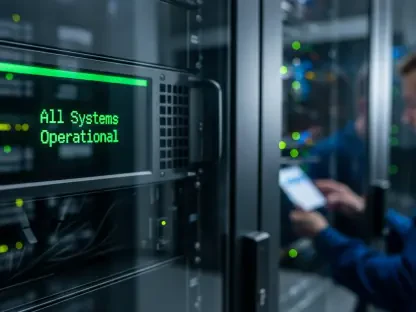

The relentless pressure to ship code faster has finally pushed traditional quality assurance to a breaking point where human-authored scripts can no longer keep pace with machine-generated deployments. For decades, the software industry accepted a frustrating status quo: developers would innovate in hours, while testers spent days or weeks writing brittle automation code that frequently shattered at the slightest change to a user interface. This reactive cycle created a persistent bottleneck that stifled innovation and left teams drowning in technical debt. However, a quiet revolution is underway as Large Language Models (LLMs) transition from simple conversational interfaces into sophisticated reasoning engines capable of navigating the complex logic of modern applications.
This transformation is not merely about adding a new tool to the developer’s belt; it represents a fundamental pivot in how digital trust is established. As software architectures become more distributed and ephemeral, the old “script-based” paradigm is being replaced by autonomous systems that treat testing as a cognitive reasoning task. Organizations are finding that LLMs can bridge the gap between abstract requirements and executable verification, allowing quality to “shift left” in ways that were previously relegated to theoretical white papers. The era of the manual scriptwriter is fading, making way for a future where software essentially learns to verify its own integrity.
The End of the Scripting ErWhen Code Starts Testing Itself
The traditional bottleneck of software development has long been the manual creation and maintenance of test scripts, a process that often lags weeks behind actual feature development. For decades, QA engineers have been locked in a reactive cycle, writing brittle code to test resilient code, only to watch those tests “flake” at the first sign of a UI update. However, a fundamental shift is occurring as Large Language Models (LLMs) move from simple chatbots to sophisticated reasoning engines. By treating testing as a logic problem rather than a repetitive chore, these models are enabling a transition toward true autonomy, where the system not only identifies bugs but anticipates them before a single line of application code is even deployed.
This evolution signifies that the very nature of a “test case” is changing from a static set of instructions to a dynamic intent. Instead of hard-coding every click and hover, engineers now provide high-level objectives, leaving the LLM to determine the most efficient path through the DOM. This shift reduces the fragility of automation suites, as the AI can adapt to minor layout changes or renamed CSS classes without requiring human intervention. Consequently, the focus shifts from fixing broken tests to exploring complex edge cases that were previously ignored due to time constraints.
The Strategic Necessity: Why Traditional Automation is Breaking Down
The modern software landscape is defined by distributed systems and rapid deployment cycles that have rendered classic automation strategies insufficient. Organizations face three primary friction points: the high cost of manual test authorship, the technical debt of maintaining thousands of fragile scripts, and the cognitive load required to understand undocumented APIs. Testing is fundamentally a language and reasoning task—interpreting requirements and diagnosing failures—which makes it the ideal candidate for LLM disruption. As development speeds increase, the “shift-left” philosophy of integrating quality early in the lifecycle is no longer a luxury; it is a survival requirement that only AI-driven scale can satisfy.
Moreover, the complexity of modern microservices means that failure points are often hidden within the interactions between systems rather than in the code itself. Traditional scripts are notoriously poor at catching these emergent behaviors. LLMs, with their ability to synthesize vast amounts of documentation and log data, offer a way to model these interactions holistically. By moving away from rigid assertions and toward probabilistic reasoning, teams can identify systemic vulnerabilities that would have taken a human analyst weeks to uncover through manual investigation.
The Four-Layered Architecture of Autonomous Quality
The integration of LLMs into the testing ecosystem is manifesting through a clear hierarchical progression, moving from basic task assistance to full system agency. At the base lies the Automated Script Generator. This foundational layer focuses on pure efficiency by translating natural language requirements into executable frameworks like Playwright or Cypress. It eliminates the drudgery of writing boilerplate code, allowing testers to describe a user journey and receive a functional script in seconds. This initial step democratizes test creation, enabling product managers and designers to contribute directly to the quality process.
Moving toward true autonomy, the Intelligent Explorer utilizes protocols to interact dynamically with live applications. Unlike static scripts, these agents observe the UI, infer the state of the application, and decide on the next logical step—such as testing the sorting logic of a data grid—much like a human performing exploratory testing. Above this sits the Analyst and Diagnostician, which revolutionizes the “post-mortem” phase of the CI/CD pipeline. When a build fails, the LLM cross-references logs, stack traces, and DOM snapshots to provide a root-cause hypothesis, drastically reducing the time spent on manual debugging and triaging cryptic system errors.
The frontier of autonomous testing involves the Adaptive Test Manager, where LLMs oversee the entire quality lifecycle. These systems prioritize test suites based on recent code changes, automatically suggest fixes for flaky tests, and generate “tests for the tests” to ensure the integrity of the entire quality process. At this level, the AI is not just executing tasks; it is making strategic decisions about where risk lies and how to mitigate it most effectively. This layered approach ensures that as the AI gains more context, it takes over increasingly complex responsibilities, freeing humans for high-level architectural oversight.
Beyond the Chatbot: Leveraging the Reasoning Engine
To effectively implement LLMs in a QA context, it is vital to view them not as information retrieval tools, but as sophisticated engines capable of synthesizing logical patterns. An LLM does not “know” your specific application, but it possesses a vast logical map of concepts like boundary values, race conditions, and XPath selectors. When tasked with a test flow, it synthesizes a new solution based on these patterns, mimicking a senior tester who draws on years of experience to approach an unfamiliar feature. This ability to generalize from broad training data to specific local problems is the “secret sauce” of autonomous quality.
The interface of quality engineering is shifting from code to the “test prompt.” Sophisticated meta-testing requires providing the AI with a specific mission, HTML snippets, and a specialized persona—such as a security-focused auditor. This precision transforms a generic command into a targeted test charter that guides the AI co-pilot through complex investigative tasks. By treating the prompt as a structured engineering artifact, teams can achieve a level of repeatability and depth that simple conversational queries could never produce, turning the LLM into a specialized extension of the testing team.
Strategies for Transitioning to an AI-Augmented QA Team
The evolution of autonomous testing necessitates a new set of practical skills and frameworks for the modern quality engineer. Testers must move beyond simple prompts and adopt Retrieval-Augmented Generation (RAG) to ground LLMs in their specific codebase and bug history. This ensures the AI’s outputs are relevant to the organization’s unique technical environment and historical pain points. Without this grounding, autonomous agents risk hallucinating irrelevant scenarios or missing domain-specific business logic that is critical to the application’s success.
As agents become more autonomous, the tester’s role shifts to that of an orchestrator. This involves designing the “meta-tests” and safety guardrails that validate AI-generated scripts, ensuring that the autonomous system remains accurate and does not hallucinate false positives or miss critical regressions. Organizations should adopt a dual-stream approach: using LLMs to handle the scale and efficiency of scripted regression testing while simultaneously deploying AI-driven agents to perform investigative, adaptive exploration that uncovers edge cases human testers might overlook. This synergy maximized the strengths of both biological and artificial intelligence in the pursuit of software perfection.
Moving forward, the focus turned toward the standardization of “Agentic Workflows” where multiple AI models collaborated to verify different layers of the stack simultaneously. Leading teams began implementing internal “Quality LLMs” that were fine-tuned on decades of industry-standard bug reports and performance benchmarks. This strategy shifted the objective from simply finding bugs to preventing their introduction through real-time feedback during the coding process. Leaders within the space also prioritized the development of ethical monitoring systems to ensure that autonomous agents did not inadvertently introduce biases or overlook accessibility standards during their automated sweeps. In the end, the path to true autonomy required a disciplined commitment to context engineering and a willingness to redefine the very definition of a software tester.