
The escalating sophistication of cyber threats has created a critical global challenge, far outstripping the available supply of skilled professionals capable of mounting an effective defense. This widening talent chasm places unprecedented pressure on both public and private sector organizations, forcing them to re-evaluate traditional approaches to workforce development. In response to this urgent need, a new paradigm is emerging, championed by industry leaders who recognize that building a resilient cyber workforce requires a fundamental shift from reactive training to proactive, deeply integrated educational initiatives that begin long before an individual enters the professional arena. This forward-thinking strategy aims not just to fill empty roles but to cultivate a continuous pipeline of talent that is prepared for the dynamic and complex nature of modern cybersecurity.
A New Blueprint for Cyber Education
Forging Industry-Academia Alliances
The cornerstone of this innovative approach is the establishment of robust, strategic alliances between technology leaders and tertiary education institutions. Fortinet’s Academic Partner Program exemplifies this model, operating on a global scale across 100 countries with an extensive network of 800 partners. This program is designed to dismantle the long-standing barrier between academic theory and real-world application by embedding an industry-validated curriculum directly into university coursework. By collaborating with institutions like the University of South Australia (UniSA), the program ensures that cybersecurity education is not a static discipline learned from textbooks but a dynamic, practical experience that reflects the current threat landscape. This deep integration provides a crucial feedback loop, allowing the curriculum to evolve in lockstep with emerging technologies and attack vectors, thereby guaranteeing its relevance and efficacy. The initiative represents a significant investment in creating a shared ecosystem where academic rigor is enhanced by industry insight, producing a new generation of professionals.
This symbiotic relationship addresses a core deficiency in traditional educational pathways, where graduates often possess strong theoretical foundations but lack the specific, hands-on skills demanded by employers. The Academic Partner Program directly confronts this issue by providing students with access to the same tools, platforms, and training modules used by seasoned professionals on the front lines of cyber defense. By moving beyond conceptual learning and into simulated environments that mirror real-world security operations centers, students develop practical competencies in areas such as threat detection, network security, and incident response. This immersive learning experience fundamentally changes the value proposition of a university degree, transforming graduates from promising but unproven candidates into verified assets who can contribute meaningfully from their first day on the job. The program’s success is a testament to the power of collaboration, demonstrating that when industry and academia work in concert, they can build a workforce that is not only prepared for today’s challenges but also adaptable to the threats of tomorrow.
Creating Job-Ready Graduates
The primary objective of these integrated programs is to produce graduates who are not merely qualified on paper but are demonstrably job-ready. Students participating in the Fortinet Academic Partner Program gain unparalleled access to an industry-recognized curriculum and sophisticated, hands-on laboratory environments that simulate complex cyber defense scenarios. This experiential learning is complemented by the opportunity to earn professional certifications, which are highly valued by employers and serve as a clear indicator of practical expertise. This multifaceted approach ensures that graduates possess a comprehensive skill set that encompasses both deep theoretical understanding and applied technical proficiency. The tangible result is a significant reduction in the time and resources employers must invest in on-the-job training, as these new hires are already familiar with industry-standard technologies and best practices. The success of this model is evidenced by the direct hiring of program alumni by local Managed Service Providers (MSPs), who recognize the immense value of recruiting talent that is pre-vetted and pre-skilled, directly fueling the industry’s talent pipeline.
This initiative is a critical component of a broader commitment to substantially increase the global pool of cybersecurity talent, with a specific goal of training one million individuals by 2026. By making professional-level training accessible within an academic framework, the program democratizes access to high-demand skills and creates new pathways into the cybersecurity profession. It allows students to differentiate themselves in a competitive job market, armed with credentials that validate their ability to tackle real-world security challenges. For employers, this creates a reliable and continuous source of talent that is aligned with their specific technological and operational needs. This strategic cultivation of a skilled workforce is essential for strengthening the collective defense posture of industries and nations alike, ensuring that organizations of all sizes have access to the expertise required to protect their critical assets from an ever-expanding array of sophisticated cyber threats. The program effectively transforms higher education into a direct and efficient pipeline for the cybersecurity industry.
Integrating Advanced Tools and Expanding Reach
The Symbiotic Role of AI and Human Expertise
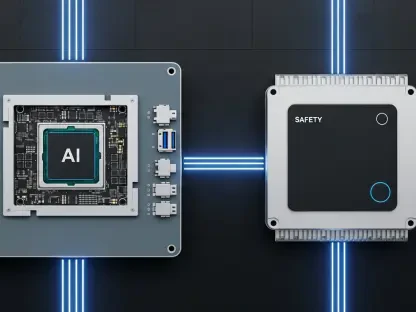
Within the modern cybersecurity landscape, Artificial Intelligence (AI) is often viewed as a double-edged sword, utilized by malicious actors to automate and scale attacks while also being harnessed by defenders to fortify security postures. Fortinet’s strategy refutes the notion that AI will render human professionals obsolete; instead, it positions the technology as an indispensable force multiplier. AI-driven systems are engineered to perform the “heavy lifting” of threat intelligence analysis, rapidly sifting through vast volumes of data to detect anomalies, identify patterns, and mitigate routine threats with a speed and accuracy that surpasses human capabilities. This automation of data-intensive tasks does not replace human analysts but rather elevates their role. By freeing up cognitive resources, AI empowers cybersecurity professionals to pivot their focus toward more complex and strategic challenges, such as sophisticated threat hunting, in-depth forensic analysis, and the strategic planning of incident response. This creates a powerful human-machine collaboration where technology enhances human intuition and expertise, leading to a more proactive and resilient defense.
This symbiotic relationship is crucial for staying ahead of adversaries who are also leveraging advanced automation. As attackers deploy AI to discover vulnerabilities and launch sophisticated campaigns, a purely manual defense is no longer viable. The integration of AI into security platforms creates an adaptive and intelligent defense mechanism that can learn from and respond to new threats in real time. This allows human teams to operate at a higher strategic level, interpreting the insights generated by AI systems and making critical decisions that require context, creativity, and ethical judgment—qualities that machines do not possess. The future of effective cybersecurity, therefore, lies not in a choice between humans or AI, but in the seamless integration of both. This collaborative model ensures that defenses are not only technologically advanced but also guided by the nuanced understanding and strategic oversight that only skilled human professionals can provide, creating a formidable barrier against even the most advanced cyber threats.
Combating Burnout and Retaining Talent
A significant, though often overlooked, challenge within the cybersecurity industry is the high rate of professional burnout. Security analysts are frequently inundated with an overwhelming volume of alerts, subjected to immense pressure during security incidents, and tasked with the relentless responsibility of protecting critical digital assets. This high-stress environment can lead to fatigue, decreased job satisfaction, and ultimately, high turnover rates, exacerbating the existing talent shortage. The strategic integration of AI directly addresses this critical human factor. By automating the detection and response to a large percentage of low-level and routine security events, AI-driven tools significantly reduce the alert fatigue that plagues security operations teams. This allows human analysts to conserve their energy and focus their expertise on the most critical and complex threats that genuinely require their attention, creating a more manageable and sustainable workload.
This reduction in operational burden fosters a healthier and more engaging work environment, which is essential for long-term talent retention. When professionals are not constantly mired in the minutiae of repetitive tasks, they have greater capacity for professional growth, strategic thinking, and proactive security measures. This shift not only improves individual well-being but also enhances the overall effectiveness of the security team. By leveraging AI to shoulder the more monotonous aspects of the job, organizations can make a career in cybersecurity more appealing and tenable over the long term. This helps in retaining the invaluable institutional knowledge and experience of seasoned professionals while also attracting new talent to a field that is perceived as dynamic and strategic rather than perpetually reactive and overwhelming. Ultimately, this human-centric application of technology is vital for building a resilient and enduring cybersecurity workforce.
Empowering the Entire Partner Ecosystem
Fortinet’s comprehensive educational strategy extends well beyond the university campus, permeating its entire network of channel partners. This ecosystem includes a diverse array of organizations, from small- to medium-sized businesses (SMBs) to mid-market companies serviced by MSPs. Recognizing that a strong security posture depends on the skill level of every stakeholder in the chain, the same high-quality training curriculum, hands-on labs, and certification pathways available to students are also made accessible to these established professionals. This ensures that the entire channel is equipped with a consistent and up-to-date understanding of modern cyber threats and the advanced technologies required to combat them. This holistic approach to enablement creates a unified front against cybercrime, where every partner, regardless of size or specialization, has the opportunity to achieve a high level of technical proficiency and security expertise.
Distributors play a pivotal role in facilitating this widespread knowledge transfer, acting as a crucial intermediary that connects vendors with their vast partner networks. In Australia, for example, a distributor like Wavelink actively supports Fortinet’s MSP partners by providing them with skills training, clear certification pathways, and comprehensive enablement resources. This tiered support structure ensures that the educational benefits are disseminated efficiently and effectively throughout the channel, empowering partners to not only secure their own operations but also to deliver superior security services to their end customers. A primary objective of this ecosystem-wide training is to help partners drive tangible business outcomes. By fostering a continuous pipeline of pre-certified, job-ready graduates who can be hired by these partners, and by upskilling their existing staff, this strategy creates a virtuous cycle. It simultaneously addresses the industry’s talent gap while enhancing the value proposition and competitive advantage of every partner within the ecosystem.
A Proactive Stance for a Resilient Future
The initiatives undertaken represented a decisive shift toward a proactive and collaborative model for workforce development. By deeply embedding industry-standard training within academic institutions and extending these resources across the entire partner ecosystem, a foundation was laid for a more sustainable and skilled cybersecurity future. The integration of AI was framed not as a replacement for human intellect but as a vital tool to augment it, which successfully worked to mitigate professional burnout and elevate the strategic role of security analysts. This holistic approach, which connected education, technology, and professional well-being, demonstrated a forward-thinking commitment that moved beyond merely reacting to the skills gap. It actively constructed the talent pipeline needed to secure the digital landscape for years to come. The effort established a new benchmark for how the technology industry could partner with academia to address critical workforce challenges.