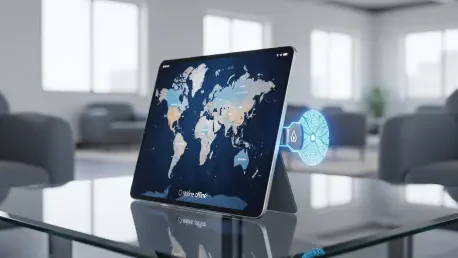

The rapid evolution of mobile computing has transformed high-end Android tablets from simple media consumption devices into powerful workstations that often rival traditional laptops in sheer utility and portability. While the hardware continues to push the boundaries of performance, the software layer has become a contentious battlefield where user privacy is frequently sacrificed for the sake of corporate data monetization and aggressive tracking algorithms. This shift toward digital autonomy through Free and Open-Source Software (FOSS) is no longer merely a niche preference for technical enthusiasts but a fundamental necessity for anyone seeking to reclaim control over their personal information. By prioritizing transparency and community-vetted code, tablet owners can effectively shield themselves from the invasive telemetry that is often embedded within proprietary applications. Utilizing a sophisticated device like a high-end Android tablet provides a perfect canvas for demonstrating how open-source tools can offer a streamlined, high-performance experience without the constant looming threat of data harvesting or restrictive subscription models. This movement represents a significant departure from the software-as-a-service paradigm, offering instead a model based on trust, security, and genuine ownership of the digital tools that define modern daily life.
The foundation of this secure ecosystem lies in the inherent auditability of open-source code, which remains open to public scrutiny by developers and security experts globally. Unlike closed-source alternatives that may hide tracking protocols or backdoors behind proprietary licenses, FOSS applications provide users with a level of peace of mind that is grounded in verifiable evidence. This approach ensures that the software behaves exactly as intended, without performing undisclosed operations in the background that could compromise the integrity of the device or the privacy of the user. In the current landscape of 2026, where digital footprints are more valuable than ever, making the conscious choice to switch to open-source alternatives is a powerful statement of independence. By moving away from centralized platforms that trap users in endless subscription loops and data-mining schemes, tablet owners can enjoy a more efficient and respectful computing experience. This transition does not require a sacrifice in functionality; rather, it often leads to a more refined and purposeful relationship with technology, where every application serves the user’s needs without demanding a surrender of their personal data in return.
Local Productivity and Media Versatility: Breaking the Subscription Loop
OnlyOffice has emerged as a cornerstone of the modern mobile productivity suite by providing a powerful, local-first environment that avoids the pitfalls of mandatory cloud synchronization. For users who require robust tools for managing documents, spreadsheets, and presentations, this application offers a seamless transition from traditional office environments like Microsoft 365 or Google Workspace. Its interface is designed to respect industry standards, ensuring that formatting remains consistent across different platforms without forcing users into a recurring payment cycle or requiring a persistent account connection. This offline-centric approach is particularly advantageous for tablet users who often work in varied environments where stable internet connectivity may not always be guaranteed. By keeping the processing and storage of sensitive documents local to the device hardware, OnlyOffice eliminates the risks associated with third-party server breaches and data profiling. The application demonstrates that high-level professional features do not have to be tethered to invasive cloud ecosystems, providing a sense of security and reliability that is often missing from contemporary proprietary alternatives that prioritize data collection over user experience.
Building on this foundation of local control, media consumption on large-screen Android devices reaches its full potential through the use of VLC for Android, a tool that has long been recognized as the gold standard for universal file compatibility. Its ability to decode almost any audio or video format without the need for additional proprietary plugins or codecs makes it an indispensable asset for any tablet user looking for a no-frills experience. The application is specifically optimized for tablet interfaces, utilizing intuitive gesture controls that allow users to manage their viewing experience with precision and ease. Simple actions like swiping along the left side of the screen to adjust brightness or the right side for volume control create a tactile connection with the content that feels more organic than traditional buttons. Furthermore, features like two-finger zooming and picture-in-picture mode allow for a multitasking workflow that leverages the expansive screen real estate of modern tablets. Because VLC is entirely open-source, users are assured that the player is not quietly tracking their viewing habits or injecting hidden advertisements into the user interface. This commitment to a clean, user-centric design ensures that the focus remains entirely on the media itself, providing a versatile and high-performance playback environment that works flawlessly in offline scenarios.
Navigating the Modern Web: Privacy-First Browsing and AI Integration
DuckDuckGo has successfully transitioned from being a privacy-focused search engine into a comprehensive browser that acts as a robust shield against the pervasive tracking mechanisms of the modern internet. It proactively identifies and blocks third-party trackers before they can even load, preventing advertisers from constructing detailed psychological profiles based on a user’s web activity or physical location. One of the most distinctive features of this browser is the signature Fire button, which allows users to clear all session history and cookies with a single, satisfying tap, ensuring that no traces of their browsing journey remain on the tablet. This level of immediate data management is crucial for maintaining anonymity in an age where even minor digital breadcrumbs can be aggregated into significant privacy risks. By refusing to store user data or track search queries, the browser creates a sanctuary for exploration where users can navigate the web without the fear of being followed by targeted advertisements. This approach transforms the tablet from a tracking beacon into a private portal, allowing for a browsing experience that feels liberated from the constant surveillance typical of mainstream mobile browsers.
The integration of cutting-edge technology within the DuckDuckGo ecosystem has recently expanded to include advanced AI tools that respect user boundaries, such as integrated access to Claude and GPT models. Unlike many other AI implementations that require extensive personal data and account creation, these tools operate within a privacy-shielded environment, allowing users to leverage the power of artificial intelligence without sacrificing their digital identity. This development is paired with innovative features like DuckPlayer, a specialized viewing mode that allows for the consumption of online videos without being subjected to invasive tracking scripts or the manipulative algorithms of video-sharing platforms. By stripping away the layers of data collection that typically accompany media consumption, DuckPlayer ensures that the user’s interests remain their own business. This combination of classic privacy protections and modern technological enhancements positions the browser as a critical gateway for tablet users navigating the complexities of the 2026 digital landscape. It proves that staying at the forefront of technological progress does not necessitate a surrender to corporate monitoring, providing a sophisticated toolkit that balances high-end functionality with an uncompromising commitment to user confidentiality.
Geospatial Privacy: Mapping the World Without Constant Tracking
Navigation and location-based services present some of the most significant privacy challenges on mobile devices, yet Organic Maps offers a compelling solution by prioritizing offline functionality and user anonymity. Built on the expansive OpenStreetMap framework, this application allows tablet users to download entire regional maps directly to their local storage, ensuring that navigation remains fully operational even in areas without cellular data coverage. This architectural choice is a powerful privacy feature, as it means the device does not need to constantly ping remote servers with the user’s real-time coordinates to provide basic mapping services. The interface is purposefully designed to be clean and free from the clutter of commercial advertisements or promoted locations that often plague mainstream competitors. While it may lack some of the real-time traffic updates found in data-heavy alternatives, the trade-off is an application that consumes fewer system resources and provides a significantly more private experience. For many users, the ability to find a destination or explore a new city without leaking personal identifiers to a centralized database is far more valuable than the inclusion of niche commercial features that often serve as vectors for data monetization.
The focus on core necessity over superficial features allows Organic Maps to deliver a highly reliable experience that caters to the practical needs of travelers and daily commuters alike. By removing the intrusive notifications and distractions that are common in modern mapping apps, it fosters a more focused and respectful user interaction that aligns with the principles of digital sovereignty. The application’s commitment to open-source development ensures that the community can verify its security claims and contribute to its ongoing improvement, creating a map that is built by the people for the people. This transparency is particularly important for location data, which is among the most sensitive types of information a user can share. On an Android tablet, the high-resolution maps look crisp and detailed, providing an excellent visual experience that rivals proprietary giants without the ethical baggage of tracking. The absence of tracking cookies and advertising IDs makes it a trusted companion for those who value their physical and digital privacy. As tablet hardware continues to evolve into a primary tool for both work and travel, having a mapping solution that operates independently of the surveillance economy becomes an essential component of a secure and efficient computing environment.
Hardening the Network: Secure Connectivity Through Open-Source Encryption
Rounding out a secure tablet configuration requires a robust solution for network security, and Proton VPN provides a critical layer of defense by encrypting all outgoing and incoming internet traffic. Based in Switzerland, the service benefits from some of the most stringent privacy laws in the world, offering a level of legal protection that many other providers cannot match. Because the application is fully open-source, its underlying code is subject to regular third-party security audits, which are made available for public review to verify the service’s claims of being a no-logs provider. This level of transparency is vital in an era where many proprietary VPN services have been found to secretly log user data or share information with third parties. For the Android tablet user, this means that whether they are connected to a home network or a potentially compromised public Wi-Fi hotspot, their digital activities remain shielded from prying eyes. The application’s interface is streamlined for mobile use, allowing for quick connections to secure servers with a single tap, ensuring that high-level encryption is always accessible without requiring complex technical knowledge or manual configuration.
One of the most impressive aspects of this security tool is its commitment to providing unlimited data even on its free tier, a rarity among reputable privacy-focused providers that often impose strict caps on non-paying users. This allows tablet owners to maintain a consistent anonymous presence and bypass geographical restrictions on content without worrying about running out of bandwidth during data-intensive tasks like video streaming or large file transfers. By providing a secure tunnel for all network communications, the service effectively prevents internet service providers and network administrators from monitoring the user’s online behavior. This final piece of the security puzzle ensures that the digital autonomy established by the previous apps is maintained at the network level. When combined with the other open-source tools discussed, the result is a comprehensive ecosystem where every layer of the user experience is protected by transparency and encryption. This integrated approach to security proves that it is entirely possible to enjoy the full capabilities of a modern Android tablet while maintaining total control over one’s data, setting a high standard for how users should expect their software to behave in a digitally conscious society.
The Road to Autonomy: Practical Strategies for Digital Sovereignty
The integration of these five open-source applications onto high-performance Android tablets demonstrated that achieving digital sovereignty was a practical and highly effective strategy for the modern era. Users who adopted this ecosystem successfully moved away from the restrictive subscription-everything models that previously dominated the software landscape, opting instead for tools that prioritized transparency and user control. This shift proved that privacy-centric design did not have to come at the expense of a smooth or modern user experience, as these applications often outperformed their proprietary counterparts in speed, reliability, and security. The maturity of the open-source community meant that high-end features, including integrated AI and sophisticated media management, were fully accessible without the need for invasive data harvesting. For those looking to secure their own devices, the first step involved auditing current software usage and identifying where proprietary tools were unnecessarily collecting data. Transitioning to local-first productivity suites and privacy-focused browsers provided an immediate and significant boost to personal security. Furthermore, utilizing audited VPN services and offline-capable mapping tools ensured that network and location privacy remained intact regardless of the computing environment. Ultimately, the successful implementation of these open-source solutions provided a clear and actionable roadmap for anyone seeking to reclaim their digital life from the surveillance economy, fostering an environment where technology served the user rather than the other way around.