
In a move that significantly escalates the geopolitical tensions governing outer space, the Chinese government has formally registered a complaint with the United Nations, characterizing Elon Musk’s rapidly expanding Starlink satellite network as a direct and mounting threat to the safety of orbital operations. The declaration marks a pivotal moment, shifting the debate from technical discussions about space traffic management to a high-stakes confrontation over international law, national security, and the future of commercial activity beyond Earth’s atmosphere. Beijing’s argument is multifaceted, contending that the sheer scale and pace of the Starlink deployment by a single commercial entity are creating an unsustainable and perilous environment, effectively monopolizing finite orbital resources while far outstripping the development of effective global governance. This formal challenge before the international community positions the “mega-constellation” not merely as an innovative technology but as a source of instability that could undermine the peaceful use of space for all nations.
A Growing Menace in Low Earth Orbit
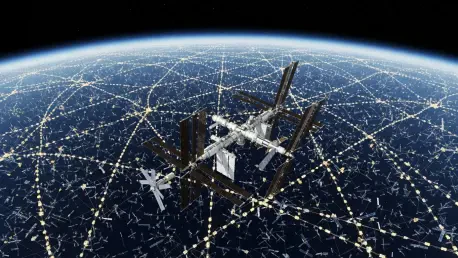
Central to China’s complaint are specific allegations of physical danger posed by the satellite constellation to its national space assets and personnel. To substantiate these claims, the Chinese representative cited two distinct events in 2021 where Starlink satellites allegedly conducted “dangerous close approaches” to the Tiangong space station. These incidents reportedly necessitated emergency evasive maneuvers by the Chinese astronauts on board to avert what could have been a catastrophic collision, posing what was described as a grave threat to their lives. Furthermore, the complaint highlighted a more recent incident where a Starlink satellite disintegrated in orbit, generating over one hundred new pieces of hazardous space debris. This event was used to underscore the growing and indiscriminate threat of orbital debris, which disproportionately impacts developing nations. These countries often operate spacecraft with limited or no maneuvering capabilities and lack the sophisticated space situational awareness systems needed to track and avoid such threats, leaving their valuable assets highly vulnerable.
Beyond the immediate risks of collision, China articulated profound concerns regarding the dual-use nature of commercial satellite networks and their potential to fuel a new arms race. The complaint pointed to the increasing utilization of systems like Starlink for military applications, including secure battlefield communications and reconnaissance, as observed in various global conflicts. This trend, according to Beijing, dangerously erodes the critical distinction between civilian and military activities in space, creating complex “accountability dilemmas” and challenging the foundational principles of the peaceful use of the domain. The integration of such massive commercial constellations into a nation’s military infrastructure, China warned, could significantly aggravate geopolitical tensions. This could undermine decades of international efforts to prevent the weaponization of space, transforming low Earth orbit from a shared global commons into a contested theater for great-power competition, with far-reaching implications for global security and stability.
Breaching International Law and Sovereignty
Anchoring its position in established international law, China’s representatives firmly invoked the 1967 Outer Space Treaty, the cornerstone of space governance. They stressed the principle of state responsibility, which holds signatory nations accountable for all national space activities, whether conducted by governmental agencies or private commercial entities. According to this interpretation, the United States government bears ultimate “jurisdictional responsibility” for the actions of SpaceX and its Starlink network. This legal framework implies that if a commercial company’s operations are found to impede the peaceful activities of other nations or contribute to an arms race, its home country is legally answerable on the international stage. This argument seeks to pierce the corporate veil and place the onus directly on the U.S. to regulate its private space sector in a manner that aligns with international treaty obligations, a point aimed at rallying support from other nations concerned about unchecked commercial expansion.
The final dimension of China’s formal complaint extended beyond orbital mechanics and into the realm of national sovereignty and internal security. The representative leveled accusations that satellite operators, specifically targeting Starlink, have been providing services across national borders without obtaining the necessary governmental authorizations from the host countries. This activity was framed not as a simple regulatory oversight but as a deliberate infringement on national sovereignty and a potential vehicle for interfering in the internal affairs of other nations. China further alleged that these unauthorized services have been exploited by a range of destabilizing actors, including “terrorists, separatist groups, and fraud networks,” particularly in regions across South Asia, Southeast Asia, and Africa. By linking the satellite network to threats against regional security, Beijing aims to broaden the scope of its argument, appealing to a wider international audience concerned with issues of terrorism, internal stability, and the unauthorized flow of information.
The Complex Web of Accusations
The escalating dispute has unfolded within a complex and reciprocal environment of accusations and denials, highlighting a deteriorating atmosphere for cooperation between the world’s two largest space powers. In response to public assertions, Elon Musk has denied that Starlink services were illicitly used by insurgents in regions like India, stating the system is geofenced to prevent unauthorized operation. In a demonstration of self-regulation, SpaceX also reported that it had proactively identified and disabled thousands of Starlink terminals linked to criminal fraud operations in Myanmar. This suggests an internal effort to police its network, although critics argue such measures are insufficient. The dynamic is not one-sided; just before the UN meeting, a Starlink executive publicly reported a near-miss incident involving one of its satellites and a newly launched Chinese satellite, pointing to a lack of coordination from Beijing. Interestingly, the Chinese launch provider involved did not issue a flat denial but instead called for re-establishing collaboration, signaling a tense but potential opening for renewed dialogue on space traffic management.
The formal complaint lodged by China at the United Nations ultimately represented a strategic maneuver to challenge the operational and regulatory dominance of U.S. commercial space entities on the world stage. By framing Starlink’s expansion not just as a technical issue of orbital congestion but as a multifaceted threat to international law, national security, and state sovereignty, Beijing sought to galvanize support, particularly from developing nations, for a more stringent and multilateral regulatory framework. The series of accusations and counter-accusations between American and Chinese space actors illustrated a deeply fractured environment for cooperation, even as both sides acknowledged its necessity. The rapid commercialization of low Earth orbit, spearheaded by entities like SpaceX, has thus become a significant point of friction in U.S.-China relations, with profound implications for the future governance of space.