
The enterprise technology landscape is undergoing a fundamental and accelerating migration away from single-provider cloud dependencies toward sophisticated, strategic multi-cloud architectures. This movement is far more than a passing trend; it serves as a powerful and decisive indicator of the future trajectory of enterprise cloud strategy. In a competitive environment where business success is increasingly dictated by agility, unwavering reliability, and sharp focus, a multi-cloud approach offers a multifaceted competitive advantage that a single vendor, no matter its scale, cannot replicate. This architectural choice is emerging as the definitive path to achieving enhanced availability, significant cost optimization, maximized performance through specialized services, an improved global user experience, and strategic compliance with an ever-growing web of data sovereignty regulations.
Enhancing Operational Agility and Resilience
Building Unbreakable Availability
Recent high-profile service disruptions from major cloud providers have served as a stark reminder of the inherent risks associated with relying on a single vendor, which by its very nature introduces a critical single point of failure. A multi-cloud strategy directly confronts this vulnerability by empowering organizations to engineer a more robust and sophisticated layer of architectural redundancy. By thoughtfully distributing and replicating critical workloads across entirely separate cloud environments, companies can implement advanced load-balancing and automated failover mechanisms that are simply not possible within a single ecosystem. This approach to resilience ensures that essential services remain continuously available and highly performant, not only during predictable traffic spikes but also in the face of unforeseen and potentially catastrophic provider-specific outages, effectively safeguarding internet-dependent businesses from crippling downtime and reputational damage.
This strategic distribution of services does more than just provide a backup; it allows for the deliberate isolation of critical applications across distinct vendor infrastructures, a practice that effectively guards against cascading failures. In a single-cloud setup, a regional issue or a core service failure can have a domino effect, potentially bringing down an entire operation. However, by placing different components of an application stack on separate clouds, an issue with one provider is contained and does not impact the functionality hosted by another. This represents a fundamental paradigm shift from a provider-centric resilience model, where a business is dependent on a vendor’s internal safeguards, to a user-defined, architecturally-driven model. In this new paradigm, the organization itself takes control of its availability posture, building a resilient system that is greater than the sum of its parts and is defined by its own strategic design rather than by the limitations of any one provider.
Achieving Financial Flexibility and Cost Control
Adopting a multi-cloud strategy is one of the most effective tools for achieving significant cost optimization, primarily by liberating an organization from the perilous constraints of vendor lock-in. When a company commits its entire infrastructure to a single provider, it becomes captive to that vendor’s pricing structure, contractual terms, and service roadmaps, leaving it with little to no negotiating power. Embracing a multi-vendor ecosystem completely changes this dynamic. It creates a competitive environment where cloud providers must actively vie for valuable workloads, compelling them to offer more attractive pricing, discounts, or service credits to win or retain business. This newfound leverage allows organizations to strategically allocate workloads based on the most favorable cost models available at any given time, transforming cloud spending from a fixed operational cost into a dynamic and optimizable investment.
This financial empowerment extends beyond simply negotiating better rates; it provides a powerful mechanism for managing and controlling budgets with greater precision. A multi-cloud approach helps organizations mitigate a wide range of financial challenges that can arise in a single-vendor relationship, including unexpected costs from sudden regional pricing changes, demand-based surcharges for high-use resources, or surprisingly complex usage-based bills that are difficult to forecast. It empowers organizations to pursue a more granular and strategic deployment model, meticulously ensuring that every single workload, from a development environment to a mission-critical database, is running on the platform that offers the absolute best possible price-performance ratio. This level of control is crucial for maintaining fiscal discipline and ensuring that technology investments deliver maximum value back to the business.
Gaining a Competitive and Strategic Edge
Leveraging Best-of-Breed Performance
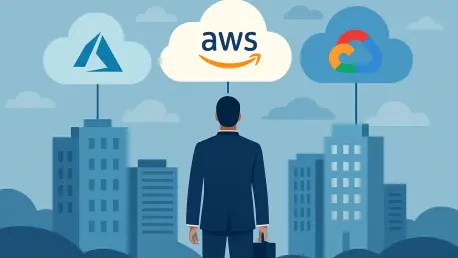
A core truth of the modern cloud market is that no single platform can monopolize excellence across all technological domains; each major provider has meticulously cultivated its own set of specialized capabilities and distinct competitive advantages. For example, Amazon Web Services (AWS) is widely recognized for its immense breadth of services, powerful and mature compute capabilities, and a massive global infrastructure that ensures low latency across the globe. In contrast, Microsoft Azure offers unparalleled advantages for organizations deeply integrated into the Microsoft enterprise ecosystem, providing seamless and secure connections with essential services like Active Directory and Office 365. Meanwhile, Google Cloud Platform (GCP) has firmly established itself as a leader in pioneering artificial intelligence and machine learning workloads, offering cutting-edge tools for data analytics and intelligent applications. A multi-cloud strategy allows an organization to break free from a restrictive one-size-fits-all approach and instead strategically leverage these specialized strengths.
This allows a business to architect a composite infrastructure that is truly tailored to its unique operational needs, thereby maximizing overall performance and driving innovation. Instead of compromising by fitting a specific workload into a generic environment, an organization can strategically align each application with the ideal platform it is best suited for. For instance, a company might run its global e-commerce platform on AWS for its scale and reliability, host its internal enterprise applications on Azure to leverage existing Microsoft investments, and process its big data analytics on GCP to take advantage of its superior machine learning services. This deliberate, best-of-breed approach ensures that every component of the IT landscape is operating at peak efficiency, creating a powerful technological foundation that directly translates into a significant and sustainable competitive advantage in the marketplace.
Delivering a Superior Global User Experience
In an era of increasingly distributed multinational teams and a truly global customer base, geographical proximity is a paramount factor for application performance and user satisfaction. Furthermore, localized events, ranging from natural disasters to unforeseen infrastructure crises, can severely disrupt service availability and performance in a specific region, impacting users and operations. A multi-cloud architecture provides a powerful and elegant solution to these challenges by offering a far broader global footprint that transcends the network of any single provider. By combining the data center locations of several top-tier vendors, organizations can dynamically leverage the nearest and fastest-performing region available from any of their chosen cloud partners to serve user requests, ensuring a consistently responsive experience regardless of where the user is located.
This ability to strategically deploy resources across a wider geographical canvas does more than just reduce network latency and deliver blazing-fast application responses. It also builds a higher level of regional resilience. If a particular provider experiences an outage in a key metropolitan area, a multi-cloud architecture allows for traffic to be seamlessly rerouted to a healthy region hosted by a different vendor, often with minimal to no impact on the end user. This proactive approach helps customers avoid network congestion and insulates the business from the consequences of regional service disruptions. The capacity to guarantee both high-speed delivery and robust resilience on a global scale is no longer a luxury but a significant competitive differentiator that directly influences customer loyalty and brand perception.
Charting a Compliant and Future-Ready Course
The discussion of multi-cloud’s benefits ultimately revealed how its adoption matured from a technical tactic into an indispensable component of modern business strategy. It was the increasingly intricate and demanding landscape of global data sovereignty and regulatory compliance that solidified its crucial role. As new and stringent regulations like the GDPR, HIPAA, and a variety of country-specific data laws emerged, organizations were confronted with the immense challenge of managing sensitive user data in a fully compliant manner across numerous, and often conflicting, legal jurisdictions. This complex environment made a single-vendor approach increasingly untenable, as no single provider could offer a universal solution for every regulatory requirement worldwide. This is where the true strategic power of multi-cloud was realized. The architecture provided the critical flexibility for a business to choose the right provider for the right data in the right location, aligning workloads with the vendor offering the specific compliance certifications, security controls, and localized data centers required to meet strict sovereignty rules. This capability transformed compliance from what was once seen as a burdensome constraint into a powerful strategic advantage, enabling safe, legal, and confident global operations.